
The Examiner has more opinions than it has staff. We maintain unanimity in our facts, not the inferences we draw from them. This examination is no exception.
As the Union Jack went down and the Lion Flag went up in 1948, the civil service was ready and waiting. Slowly Ceylonised over decades, the civil service was supposed to be the handmaiden of our transformation from third world to first.
Instead the civil service became a den of corruption and a bastion of incompetence. Today many civil servants’ chief qualification is their name appearing on a politician’s job list.
Jobs for votes
Government jobs were increasingly traded for votes and favours since 1972, when a new constitution abolished the Public Service Commission. The responsibility of appointing, transferring, and disciplining public officials was instead brought under the control of the cabinet, eroding the independence the public service previously enjoyed.
“Earlier there was tampering here and there," a retired civil servant who had worked in the highest offices of government told The Examiner. “But the government that was elected in 1970 looked at the public service differently from the past…political golayas were appointed to various positions.”
Newly nationalised companies also became a dumping ground for political lackeys, he went on. The Lanka Sama Samaja Party held the transport portfolio; as a result, CTB conductors were from party powerbases like Agalawatte, Matugama, and Panadura. The SLFP also followed that example.
Politicisation led to declining discipline. Ronnie de Mel, finance minister in J.R. Jaywardene’s government, appointed a man who “would buy bread for his house” as a bank peon. That man “came and went as he pleased”. This isn’t an unusual example, said the retired mandarin, adding that the new culture resulted in lower level officials close to politicians feeling more powerful than senior, non-political civil servants.
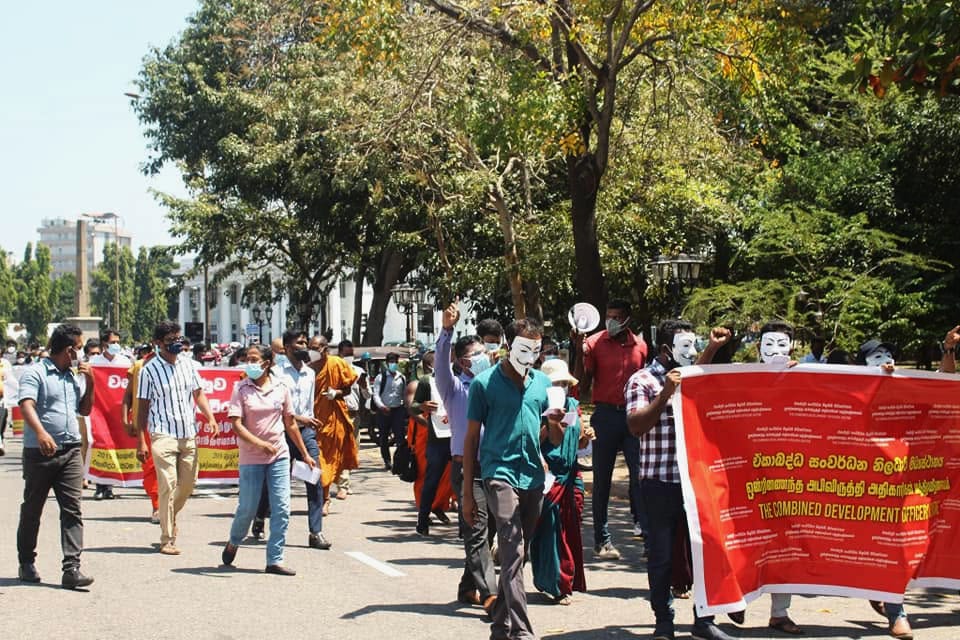
Politicised recruitment pressure may also have increased following the introduction of the preferential voting system in 1989. Increased intra-party competition forced MPs to seek votes in areas they weren’t familiar with, muses K.L.L. Wijeratne, a former chairman of the Salaries and Cadre Commission.
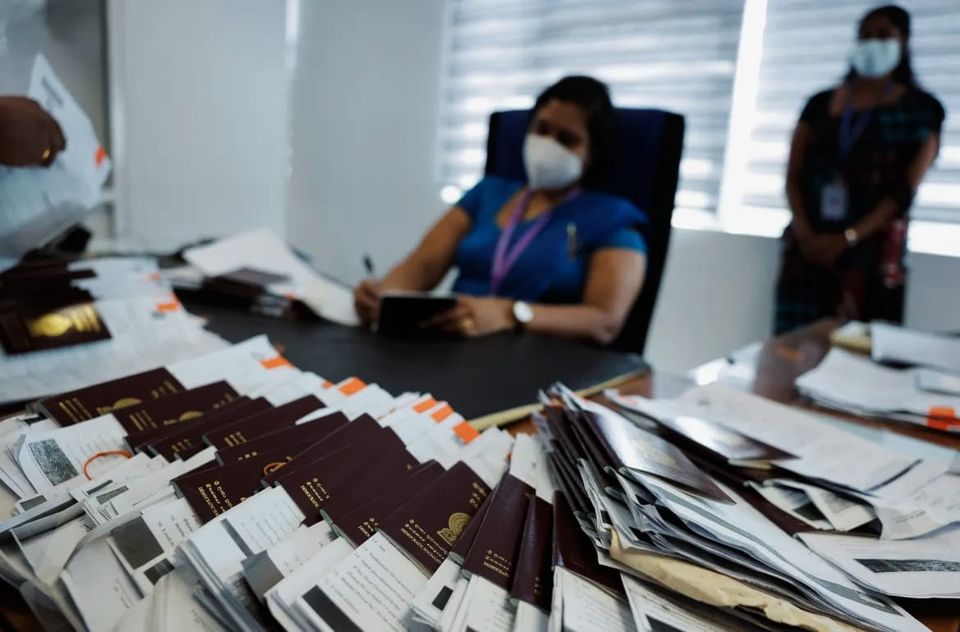
No institution rises higher than its people so it’s no surprise that today we have a flailing, often failing, state. We all know the state often struggles to competently provide even the most basic services; fuel, electricity, and passports are just some examples. What really rankles is that despite this abdication of responsibility, the civil service is bloated.
Bloated bottom
The government employs an exceptionally high share of the workforce, Verité Research finds. We have the largest public sector share of employment among a range of South Asian and South East Asian countries.
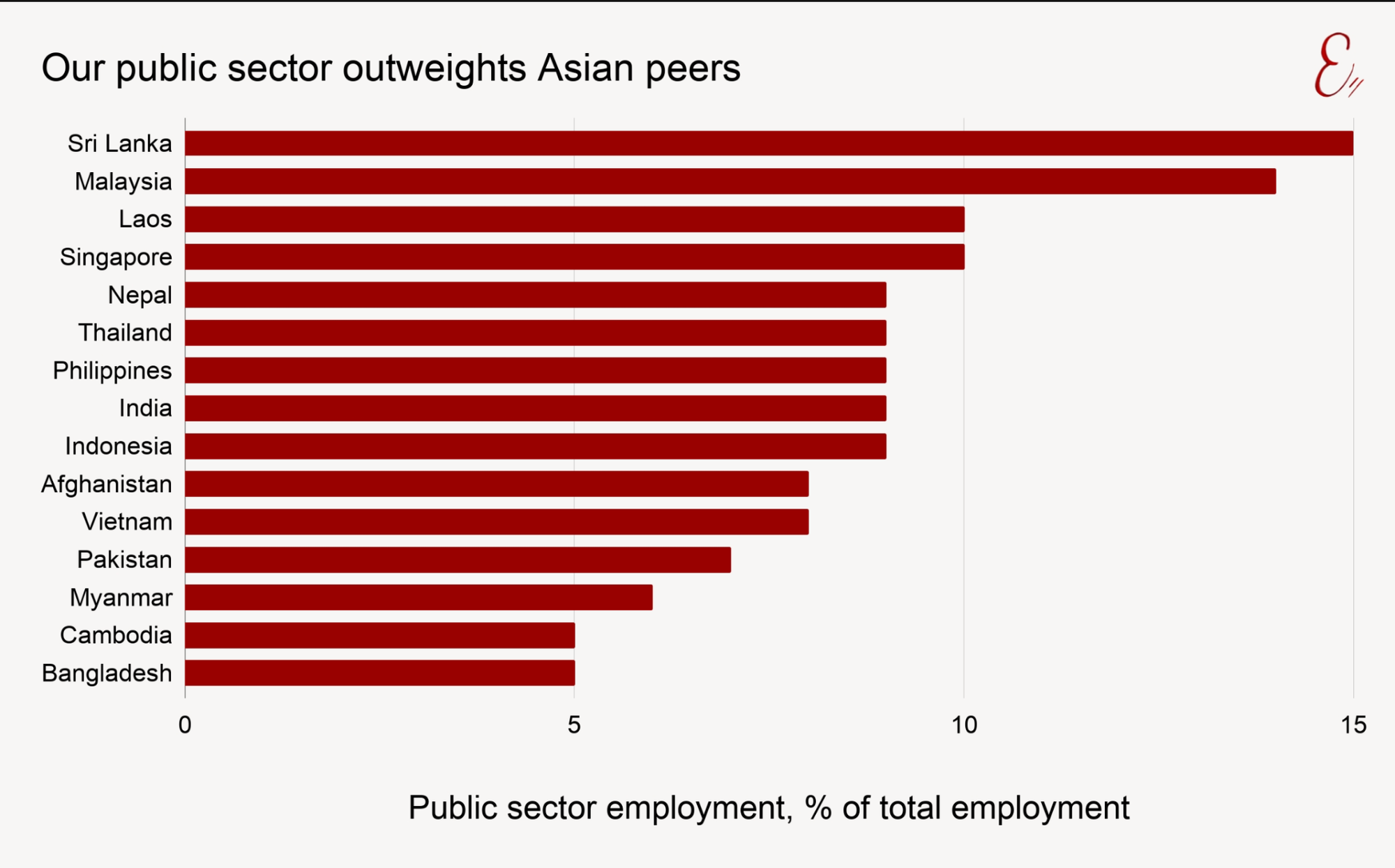
This isn’t a new phenomenon. In 2004 Sri Lanka’s public sector employment share was over five times that of India, Bangladesh, or Pakistan.
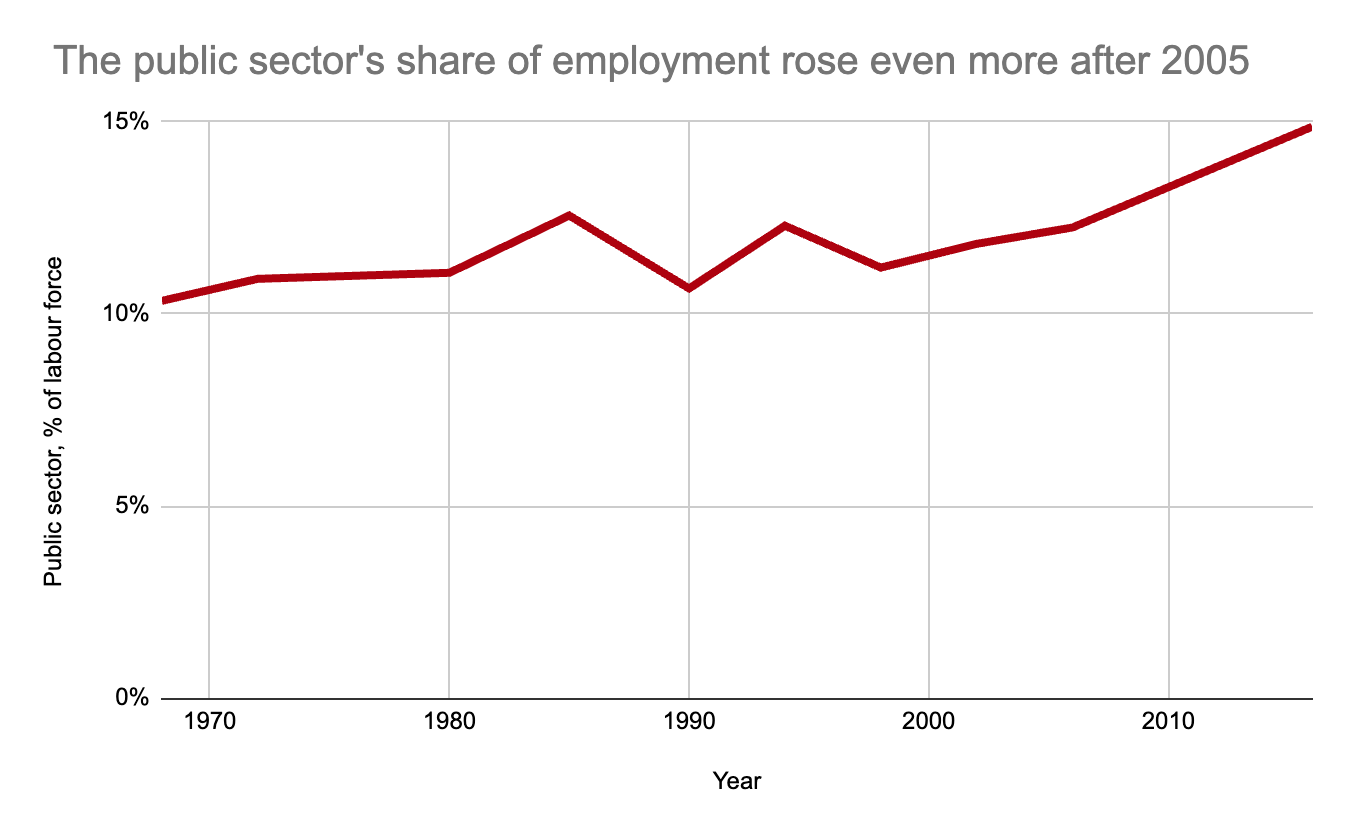
Worryingly that burden has since become much heavier. In the decade between 2006 and 2016 two-thirds of jobs created were in the public sector. In that decade, the public sector added an average headcount of 26,000 a year, while the workforce as a whole expanded by 41,000. Since then it continued to grow slowly, by about 6,000 annually, until the hiring freeze of the economic crisis years started reversing the trend.
“Recruitments were made without knowing the need of the department — that’s because of political influence,” said Prathap Ramanujam, a former public service commissioner. The problem is driven by a massive surplus in the number of non-executive employees like management assistants and development officers.
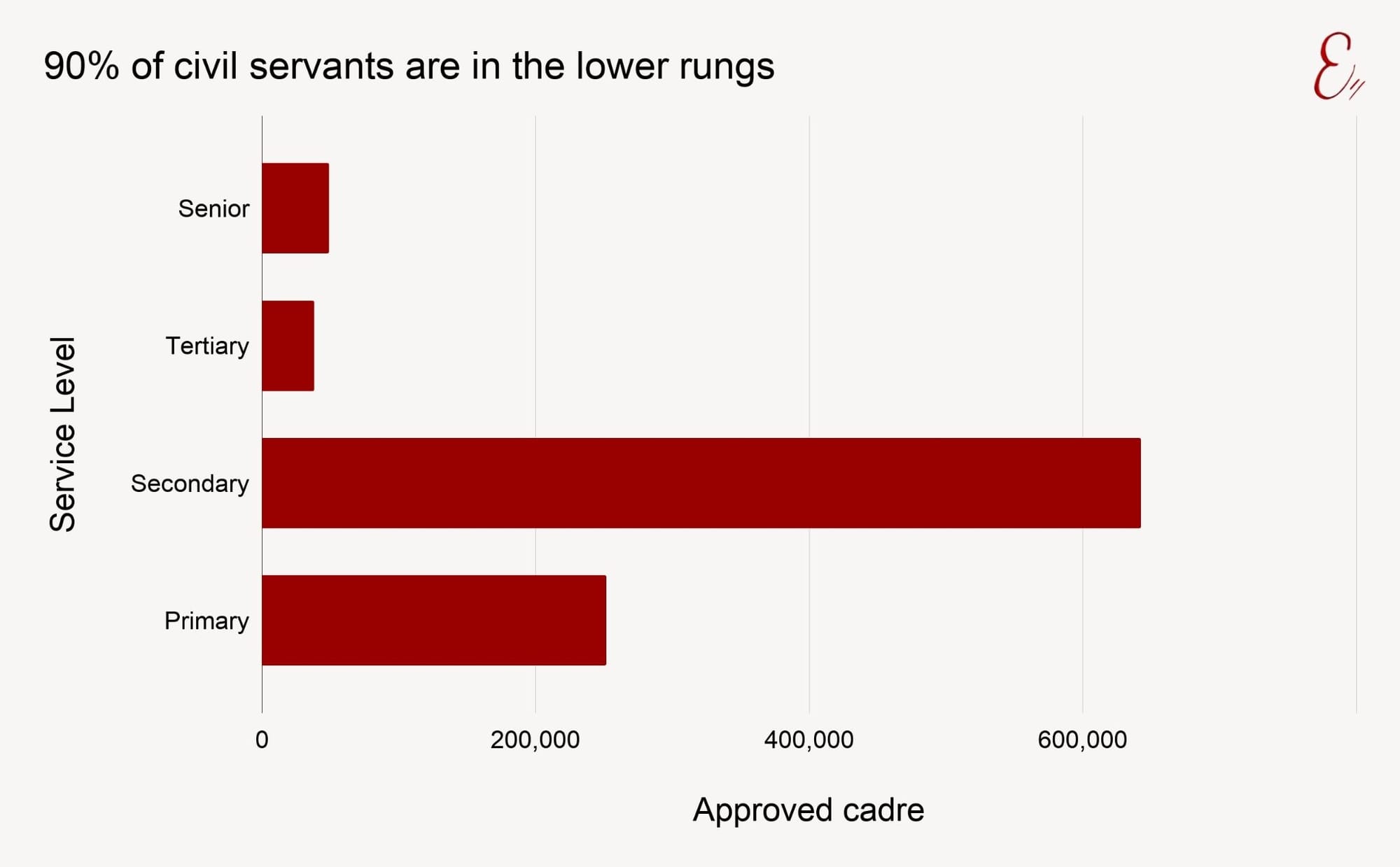
Mick Moore, a scholar at the Institute of Development Studies, attributed this over-recruitment in the lower rungs to three main factors: a large population of arts graduates who found it difficult to find work, violent youth movements led by unemployed and un-employable young people, and a government that took on the responsibility of providing jobs.