
The Examiner has more opinions than it has staff. We maintain unanimity in our facts, not the inferences we draw from them. This examination is no exception.
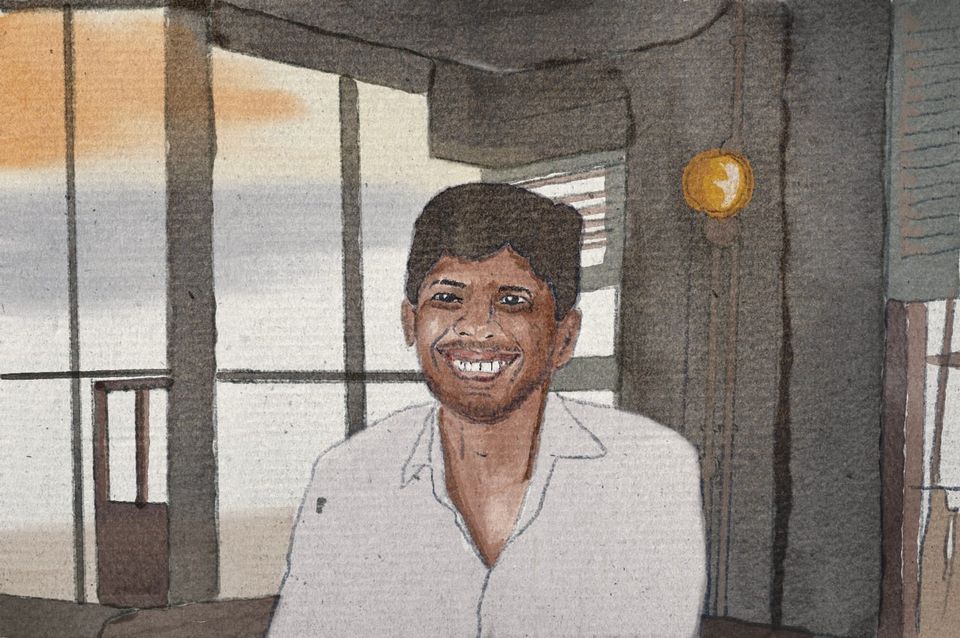
It’s not every day The Examiner lunches in London. Today we’re at Blacklock, an American steakhouse in the city’s second financial district, Canary Wharf. I have Sri Lanka’s hottest fintech founder, Anton Padmasiri, at the table with me.
Earlier this year he sold WealthOS, his fintech startup, to JPMorgan. The sale was exceptionally fast by Lankan standards: it had been just over two years since the company secured its first client. He now works out of JP Morgan’s offices there, but he’s clearly enjoying life too. Well-tanned from summer holidays in Tuscany and Corfu, he briskly walks me through the menu. We order fast, and I dive right in, asking how he went from founding a Sri Lankan start-up to working for the greatest behemoth in global finance.
He tells me he’s come “full circle” –– Canary Wharf is where he started his white-collar UK career in the mid-noughties.
He was in his early 20s then, and had never left Sri Lanka. But he yearned for adventure, and applied for a working holiday-maker British visa, banking on his sister’s London home to crash in. After dropping out from Kelaniya University, he’d been working at John Keells during the heady ceasefire days when Colombo’s market was roaring. His first London job, though, was that rite of immigrant passage — the McDonald’s graveyard shift.
For six months he applied for job after job in “the City”, as London’s finance world is called. Finally, “he lucked out”. Through a client of his from John Keells days, he was referred to an American company setting up shop in Britain. That was his breakthrough, both in terms of establishing himself and finding his passion. He “accidentally fell in love” with product — the field of using technology to solve business problems.
This led to a steady but not quite heady rise through the cogs of financial giants’ pension management product teams.
Our plates arrive. Padmasiri’s clearly a people person, bantering easily with our waiter, who accuses him of stealing his job for guiding me through the menu earlier. Padmasiri had lured me into ordering the “all in” — a carnivorous buffet balanced with a fermentation heavy pre-bite of kimchi, pickles, anchovies, and other umami delights. Despite egging me on, he picks a classic bread and meat situation. But a good Sri Lankan, he insists on full-fat coke. The Examiner bank account’s health is about as good as my cholesterol will be after this lunch, so I skip a drink.
Fintech-forward techies
For Padmasiri the years started rolling by. “Of course I’m going back,” he kept telling himself, convinced he never wanted to permanently migrate. But after about six or seven years, the credibility began to wear thin. So he finally admitted to himself that he’s here to stay.
For someone so well settled into work and life in the UK, I’m curious why Padmasiri chose Sri Lanka to base his startup. After all, software engineering centres like Eastern Europe are closer and India’s talent pools are deep oceans compared to our puddles.
"It's more than just the fundamental quality of the tech talent — it's the combination with exposure to financial services," he explains.
For what he wanted to build — the operating system of pension investment management — Sri Lanka had a lot going for it. The best talent had worked on global scale, high frequency, zero tolerance stock market systems at the London Stock Exchange Group’s Athurugiriya cluster and at Yaala Labs, which collaborated closely with WealthOS in their early days. In India, the highest candlepower tech talent worked for technology companies like Google or Microsoft, as opposed to banks and asset managers. Our costs were also competitive.