The Examiner has more opinions than it has staff. We maintain unanimity in our facts, not the inferences we draw from them. This examination is no exception.
Praja Shakthi is the government’s flagship scheme to empower the one in six Sri Lankans below the poverty line. And if current plans come to pass Praja Shakthi will not only spend its 25 billion rupee budget allocation, it will also control all government spending at the village level. Any village project, however big or small, will need to be approved by the village’s unelected Praja Shakthi council.
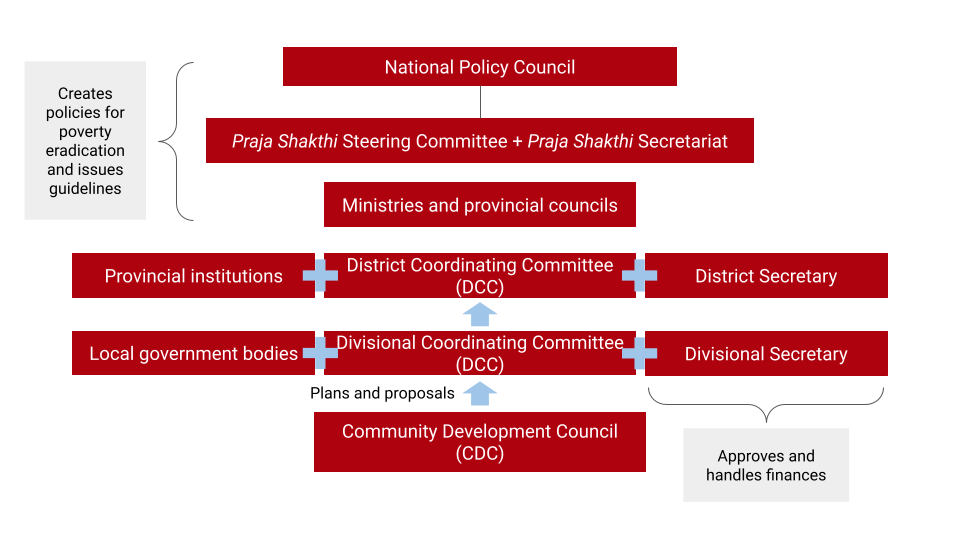
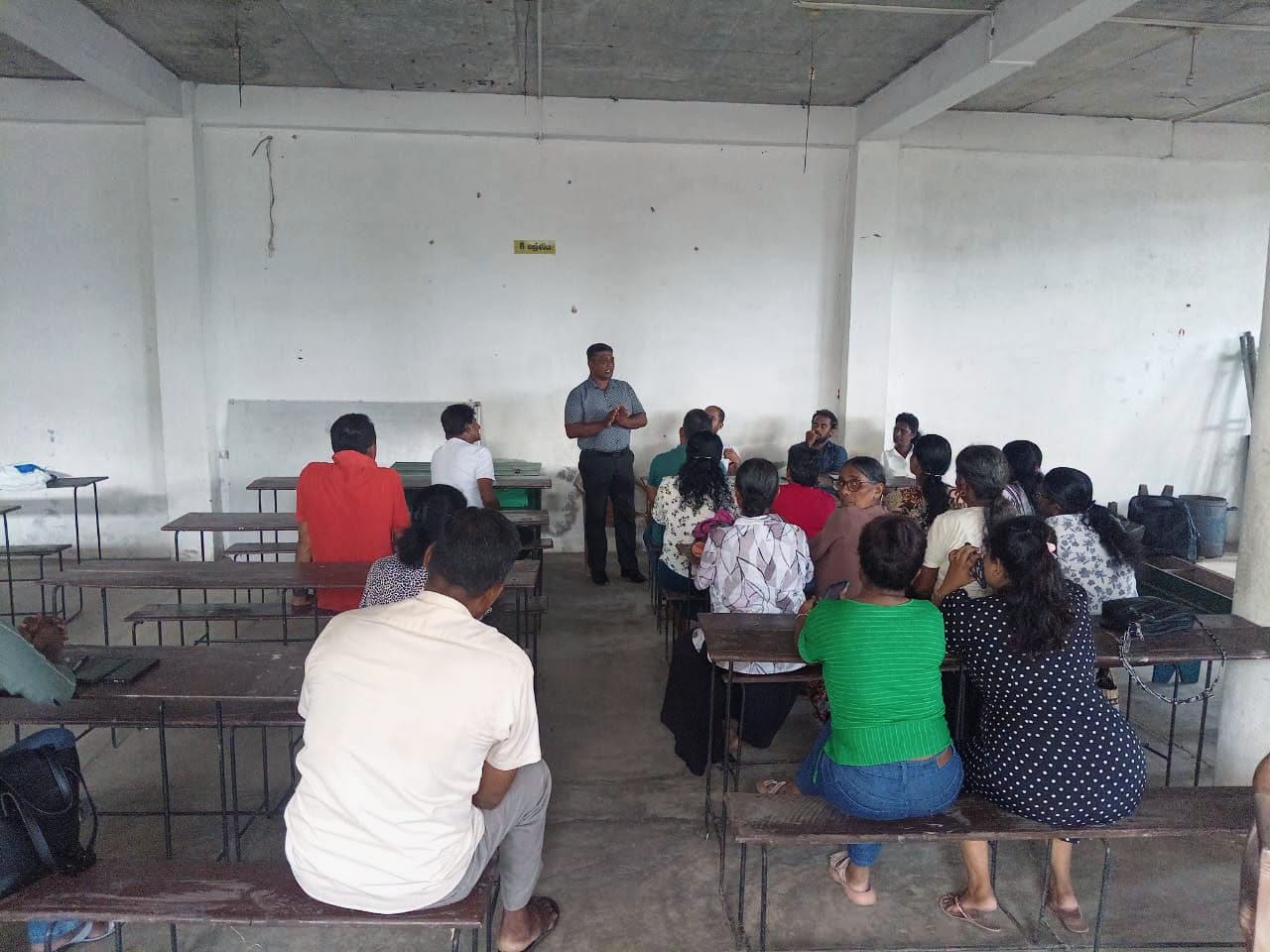
Praja Shakthi councils consist of volunteers who work with civil servants to identify development needs and draw up a village development plan. These councils have already started bypassing and supplanting elected local governments like pradeshiya sabhas.
As opposition politicians question the programme’s legitimacy, the government is currently waiting on the legal draftsman to finalise a Praja Shakthi bill to put the programme on a firmer legal footing.
The government hopes to place this bill, which essentially makes existing circulars into law, on parliament’s order paper by year-end, said Sampath Manthrinayake, secretary to the rural development ministry. Wasantha Piyatissa, the ministry’s deputy minister, said that they’re drafting the law to give the programme “full” legitimacy. But felt it was too early to share details, as they’re still being discussed.
“We feel that it’s good for it to have more of a legal basis," said Piyatissa.
A circular released in August last year brought the scheme to all 14,008 grama niladhari divisions, creating Praja Shakthi councils in each division. These councils are tasked with identifying and prioritising their villages’ development needs, and monitoring project implementation. President Anura Kumara Dissanayake, chairing a Praja Shakthi policy council at the national level, oversees Praja Shakthi from the top.
The development council’s scope isn’t limited to the Praja Shakthi budget. Only projects in the councils’ village development plans will be executed because it demonstrates “the village’s agreement on what it needs,” Piyatissa explained. According to him, any project, regardless of which government agency funds it, should first be identified and approved by the village’s Praja Shakthi council.
“If the village identifies that a particular road must be built first..that should be prioritised. The road that should be built isn’t what the Road Development Authority wants but what the village has asked for,” says Piyatissa.
However, divisional secretaries told The Examiner that this level of Praja Shakthi council control hasn’t been implemented yet. Clarifying the matter, Manthrinayake said that directives won’t be issued for now on Praja Shakthi approval for other agency budgets as Praja Shakthi is still in a transition period.
Unelected power
By reserving the top seats for government loyalists, Praja Shakthi councils are undemocratic – even on paper. Though the councils are supposedly operated “by the community for community development”, in practice they’re headed by political appointees. Council chairmen are government MPs or their representatives. They then go on to appoint 15 to 20 villagers to the council. The remaining four members are civil servants like grama niladharis or samurdhi officers.
In most cases the government MP appoints a representative to chair the Praja Shakthi councils. Though there’s no rule that a council chair must be an NPP loyalist, Praja Shakthi chairs say they were appointed because they supported the NPP in the last elections. The chairs The Examiner looked-into, six in total, directly campaigned for the government in the 2024 election.
Before the 2024 presidential election, the NPP built kottasha sabhas — an organisational network at the electoral ward level — to campaign among the grassroots. Praja Shakthi councils mirror these older bodies but are less political because of their ex-officio members.
One chair The Examiner spoke to was appointed through a kottasha sabha. “The NPP kottasha sabha for my area decided to make me the Praja Shakthi chair. I didn’t attend the meeting. Later the seat’s party office informed me by telephone,” said a Praja Shakthi council chair from Divulapitiya who wished to remain anonymous. He said NPP party organisers asked him to select government supporters when appointing the rest of the council.
Even though the NPP won most of the local government electorates in the country, the party still wants to cement their victories in villages that aren’t JVP strongholds, says Kumudu Kumara, a former Praja Shakthi council chair from Attanagalla.
Kumara also feels that Praja Shakthi was established because local civil servants were often political appointees from previous regimes who aren’t supportive of the new government.
“The newly-elected local government leaders of the NPP didn’t know their constituencies well either, and weren’t equipped to work well with villagers,” he says, adding another reason for the need for Praja Shakthi.
Three council chairs The Examiner spoke to felt that the Praja Shakthi councils were a way for new leaders like them — who emerged by campaigning for the NPP — to become the ones to deliver on the promises to the village. Most of them are first-time supporters of the party.
JVP interference
Within Praja Shakthi councils rifts are already emerging. In Attanagalla for example there’s a tussle between the JVP’s central command and new NPP leaders from within the village.
Some chairs in the Attanagalla councils, newly emerged NPP leaders, feel they’re being overpowered by JVPers. Kumara, the council chair, has already resigned. So have about half of the Attanagalla area council chairs over the last few months. They left because they felt their criticisms of NPPers in the Attanagalla Pradeshiya Sabha weren’t taken seriously by the governing JVP-NPP.
When Suranjith Shantha, one of the chairs who resigned, listed priorities for his village, a JVP activist asked him to add another item. Though it was included before sending it to the divisional coordinating committee, Shantha added a note saying that the proposal didn’t come from the council.
The three council chairs who resigned felt betrayed by this kind of interference from the JVP. “The way I feel, we were appointed to do the JVP cadres’ bidding, not to do what the village needs,” complained Kumara.
Jayasundara feels that the NPP’s old 3% base from 2019—made up largely of traditional JVP supporters—was imposing its will on newer supporters like him, who delivered the party’s much larger recent mandate.
“We need space to discuss the problems we see. But the JVP representatives think criticism is betrayal. Our resignations too were a statement to get the government back on track, not to go against it,” he said.
They expected civil servants, with their alleged loyalties to previous regimes, would be tough to work with. Surprisingly they found it easier to work with them than JVP cadres.
Centralising decentralised power
In its campaign manifesto the NPP said past poverty eradication programmes were inefficient, expensive, opaque in selecting beneficiaries, politicized, and often delayed.
When the Yahapalanaya government initiated Gamperliya in 2018, the initial plan was for a village committee to decide which projects to implement, said Dhananath Fernando, who was involved in Gampereliya. This didn’t work out, politicians took over; boards adorned with politicians' faces announcing renovated roads followed.