The Examiner has more opinions than it has staff. We maintain unanimity in our facts, not the inferences we draw from them. This examination is no exception.
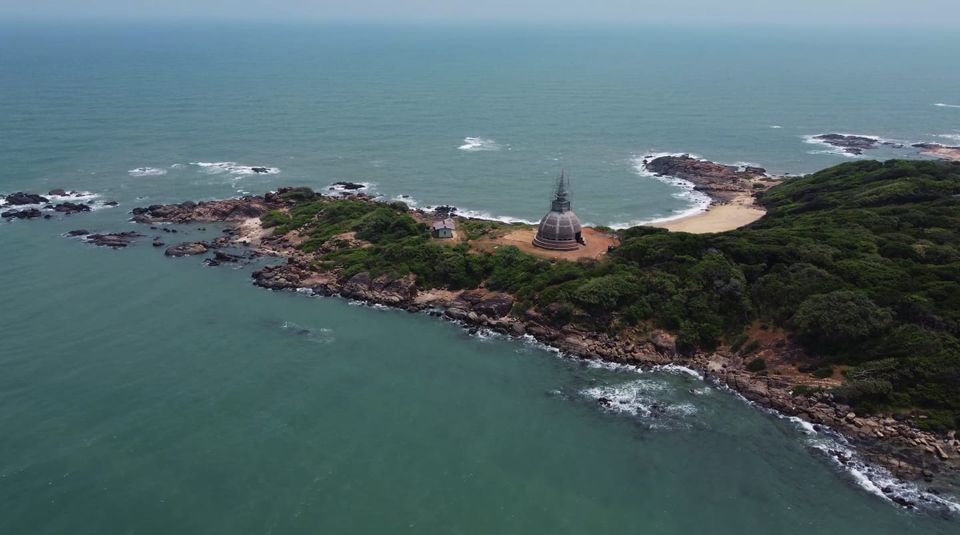
The Arisimalai temple overlooks one of the east coast’s most picturesque beaches. The temple’s Buddhist monks call it pooja bhoomi, sacred land, claiming two merchants carrying a lock of the Buddha’s hair beached there in the 6th century BC.
But for the surrounding Tamil-speaking villagers, Arisimalai, literally rice-mountain, is occupied. The temple is an enclave — a self-functioning ethnic island — in Trincomalee’s mixed Muslim and Tamil Kuchchaveli.
The temple’s Sinhalese vendors — selling votive flowers and snacks to Buddhist tourist-pilgrims — migrated here from far-off places like Badulla. Past the shops, and just before the newly-built dagoba, is a security hut where an attendant collects a 100-rupee donation from each visitor. Their donations pay for the temple’s daily expenses, he says.
Most temples depend on surrounding villagers, who offer alms for monks. But not so at Arisimalai. Buddhist donors from other parts of the island stay at holiday huts constructed on the nearly 110-acre premises. It is they who feed the monks.
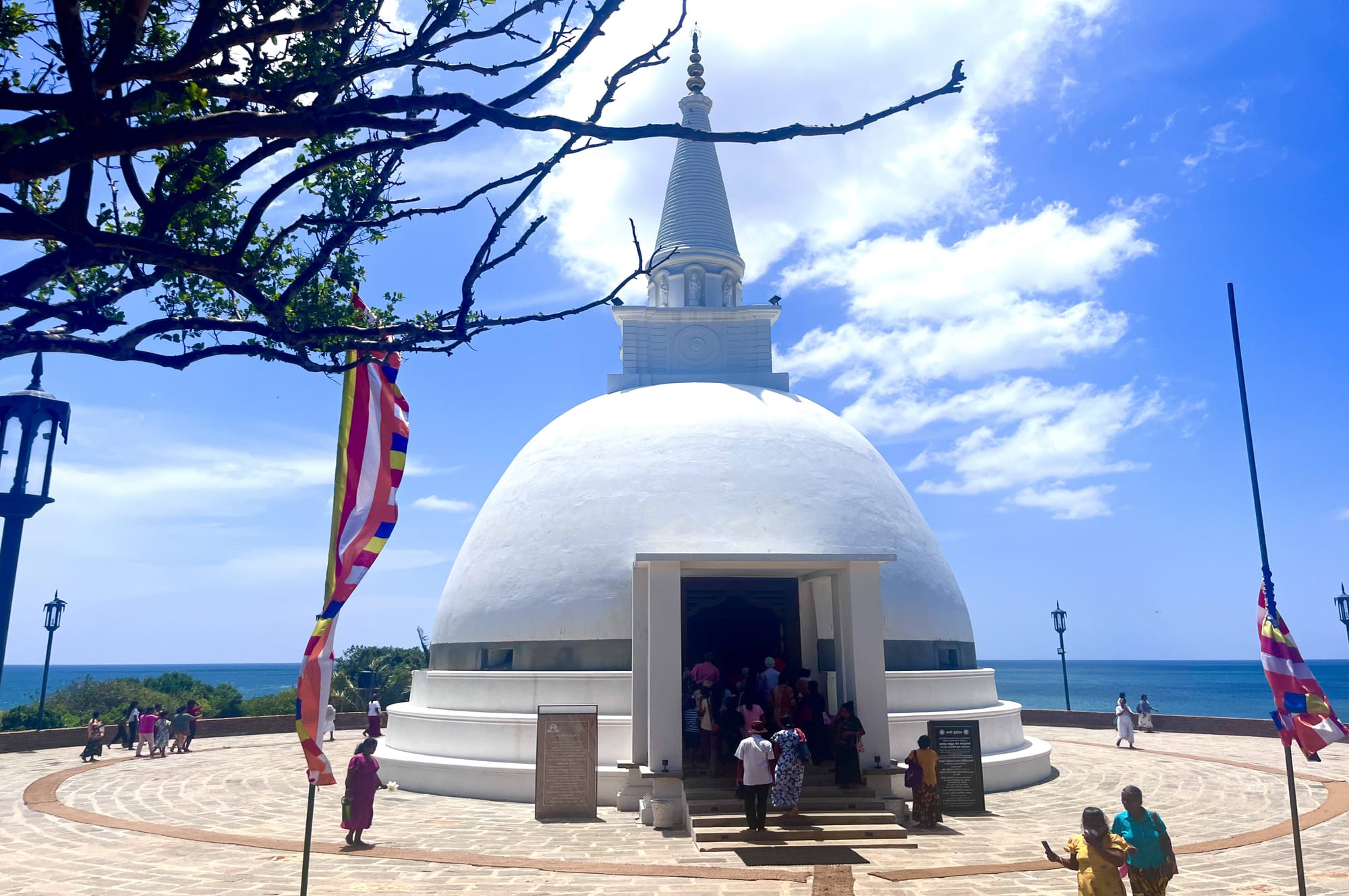
Arisimalai’s colonising, cantonment-like feel isn’t a coincidence.
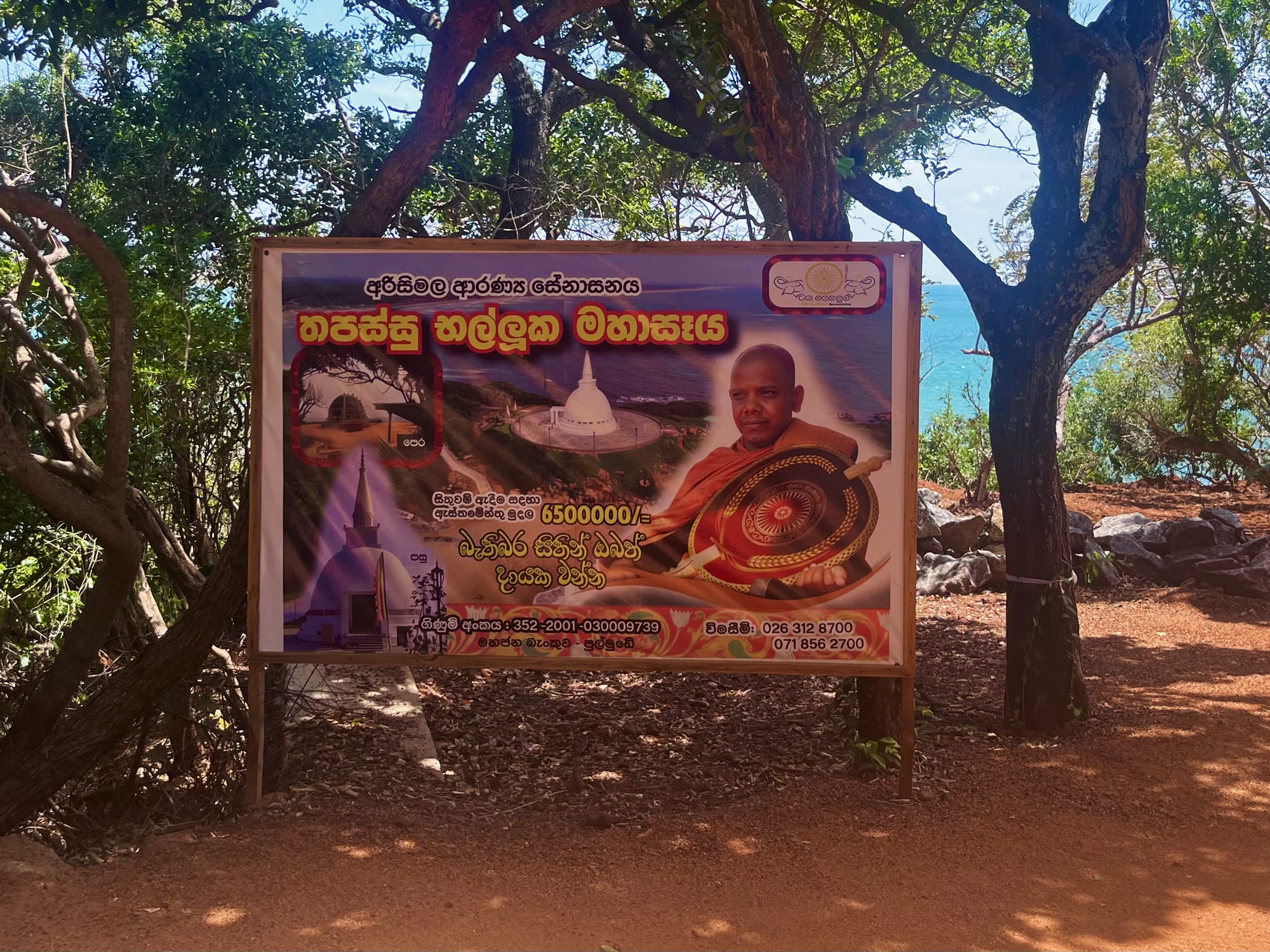
The Arisimalai temple complex is located in a remote, largely uninhabited part of Kuchchaveli. Bare from time immemorial and owned by the state, as the war ended and the area became accessible again, a monk, Panamure Thilakawansha, saw opportunity. Sans proper paperwork or authorisation, he started building a temple on the stunning site in 2012.
He then started formalising his claim. A decade after he started building, Prime Minister Mahinda Rajapaksa, who was also the minister responsible for urban planning, zoned the 271-acre premises as an urban development area under the 1946 Town and Country Planning Ordinance. In the same gazette notification, he directed that a physical plan be prepared for it. Such a plan would specify what can and can’t be done on the land.
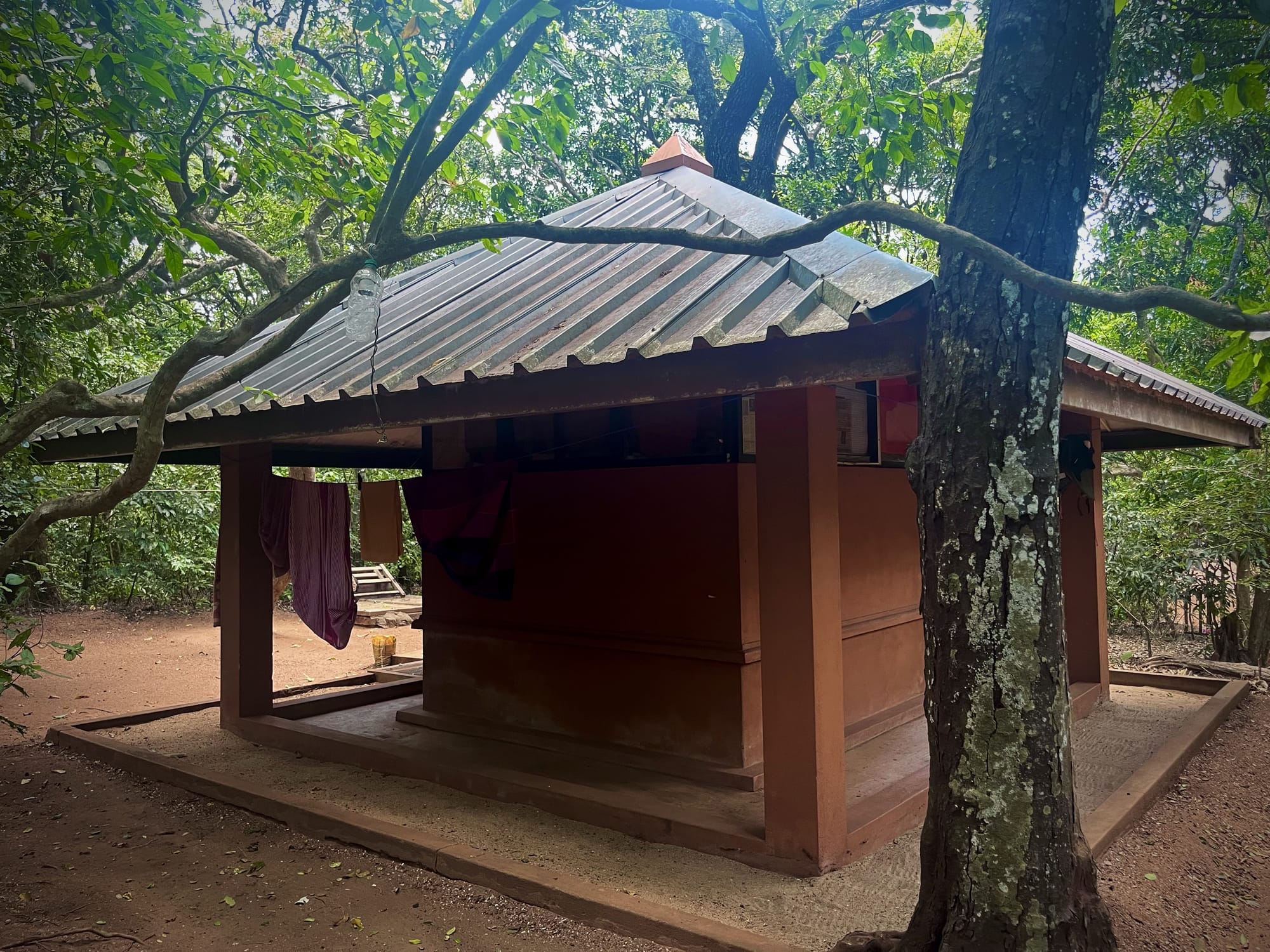
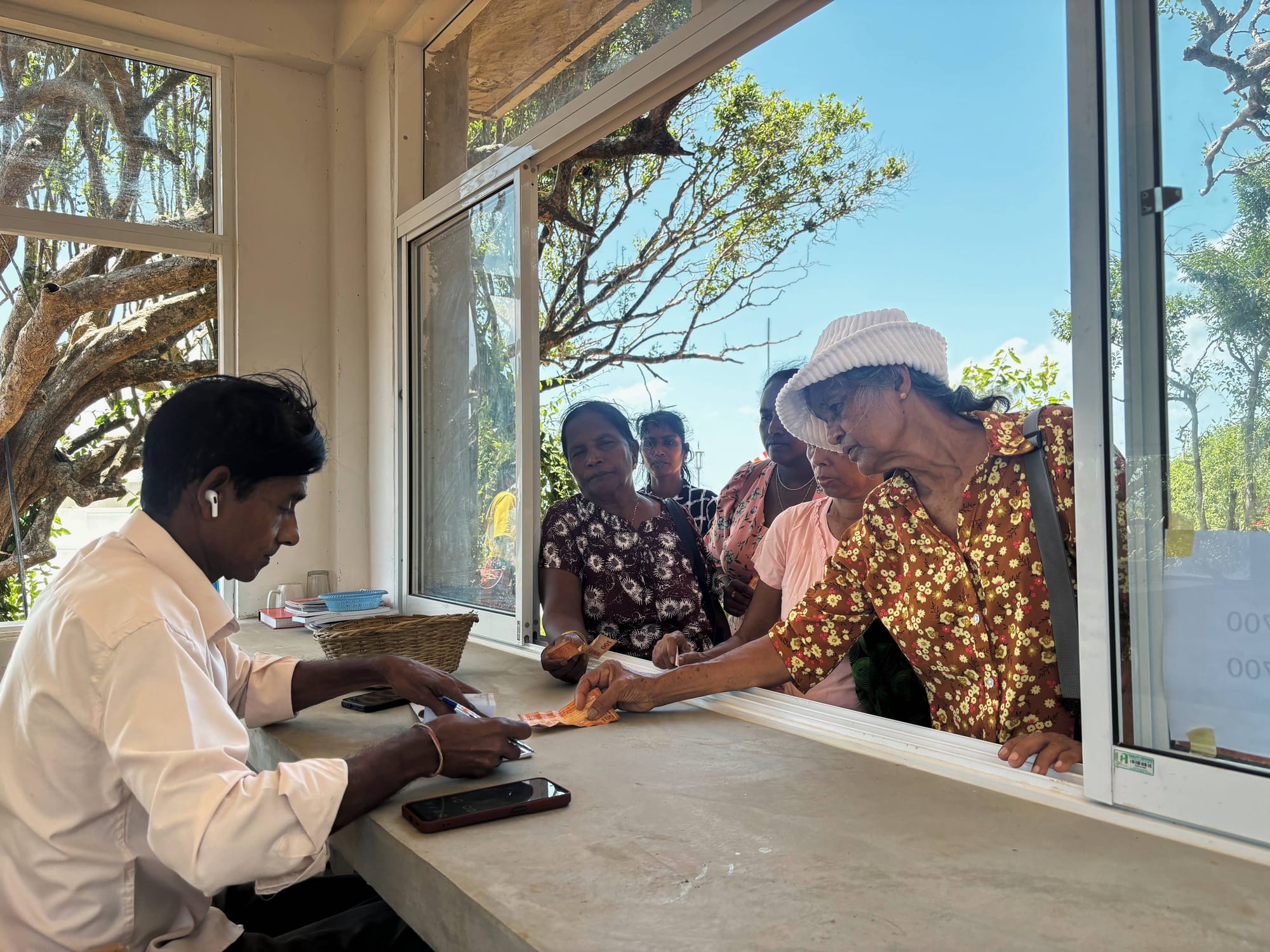
The temple has huts for donors to stay the night and collects 100 rupees from visitors.
This zoning is commonly referred to as a pooja bhoomi gazette when applied to land around religious sites even though the Town and Country Planning Ordinance makes no reference to religion whatsoever.
However, so far, only one of the island’s 166 pooja bhoomi gazette notifications defines the activities the land can be used for: the one for the Anurardhapura Sacred City, which was the first one issued. It took over 40 years for the physical planning department to complete the Anuradhapura plan. This plan includes commercial activities within the zone.
As a result of this vague zoning, in former war-zones, political monks use pooja bhoomi zoning gazettes to claim land ownership and limit others’ use of the land. For in these parts, the rule of law is tenuous: kachcheri and courthouse are often superseded by politicians and brigadiers.
A physical planning department officer said that’s the main reason for monks getting them: they’re perceived to give the monks and their ownership claims legitimacy. It also helps them access the Buddhasasana Ministry’s temple development funds, he adds.
“We can’t argue with them as the gazette isn’t detailed about what can be done inside a pooja bhoomi zone either,” says a local official.
In Arisimalai, citing the temple land’s pooja bhoomi gazette, Thilakawansha stopped villagers from farming, even though they had valid government permits. The Divisional Secretariat estimates that villagers hold over 120 private permits for the land. The monk verbally harassed and threatened them on multiple occasions to drive them out. Thilakawansha could not be reached for comment.
In Kuchchaveli, with the erection of 32 Buddhist temples since the war ended, at least 200 families can’t access their lands due to pooja bhoomi gazettes, the Divisional Secretariat estimates, in an RTI response. Ten of these temples have been zoned as pooja bhoomi townships — nearly 2,000 acres in total.
As the war ended
The Examiner pieced together the pooja bhoomi process from interviews with the Buddhasasana ministry, the physical planning department, and the land commissioner’s department. Save for a small handbook at the physical planning department, none of these departments had circulars, manuals, or other written documents specifying these processes.
Eighty-five percent of the 166 pooja bhoomi gazettes were issued after 2008. This was the year that two unrelated subjects — sacred areas and urban development — were brought under one ministry, right before the civil war ended in 2009.
Prior to this, the Urban Development Ministry’s physical planning department only issued pooja bhoomi zoning notifications for “significant” religious sites like Kataragama and Anuradhapura. Once the sacred areas and urban development subjects were joined in 2008, the department began issuing them for smaller temples too.
Small, insignificant sites
The physical planning department issues the pooja bhoomi zoning gazette, but they do so on the Buddhasasana Ministry’s recommendation. Since any monk can apply, the ministry is constantly fielding applications. There are nearly 175 pending applications.
In turn, the ministry has only two criteria for determining eligibility: recommendation letters from the Divisional Secretariat and Archaeology Department.
This lax criteria meant that even “small, insignificant” sites were zoned as pooja bhoomi, says an officer there. To prevent this, last year the Buddhasasana ministry started mandating that lands zoned as pooja bhoomi be first listed as an archaeological site in the gazette.
More concerningly, the Divisional Secretary’s recommendations are sometimes ignored. When Arisimalai was being zoned, the secretariat didn’t recommend the zoning, writing an adverse report, an official familiar with the matter said. But the gazette notification was issued anyway.
Buddhism’s place in the constitution
Although Thilakawansha built a temple in Arisimalai, chased away villagers, collected donations, and had Arisimalai gazetted as pooja bhoomi, there’s no evidence that he has any ownership claim to the land.