
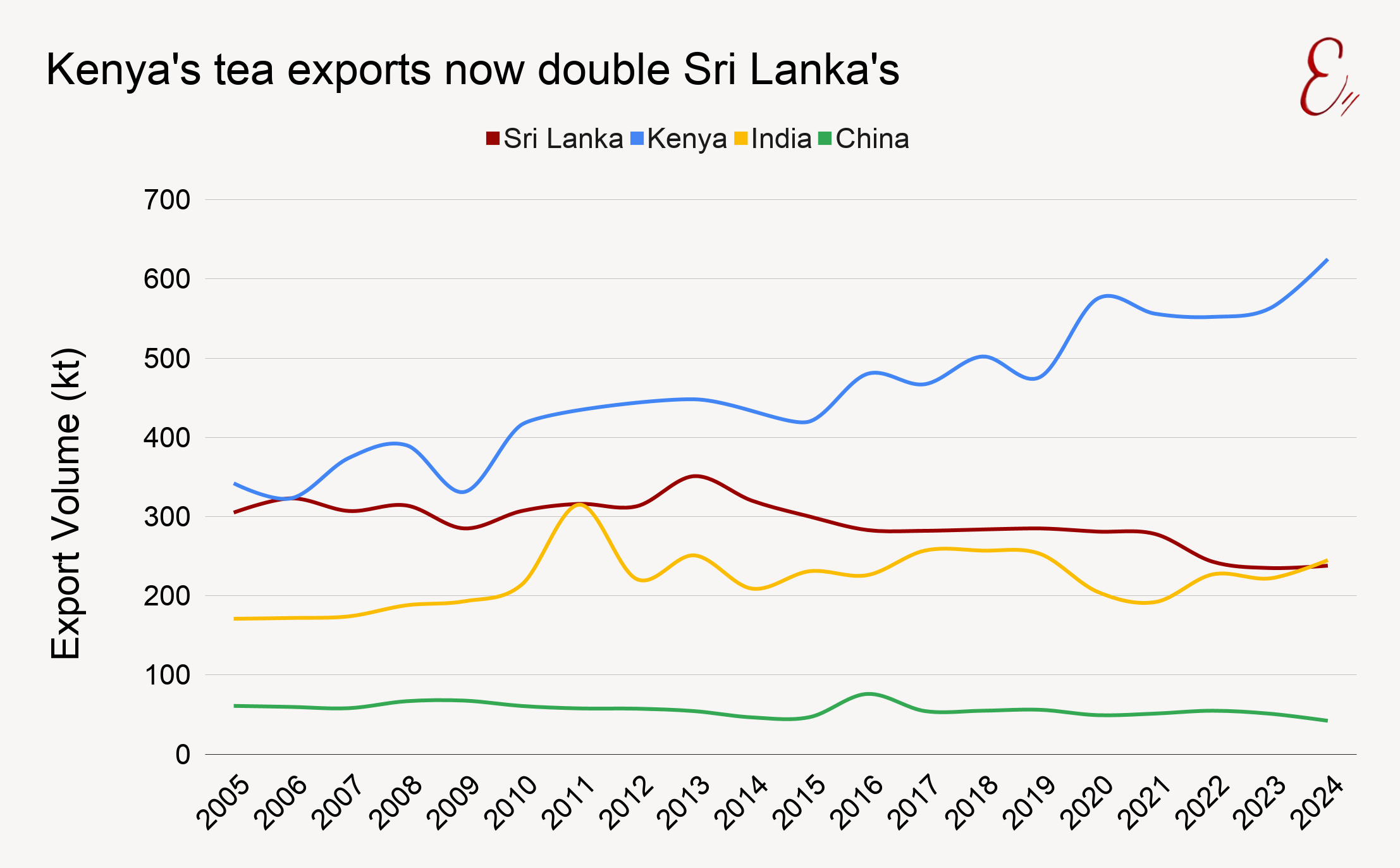
Sri Lanka’s been losing ground in the global tea market for years. Historically the world’s largest exporter of black tea, in 2009 it was overtaken by Kenya. By 2024, India had pushed the island to third place.
Sri Lanka has not only lost market share. It’s also exporting less tea. Kenya now exports twice as much tea as Sri Lanka.
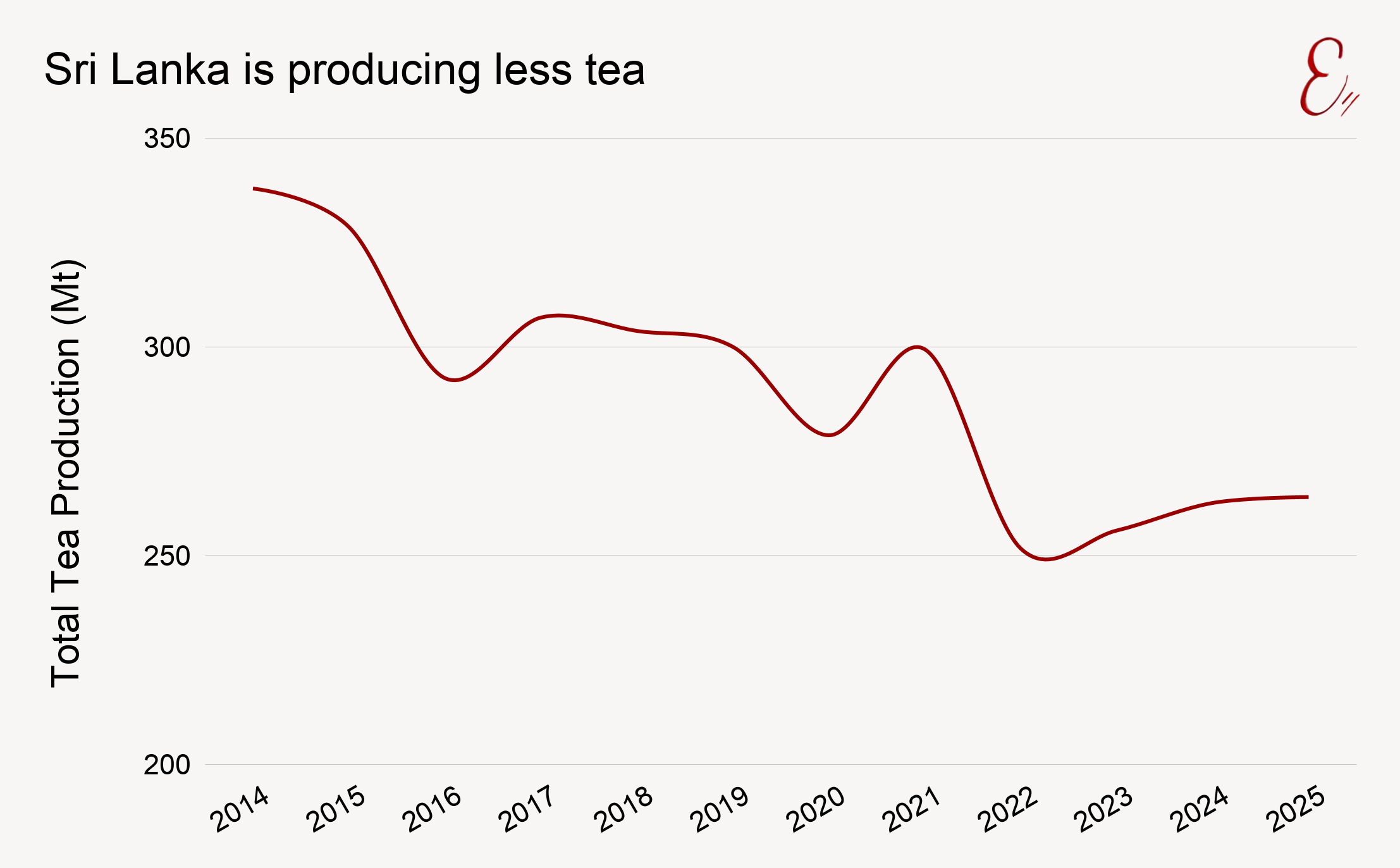
Although the Ceylon Tea brand (a trademark of the government’s Tea Board) continues to command relatively high prices in the international market, the willingness to pay this premium is tied to the quality of Sri Lanka’s tea. Interviews with leaders in the industry suggest that the subtle and sophisticated taste which has long defined Ceylon Tea is under threat from degrading agricultural practices.
Meanwhile as production volumes fall, the cost per kilogramme of tea is rising.
All these issues appear to have a common cause: the tea industry has a labour problem. Labour is the largest cost component in tea, approximately 40% of the total cost per kilogramme of processed tea.
Youth on tea estates are migrating to cities in search of better opportunities, leaving behind an aging workforce. However, only a few plantations are starting to use machines to ease the labour burden.
What does mechanisation look like?
In general, field-level mechanisation has taken two forms: machine assisted harvesting and chemical spraying using drones.
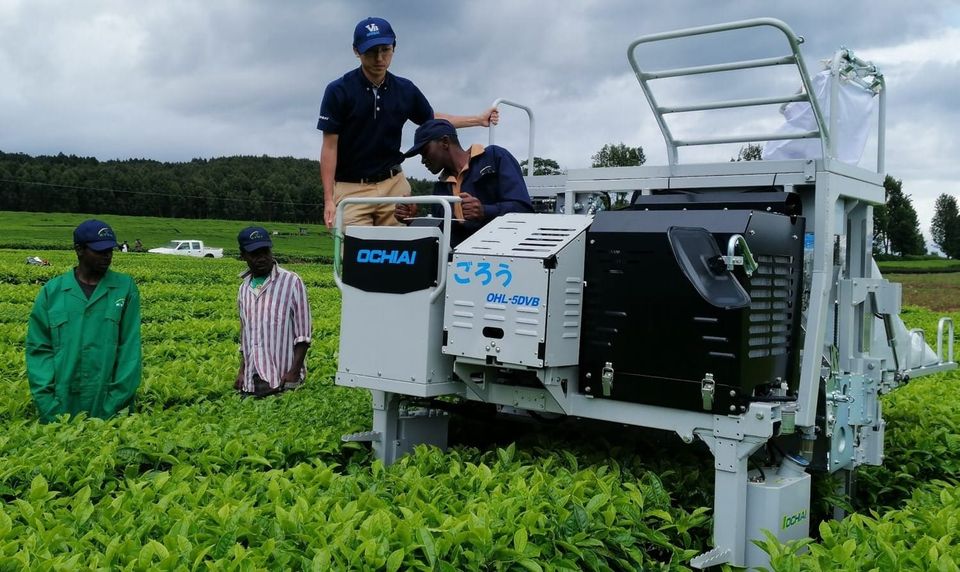
In Kenya large plantation companies have embraced mechanisation, says Paul Ayiemba, an economist at Kenya’s Tea Research Institute. Spraying is done by drones, which replaced aeroplanes in recent years. Meanwhile a lot of harvesting is carried out through giant combine harvester-like vehicles.
Mechanisation is far less widespread in Sri Lanka, although a few plantation companies have begun to change that.
In Sri Lanka, tea is often grown on hilly terrain, even at lower altitudes. This makes it difficult to use ground based vehicles for harvesting, or drones for fertilizer spraying.
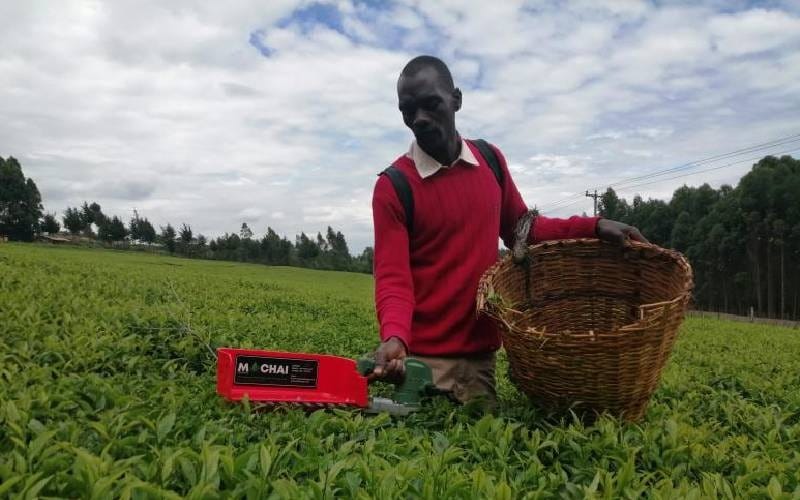
So instead, some plantation companies, like Agarapatana Plantations, are using harvesting machines carried by human operators. Agarapatana, part of the Lankem Group, and one of around 20 regional plantation companies, has over 900 of these machines, said Denham Madena, the company’s CEO.
These battery operated devices contain a motorised blade attached to a tray which mows through the tea bush. The worker then pushes the cut leaves onto a collecting bag. Since these machines are faster than a human hand, a single worker can cover a larger area, enabling estates to manage huge acreages despite a diminishing workforce.
Madena also said that nine of his 20 estates use drones to spray chemicals like fungicide and fertiliser, used to accelerate regrowth after harvesting. However, these drones can only be deployed in select fields due to terrain challenges.
Devaka Dias, who manages a smallholder plantation, designed a few fields in his estate to showcase how mechanisation is viable. He uses large engine powered harvesters, and allocates three operators to each. This machine can cover the entire width of the tea bush, with operators standing on either side.
Typically, although they are faster, given the same area, machines produce less yield than human hands. To try and offset this problem and increase the density of pluckable leaves per bush, Dias grows his tea in a dome shape. But it doesn’t fix the problem entirely. In fact, since Dias was able to find enough workers this season, he’s abandoned his machines, completely shifting back to hand harvesting all his fields — at least for the time being.
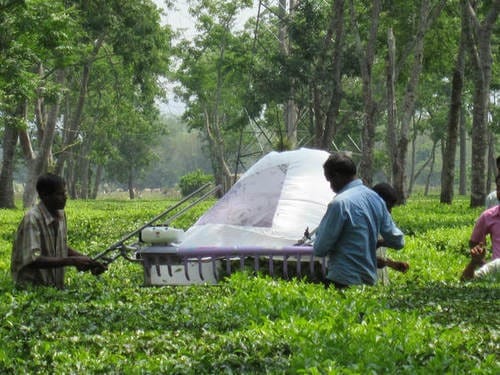
Roshan Rajadurai, Managing Director of Hayleys Plantations, also thinks that machine harvesting is only to be used as a last resort. He said that Hayleys relies on machines for about 5-10% of harvesting but this is often during the peak seasons, when there is more leaf than a team of handpluckers can manage. His priority is maintaining the quality of his harvest and machines make that a challenge.