
The Examiner has more opinions than it has staff. We maintain unanimity in our facts, not the inferences we draw from them. This examination is no exception.
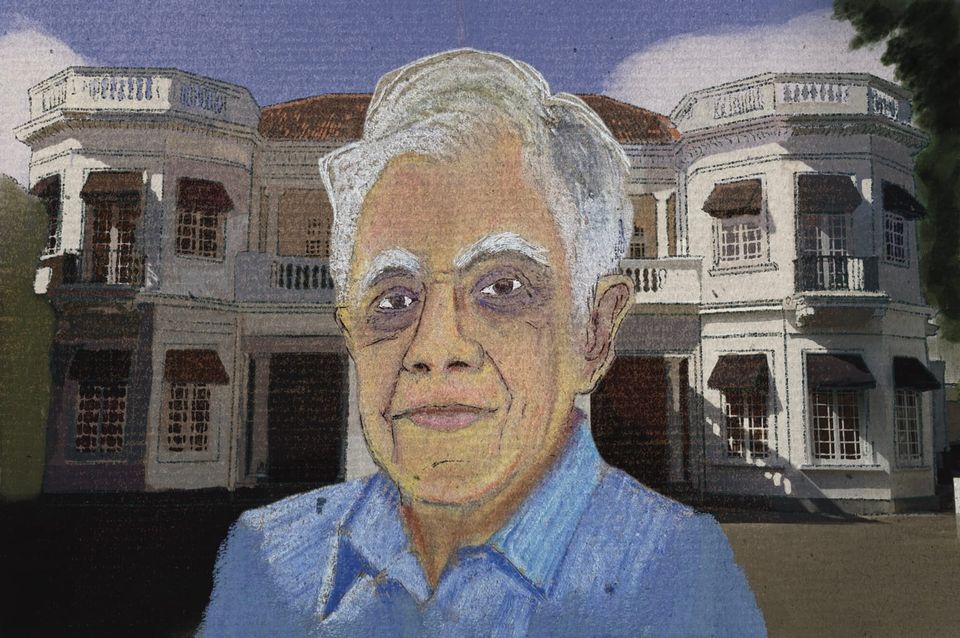
“Tintagel” was Nihal Jayawickrama’s reply when I asked him where we should lunch. I smiled. The former secretary to the Justice Ministry, appointed at the tender age of 33, and now 88, hasn’t lost his mojo.
No restaurant — even Bawa’s studio, now become the Gallery Café — can claim anywhere near Tintagel’s pedigree. It was the home of the three Bandaranaike prime ministers. If the waiters’ intelligence is on point, it will be home to one of them again soon. Yes, Tintagel’s lease is up. Lunch while you can.
I’ve reserved one of two verandah tables, a few meters away from where S.W.R.D. Bandaranaike, the former prime minister, was assassinated by Talduwe Somarama, “a foolish man in robes”. Thinking Jayawickrama is a few minutes late, I wander to the sitting room. But he is waiting for me. I’m surprised that, at 88, he has come alone.
We make our way to the verandah and sit down. I break the ice, asking Jayawickrama when he first came to Tintagel.
Jayawickrama pauses to think, then with twinkling, mischievous eyes, says it was 70 years ago, in 1956. He had come to Tintagel to invite Bandaranaike to speak to the Royal College literary association. Jayawickrama said there was no security, save for maybe a sole policeman at the gate. He had walked to the verandah, and sat on one of the many chairs where the public would sit in the mornings, waiting for the prime minister to talk to them.
Bandaranaike’s response to the invitation had been clever rather than candid. He said it would be a great honour to address the Royal College literary association, and that he would be so happy to drop by. But the prime minister had only one problem: he’d have to go to the one at his own school, S. Thomas’, first. But they hadn’t invited him. Thus nothing ever came of the invitation.
We move on to more important business, lunch. Jayawickrama eschews the wine, we settle on thambili, almost always the best value drink on a Colombo resto menu. A veggie, he orders his usual, the parmesan gnocchi. I’d have ordered the pumpkin gnocchi, for many years my Paradise Road staple, but sadly they dropped it years ago. Good. For having taken up the pen, the purse won’t permit me anyway. Really wishing for Caribbean ox tail, I reluctantly settle for the osso bucco.
I’m too impatient for subtlety, so launch right into one of my burning questions: how did Jayawickrama become both secretary to the Ministry of Justice and attorney-general at such a young age. The answer is found in Balangoda, where Sirima Bandaranaike’s brother contested the 1965 election. He faced a few court cases, but the SLFP was strapped for cash. So, the party asked Jayawickrama to represent him. Jayawickrama went on to represent other members of the Ratwatte family, and then eventually, Mrs. Bandaranaike started consulting him too. He also served as her election agent and ended up drafting her prime ministerial acceptance speech in 1970.
A few days after her victory, Mrs. B called him and asked if he could be the permanent secretary to the justice ministry. Jayawickama said he was a lawyer, not a public servant. She responded:
“No no no no, you had been complaining for a long time that absolutely nothing had been done about law reform. I am telling you now come and do whatever you want to do — all the reforms you have been talking about. You have a free hand; we have got a two-third majority so the legislation can be passed. So come and do that.”
The Justice Ministry secretary’s monthly take-home at the time was around 1,800 rupees, which more than covered the 500-rupee rent onof his Park Road flat. Today, the secretary’s entire salary wouldn’t even pay for half the rent of such a flat.
Jayawickrama’s work was cut-out for him. The tale sounds familiar. The civil procedure and criminal procedure codes — the backbone of court work — were from 1880. Two distinguished commissions, chaired by Justices Noel Gratian and C. Nagalingam respectively, had already figured out what needed to be done. They produced “excellent reports” but “no government had done it”, Jayawickrama said rather ruefully.
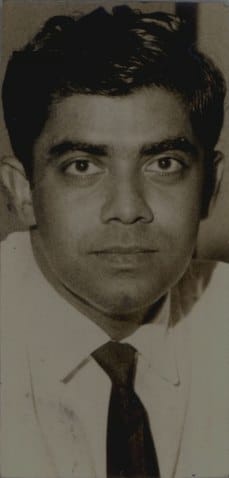
When the attorney-general died, an acting attorney-general was identified. But he had to finish some cases he was presiding over. As the country needed to have an attorney-general, Bandaranaike appointed Jayawickrama to the office on his 33rd birthday. His contemporaries were the most junior state counsel. It was not a friendly atmosphere. Luckily for him, he had friends who warned him of the files which contained traps and snares.
He set up a research division in the Justice Ministry for law reform, consisting of five or six bright young things. The division included Dhara Wijetilleke, who became the planning ministry secretary, Suri Ratnapala, who became a distinguished constitutional law professor, and Priyani Wijesekara who became the Parliament’s secretary-general.
Unclogging justice
This team was the moving force behind the Administration of Justice Law of 1973, which overhauled the justice and courts system.
Among the many changes brought by the act was a recommendation from the Gratiaen Commission of 1952. The attorney-general's role was almost bifurcated by creating the office for a director of public prosecutions.
The key reason Jayawickrama pushed this initiative through was to de-clog and speed-up the justice system by eliminating “non-summary proceedings”, where the police would present evidence to a magistrate to decide which court would hear a case. The public prosecutions director would instead direct the police’s inquiry and decide whether to file a case in the magistrate’s court, or at a higher court.
The team also introduced pre-trial conferences for non-criminal cases and mandated day-to-day hearings for trials, with postponement only granted in the event of family bereavement.
These initiatives faced massive protest from the Bar, as they “would change their lifestyles” and affect them financially. Not all his reforms succeeded. When he tried to regulate lawyers’ fees, the cabinet paper leaked and a lawyer representing the prime minister barged into Temple Trees, left his briefs on the breakfast table, said “you appear for yourself”, and went off. Mrs. Bandaranaike told Jayawickrama to withdraw the cabinet paper.
The Bar also refused to participate in the legal aid scheme. Jayawickrama’s response was to say that he would create a brigade of “barefoot lawyers” like barefoot doctors. Years later he said the proposal wasn’t a serious one, the remark was made in terrorem, meant to frighten the bar into becoming more generous with legal aid.
He added that it wasn’t only the bar which resisted reform, it was also the bench. The government’s reforms had provided a non-mandatory provision that, like the US Supreme Court, oral submissions would be limited to 30 minutes and the rest argued through written submissions. However, the chief justice refused to abide by this, saying he would give the parties as long as they liked.