The Examiner has more opinions than it has staff. We maintain unanimity in our facts, not the inferences we draw from them. This examination is no exception.
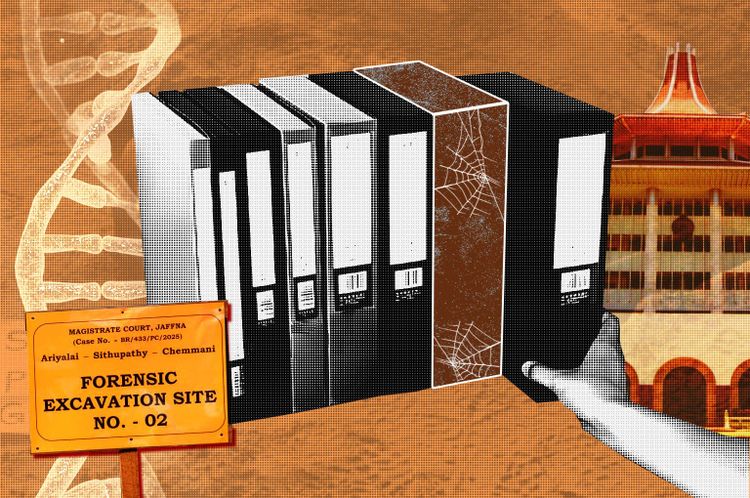
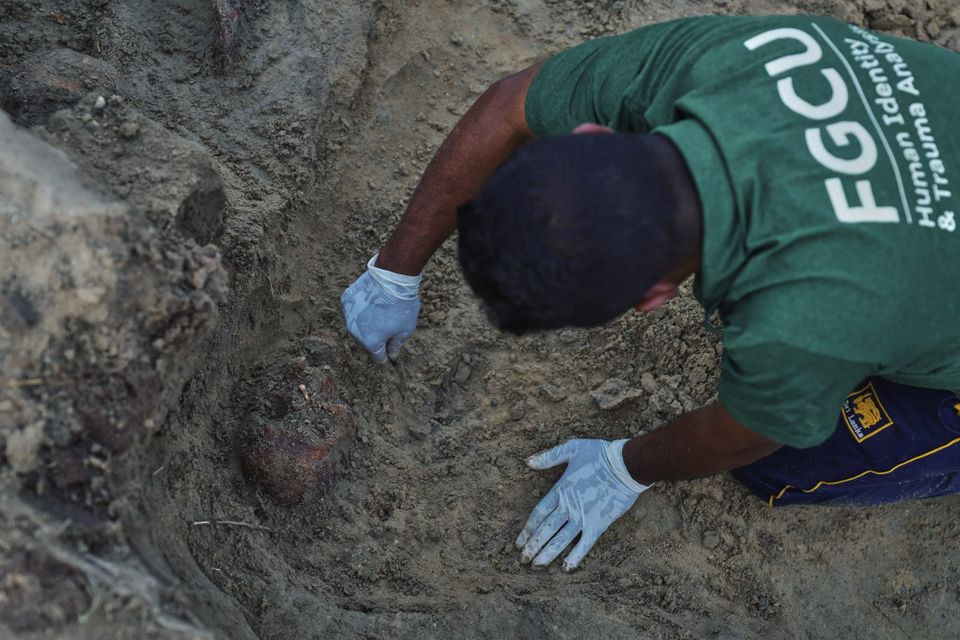
CID officers yesterday asked the Jaffna Magistrate’s Court for permission to proceed with carbon dating of bones found at the Chemmani mass grave site. Over 570 skeletons were exhumed between May 2025 and October 2026. Hundreds are believed to have been buried in Chemmani following roundups and arrests by the armed forces in the late ’90s.
Why radiocarbon dating is unreliable
Sri Lanka is virtually the only country where courts and investigators use radiocarbon dating on bones from suspected late-20th-century conflict graves. Almost all countries rely on forensic anthropology instead, such as dating remains based on physical artefacts found around them. Radiocarbon’s misapplication often reclassifies suspected mass grave sites as historical burial grounds, effectively stalling criminal investigations.
There’s more than one way to determine how long ago a skeleton was buried. Standard carbon-14 dating, commonly known as radiocarbon dating or simply carbon dating, is widely used in archaeology. But it isn’t typically used for dating clandestine graves suspected to be from the last century or so.
“Standard C-14 doesn’t work for recent bodies,” says Melissa Connor, emeritus professor of Forensic Anthropology at Colorado Mesa University. Connor was part of a team of international observers who advised Sri Lanka’s forensic teams in 1999 when they were excavating the Chemmani mass graves in Jaffna. At the time, authorities opted for artefact identification and DNA profiling of the recovered skeletons.
“The C-14 method works for materials only from roughly 100 to 60,000 years old,” she explained.
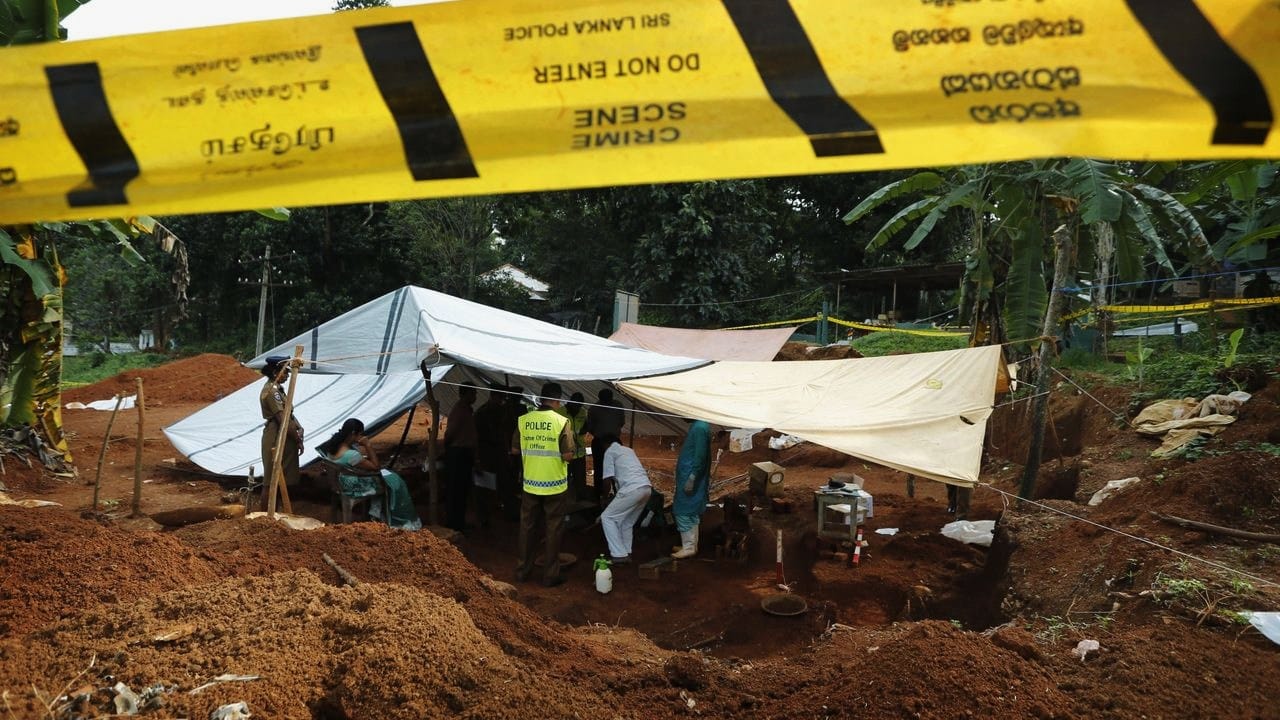
So investigators often rely on clues at the site itself. Connor says artefacts are a good guide to when someone died. Dates on coins, clothing styles, synthetic fabrics, hairstyles, and the type of amalgam in dental fillings can help date a site. Vegetation growing over a grave is also used, since botanists can work out how long a tree or bush of that size takes to grow. Satellite and aerial photographs can show when the ground was disturbed.
Mass grave dating around the world
In fact carbon dating isn’t a commonly used method for contemporary grave sites at all. In Bosnia, investigators used botanical and geological clues to date mass graves, and then followed up with DNA matches with living relatives.