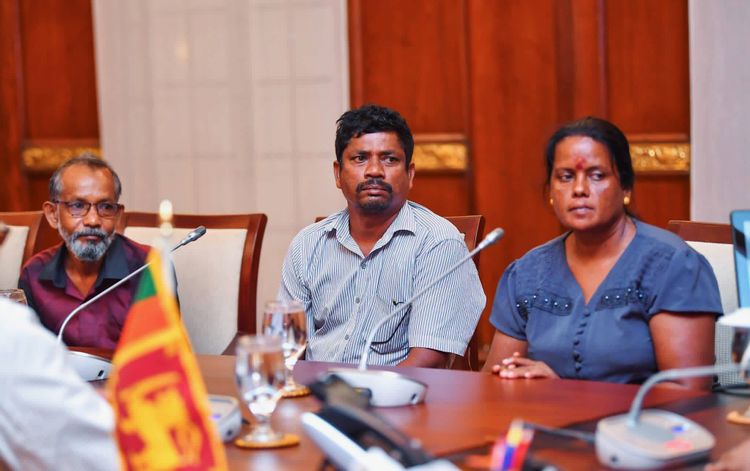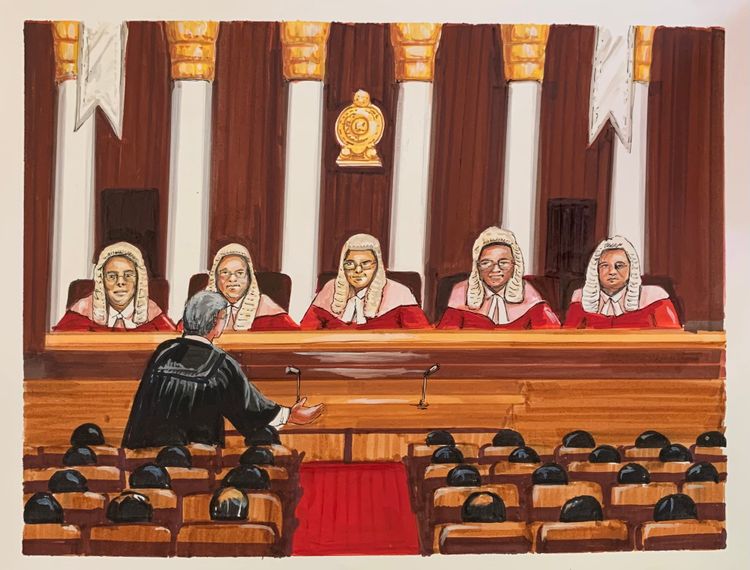
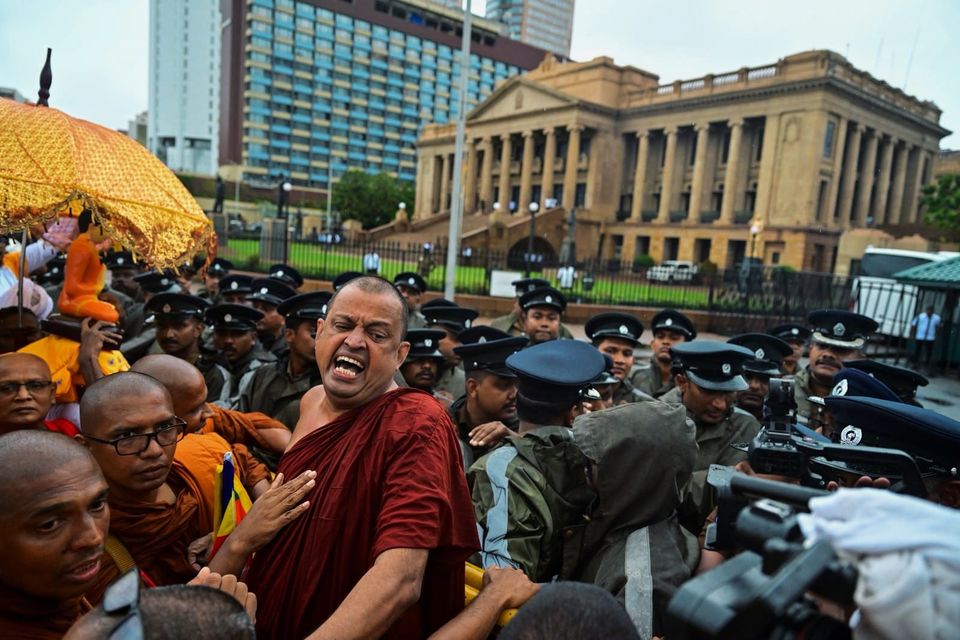
Convicted monks will no longer always have to wear prison garb when attending court. The government is amending prison standing orders to allow monastic orders to determine whether a convicted monk appears in robes or prison garb.
These draft amendments, which apply similarly to men-of-the-cloth from all religions, don't change the standing orders for what convicted clergy must wear inside the jail.
The amendments are being introduced as a caravan of Buddhist monks set out on a protest march from Kandy to Colombo demanding “justice for the robe” last Sunday. They are outraged that Galagoda Aththe Gnanasara, the controversial Buddhist monk, was brought to court in the lay court dress, rather than saffron robes.
Gnanasara is currently serving a six-year sentence for contempt of court. He was convicted for his unruly behaviour at the Homagama court in 2016.
The protestors reached the Presidential Secretariat yesterday, and some monks camped outside overnight. Two laymen have been arrested and the police obtained a court order restraining 54 people protestors, including Ulapane Sumangala, a key organiser.
The protest march, called a walk for freedom by the organisers, prayed that President Anura Kumara Dissanayake’s false beliefs (mithya drishti) be dispelled and that Gnanasara be granted an “unconditional” presidential pardon.
A loudspeaker invited protestors to carry a national flag for the nation and the Buddhist flag for Buddhism. When they reached Galle Face Green, one protestor carried the Ceylon flag of 1948, without the stripes representing minorities or the Bo leaves.
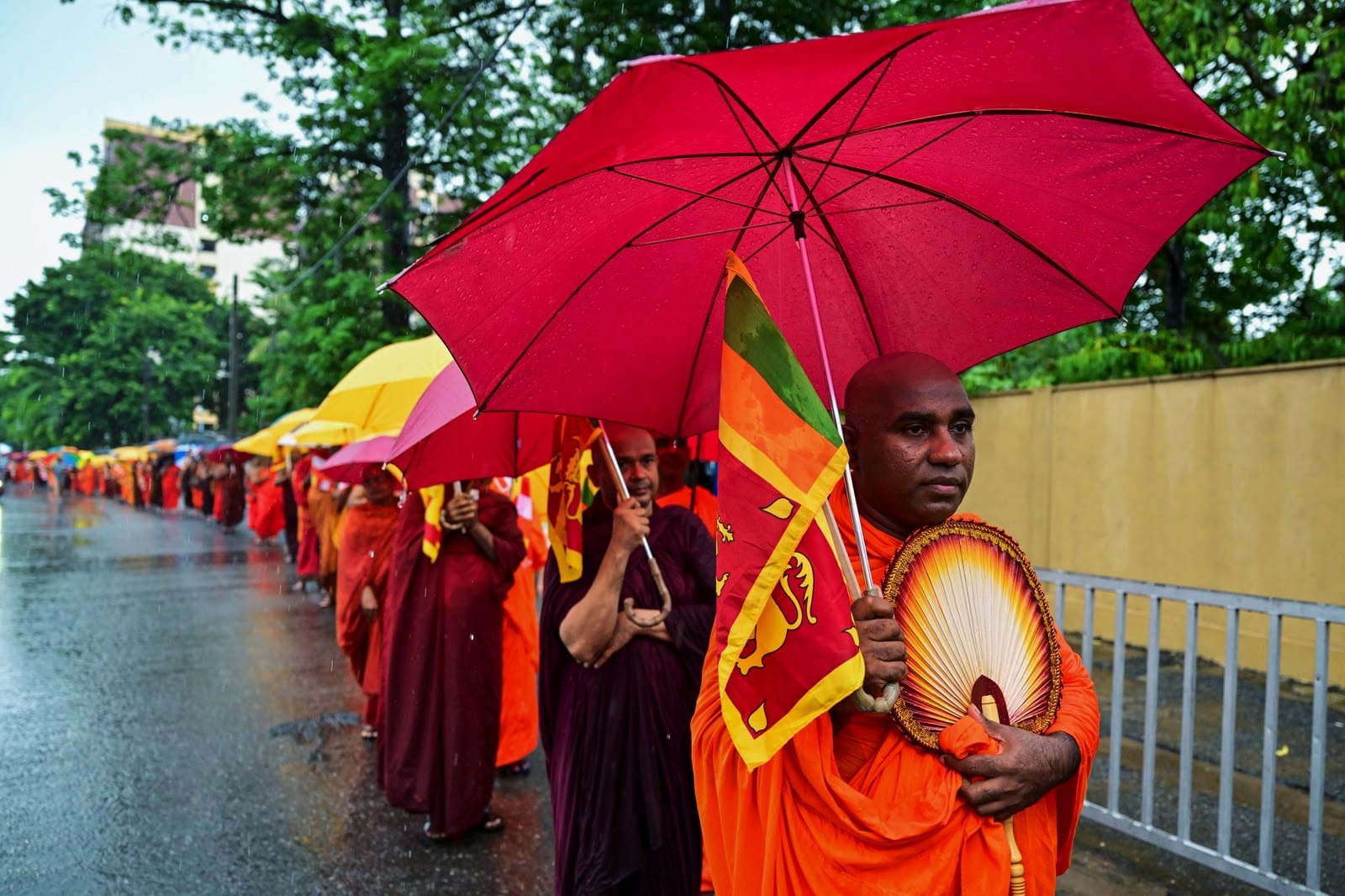
Lay participants loudly criticised the government for being anti-Buddhist and proclaimed that time had come to send it home.
Only monastic order can disrobe a monk, they believe. However, according to the vinaya, the Buddhist rules of monastic discipline, even they don’t have such power. Disrobing is an individual monk’s choice.
When Dissanayake met representatives from the three Buddhist monastic orders of Siam, Amarapura, and Ramanna on October 8th, he claimed the removal of the imprisoned monk’s robe arose from “outdated” prison standing orders.
“These provisions do not fit the times. It could even be that when they were written, it wasn’t expected that monks would be sentenced,” Dissanayake told the monks. He promised to amend the regulations in a fortnight.
The draft circular requires the prisons’ commissioner to notify the Buddhist Affairs Department when a Buddhist monk is convicted and imprisoned. The commissioner general of Buddhist affairs, on the advice of the monastic order concerned, then determines whether the monk will wear robes or not when appearing in court. A similar process will be put in place for clergy from other faiths.
The three monastic orders had earlier written to the prisons’ commissioner, saying they wanted to decide on what convicted monks could wear.
Mahawela Rathnapala, deputy registrar of the Siam Order’s Malwatta Chapter, explained to The Examiner how orders would arrive at such a decision. Once they’re informed of a conviction, the order would convene their council. The council will decide whether the crime is one that severs his monastic status. If it is, then the monk won’t be allowed to wear the saffron robe.