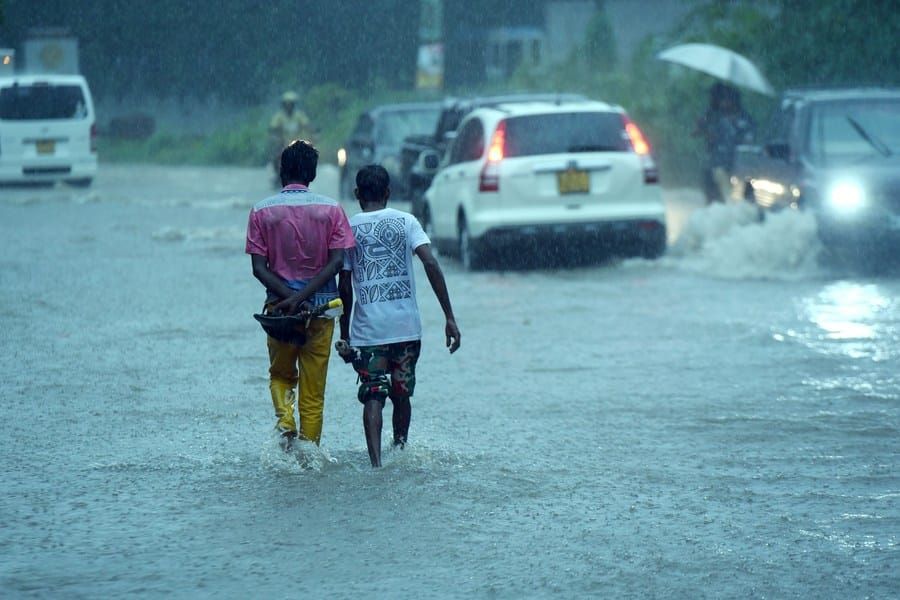
El Niño is here. But the last few days of rain, that left eight dead, was the Southwest Monsoon. The Meteorological Department says rain will ease from Monday.
In May, the department predicted the monsoon would be dryer because of El Niño. This wasn’t the case. The Madden-Julian Oscillation, a wave of clouds, rain, and wind that circles eastward around the equator every 1 to 2 months negated its impact, explained Charitha Pattiarachchi, professor of coastal oceanography.
El Niño is intensifying. Its peak spell will be between August and October, and should persist into early next year at least. But in October and November, Pattiarachchi expects another weather phenomenon — the Indian Ocean Dipole — to override El Niño’s drying effects. For the rest of the year, forecasters predict a positive Dipole, which leads to heavy rainfall and higher flooding risk.
Sivananda Pai, the head of Chennai’s Regional Meteorological Centre, agrees. He thinks Sri Lanka will have a “second winter” in these months, followed by an El Niño-induced dry spell at the start of next year. The Disaster Management Centre says the dry spell will last till April.
Pattiarachchi is more cautious. He thinks it’s "very hard to think what will happen in January, February" or further into 2027. Nature remains unpredictable. Analog forecasting, which looks at previous events to predict future ones, isn’t a perfect science. He’s briefing Parliament’s climate caucus today.
The last time El Niño strongly affected the island was in 2016 and 2017. Flooding and landslides, followed by a severe drought, affected two million people. Between 1997 and 1998 one of the most powerful El Niño’s in history, combined with a negative Indian Ocean Dipole, raised ocean temperatures bleaching and killing coral reefs around the island.
What is El Niño?
El Niño and La Niña climate effects in the Pacific Ocean affect weather around the world. The most impacted areas are Peru, parts of the United States, and Africa.
El Niño de Navidad, as Spanish-speaking Peruvian fishermen initially called it, hit their western coasts in December, leading them to name it after baby Jesus Christ. Peru just started preparing for it, saying they should have started earlier.
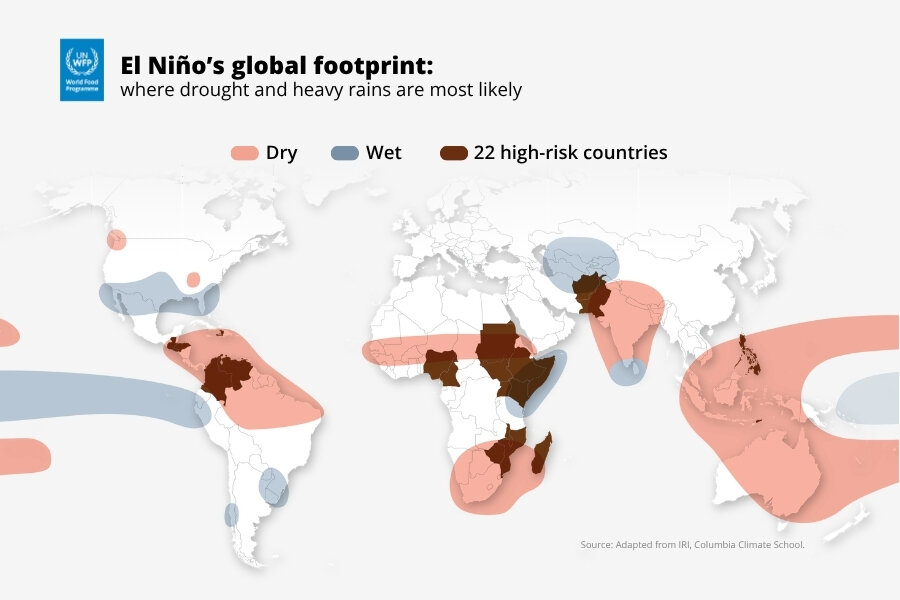
Pattiarachchi, who studied the phenomenon for 40 years, calls it a seesaw-ing of sea surface temperature between the eastern and western Pacific Ocean. He dismissed terms like "Godzilla" and "super El Niño" as "media hype”, and thinks these labels mislead the public to attribute almost any weather event to El Niño. In Deniyaya, for instance, lenders stopped lending to small planters citing El Niño.