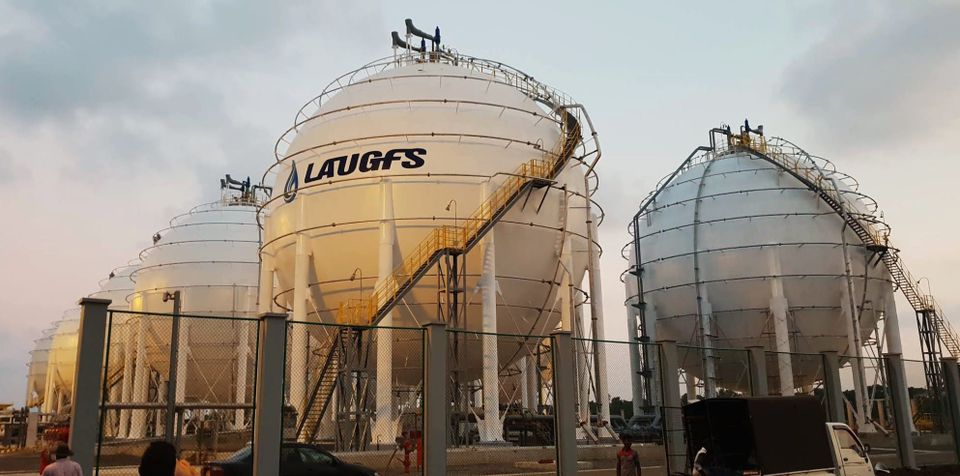
Gas has been in short supply since September. The government’s Litro, which usually commands around 80% market share, faced a two-day shipment delay in mid-October. But Laugfs Gas’ shortages have been more persistent: they’ve struggled to supply even half their usual volumes in recent months.
As a result, Litro now supplies 90% of the market, said Channa Gunawardana, Litro’s chairman. Most of their new customers are from manufacturing industries, which is Laugfs’ main client base.
Laugfs uses both the Hambantota and Colombo ports to offload LPG shipments. Its Hambantota port terminal enjoys BOI tax breaks and has export conditions which Laugfs hasn’t been able to meet. As a result, LPG’s release from the terminal into the domestic market has been restricted.
On November 3rd, Laugfs announced three shipments of gas would arrive from last Thursday onwards, including one shipment to Colombo. Distribution will begin, “subject to shipping arrangements, port operations, and applicable regulatory approvals”, Laugfs noted. They’ve also requested temporary permission to discharge LPG from their Hambantota terminal.
Why did Laugfs increase prices?
A week ago, Laugfs Gas steeply increased the price of a normal 12.5kg domestic gas cylinder by 36%, from 4,965 rupees to 6,740 rupees. Litro prices remain the same. After the Consumer Affairs Authority intervened, Laugfs halved their price hike five days later. A Laugfs cylinder now sells at 5,995 rupees.
Nalinda Kurukulasooriya, Laugfs Gas’ CEO, justified the hike to the press. He said LPG prices surged after the outbreak of war in the Gulf. Higher freight charges and insurance premiums under wartime shipping conditions also contributed to the additional 1,769-rupee cost of supplying a cylinder, he added. The rupee’s depreciation and higher interest rates on Laugfs’ loans also played a role.
“But we didn’t increase by 1,769 rupees, only by 1,775. This is a breakeven price, not a profit-making price,” Kurukulasooriya told reporters.
He acknowledged that consumers could struggle but said the company answered to its shareholders and lenders, and could not keep selling gas at a loss.