Dengue cases are surging, on the back of monsoons and Cyclone Ditwah. But doctors hope that with new remedies future epidemics may soon be swatted away. Sri Lanka is not far from biologically engineering mosquitos so that they aren’t easily able to carry dengue, chikungunya, and other viruses.
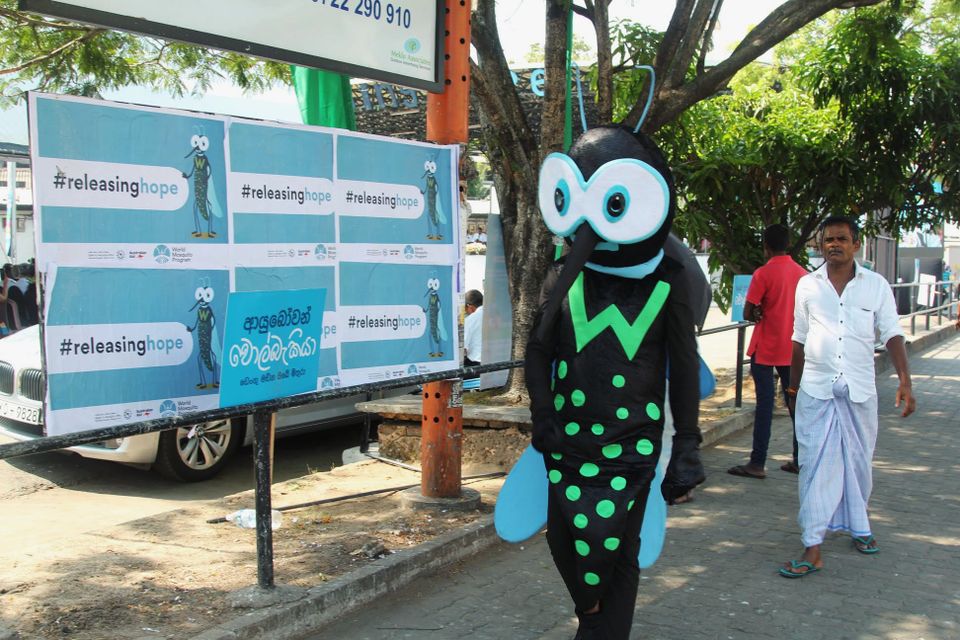
The National Dengue Control Unit, a health ministry agency, is awaiting Colombo Municipal Council approval to release mosquitoes infected with the Wolbachia bacteria.
The bacteria, present in 60% of other insects but not the dengue-carrying mosquito, deprives the dengue virus of nutrients and boosts the mosquito’s immunity. Once a mosquito carries the Wolbachia bacteria, so do its offspring.
Countries which released Wolbachia mosquitoes reported far fewer dengue cases. In Australia’s North Queensland, where the first Wolbachia mosquitoes were released, dengue has essentially been eliminated as a public health concern, with zero local outbreaks recorded for years.
Following Wolbachia method pilots in Colombo North and Nugegoda from 2018 to 2021, the dengue control unit applied for Colombo Municipal Council approval two months ago. Following council approvals, a factory will be established to breed Wolbachia mosquitoes that will be released to Colombo municipal and Dehiwala-Mount Lavinia areas.
“We are thinking of expanding it even further to cover the whole country; at least the areas that report high incidences of dengue throughout the year,” added Kapila Kannangara, the dengue control unit’s director.
Radiation control
In parallel, the dengue control unit is also implementing a Sterile Insect Technique, SIT, programme with Kelaniya University. The pilot, done in 2021, was successful, and authorities are awaiting equipment to roll out the initial phase soon.
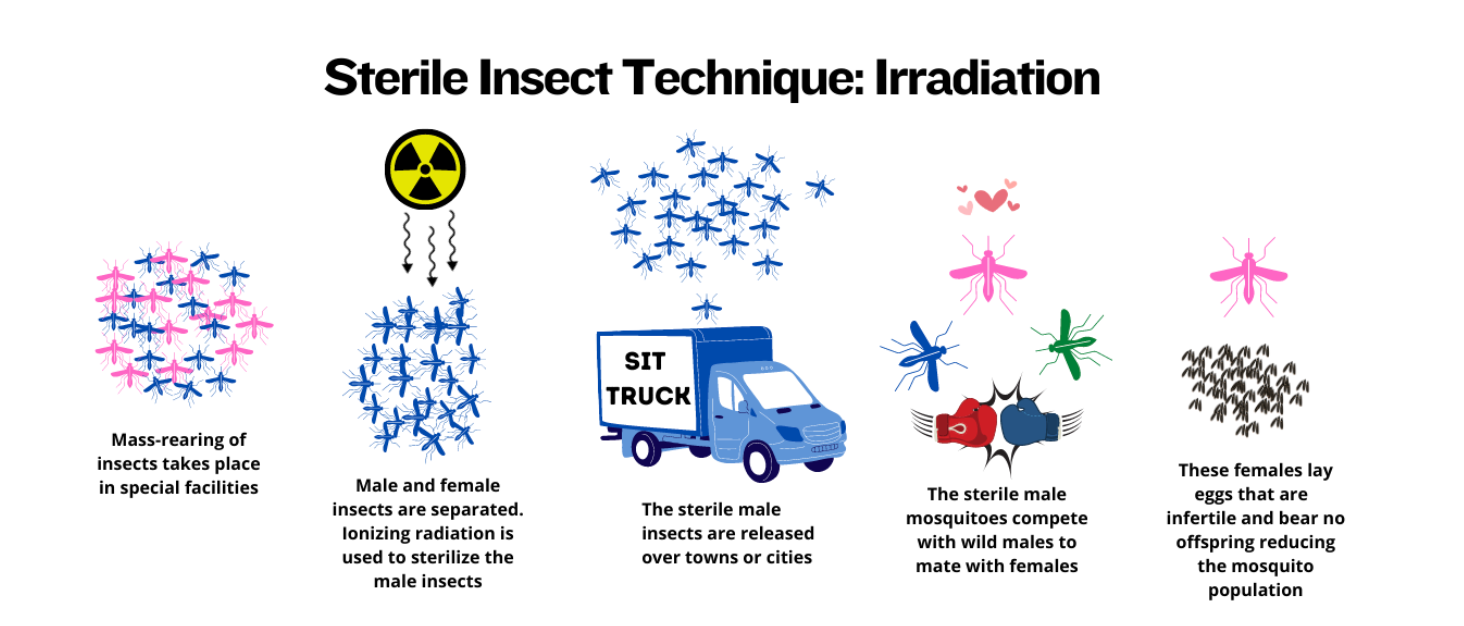
The initial phase of SIT — which controls mosquito density and population — will cover 600 hectares in Kelaniya.
Colombo district, worst-hit
But while the country waits for these breakthroughs, it is currently facing a dengue epidemic with over 42,000 cases and 27 deaths recorded in the first half of the year.
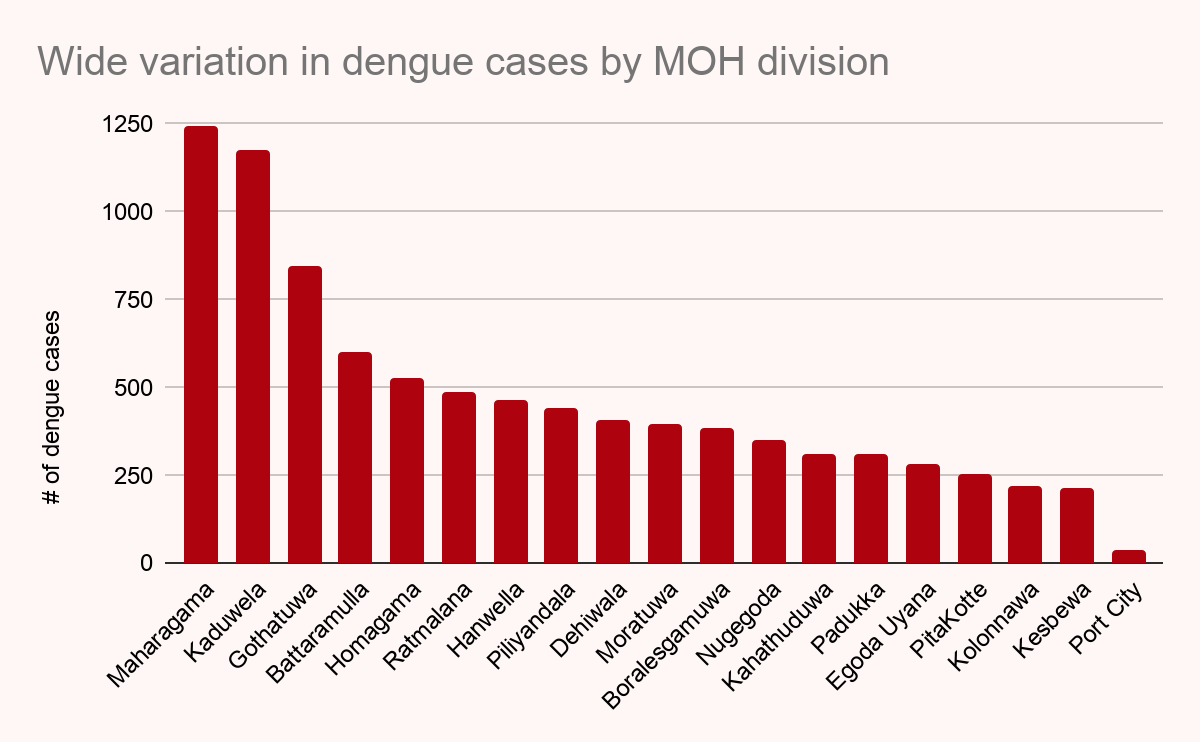
Last year there were only around 51,000 dengue cases. But in the first half of this year alone, nearly 50,000 cases have been reported.
Cases rose rapidly in June, and authorities are now worrying. The serotype-2 strain that’s circulating this year, last made a major appearance in 2017. Since that was nine years ago, doctors suspect the population is no longer as immune to it as in the past.