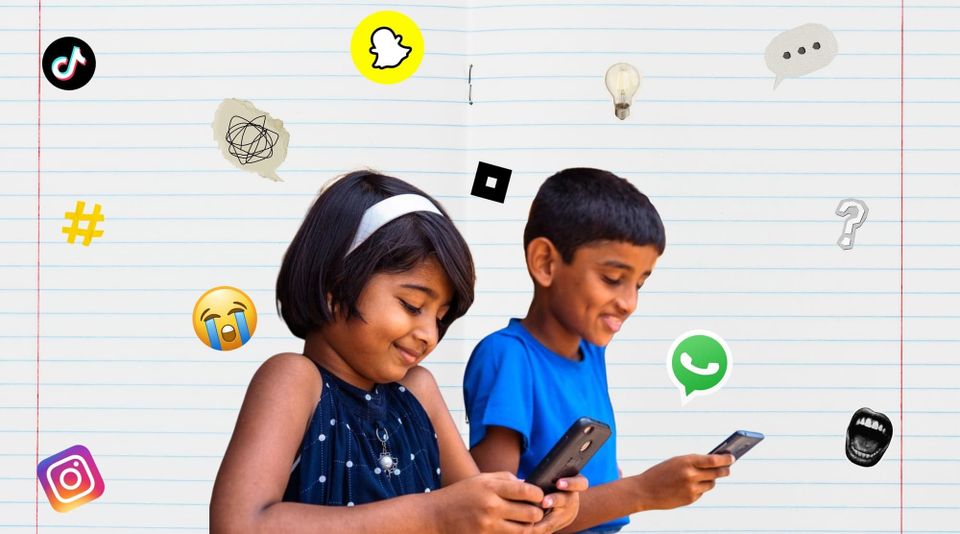
Sasha Perera, 13, explains why apps are better than board games. “It gets recorded instantly,” she says. “If you write scores on random papers they can fly off in the wind.” She isn’t wrong. Data recorded on apps stays with us, like it or not, for a long, long time. And around the world — and lately in Sri Lanka too — parents and governments are asking whether such a powerful tool should be in the hands of children at all. They’re plotting social media bans and restrictions for kids.
At least in Colombo’s elite schools, children are worried. I asked students from Colombo International School, Lyceum, Asian International School, Ladies’ College, and Elizabeth Moir about the impending ban: “what would you do if it all went away? If you woke up, and there was no social media?”
Social media addiction
The short answer, from the eight to 13-year-olds, was: “be extremely upset.” The longer answer was more interesting. “Everyone has TikTok, YouTube, and Instagram,” Aniela Rajenthiran, 11, told me with the gravity of a diplomat. “I would feel like a loser definitely without…I wouldn’t know how to handle it.”
Adults think they know what their children are doing. Often they don’t. Parents consistently underestimate their children’s use. Most children I interviewed are on TikTok, YouTube, Instagram, and WhatsApp. Some also said they are on Snapchat, and a 12-year-old said he plays games with friends on Roblox. “Board games are for old people,” he added. Instagram and TikTok are the most popular apps. Facebook didn’t even get a cursory mention.
Although Instagram is one of the most popular apps, teenagers don’t actually post, because they’re scared of the permanency. Instead, they prefer the 24-hour story, and closed TikTok accounts with only a few of their closest friends. Younger children, 11 and 12 year olds, on the other hand, are usually avid posters.
Sri Lankan children’s social media usage is a mixed bag. Yuvin Fernando, ten, told me his feed was full of bad news, and that this was, on balance, a good thing. “Parents don’t like to share those things,” he said. “So it’s a good way to learn about it.”
Ayan Farook, 12, and Senal (name changed), 16, both remarked that it was important to be available constantly as otherwise you’d miss liking a post at the “right” time or commenting when “everyone” else was on. “Social media is for being social,” Sabrina (name changed), 14, said emphatically, pointing out that yes, people get sidelined, or left out and feel depressed if they aren’t tagged in a post. But you get over it at some point, she said stoically.
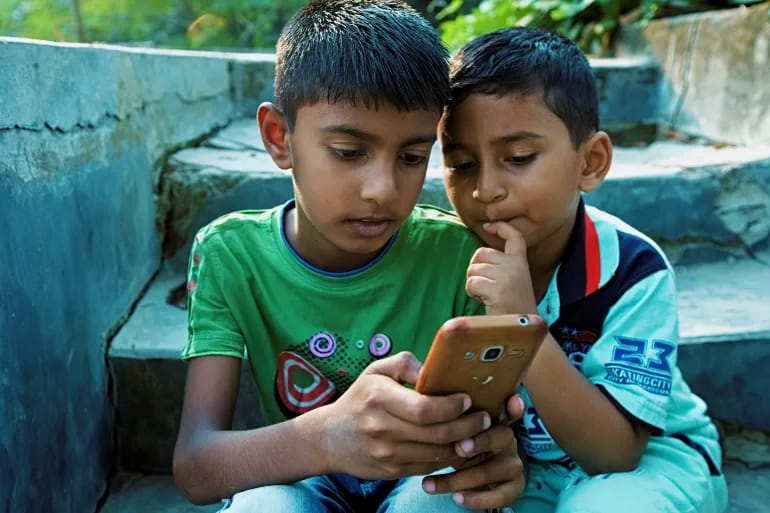
Senali Paranavitarana, 17, said that even if social media access was removed from the under-16s it wouldn’t be that bad. Kids would still be able to communicate by playing games online and using the in-game messaging app. She pointed out that this is actually more inclusive than traditional social media, and makes it possible to bypass the friction of organising in person: “just when you feel like it, you get on the app, connect with the squad and whoever is free is on, and you play.”
TikTok trends are also a big part of children’s social media use, essentially replacing playtime. While phones are banned during school, any chance after school is used to make the latest TikTok trend, and often to do so together with friends. This has sometimes caused problems for teachers. At one school “six seven” — a viral catchphrase that means nothing at all — was banned after a student said it at assembly in response to a question about how many cancer deaths took place in the last month. Other trends too have been banned by schools, to cope with the huge influence of social media on school life.
Teachers noticed that younger children are now heavily on the apps. “There’s no difference between under-13s and teenagers,” said Palitha Gunaratne, a history teacher. “They all use it as much as they can.”
Parents find daily life with app-using teenagers challenging. “Definitely in bad moods, never talking, heads looking down all the time, plus getting angry for the slightest thing,” Peter Ranganathan, a parent, told me. “It can’t be only hormones. It is definitely the effect of social media.”
Several parents talked about how their family time with their teenagers has changed forever with the advent of social media. “Just when my child is learning so much about himself — what he likes, dislikes, what is good, what is bad, then the main influence becomes the social media, and not the family,” mourned Sasala Wijemanne. She has three teenagers and worries how best to parent them in this transient digital landscape. It is a whole new world that parents must navigate carefully. Globally, parents have been strong advocates for social media bans, with nine in ten British parents advocating for one.
Social media v algorithmic media
But the case for banning isn’t primarily concerned with social media’s negative influence, but rather with addiction.
Teachers expressing a view from inside the classroom identified Covid-19 as the time when social media became “a way of life”. The published evidence agrees: children’s daily screen time rose by nearly two hours during the pandemic and continued after it ended. Huge chunks of time that are disappearing into thin air, as teenagers eat up the gigabytes available to them.
As with all addictions, it’s easy for a heavy user to perceive themselves as indulging but moderately. Perspective is skewed, or completely lost. Hansini Kulatunga, 15, was the only respondent who admitted to not knowing. “Lost track,” she said. “I don’t know. Maybe six, seven hours?” A few others claimed “a few hours a day, max”, "I have no time so I scroll only before bed”, or “screen time counters say a lot but that doesn’t really mean anything as it includes all the research I have to do”.