
The Examiner has more opinions than it has staff. We maintain unanimity in our facts, not the inferences we draw from them. This examination is no exception.
Aruna Jayasekara, the deputy defence minister, will represent President Anura Kumara Dissanayake at the National War Heroes Commemoration, read a Defence Ministry press release last year. Facebook exploded in outrage. Angry netizens branded Dissanayake a Tiger sympathiser, calling him “Velupillai Anura Kumara”.
In the end, the president showed up. And the commemoration’s organiser, the Ranaviru Seva Authority, also part of the Defence Ministry, claimed he had always planned to be there.
Nearly two decades after the war’s end, its commemoration remains charged, and contested. Victory day or genocide remembrance? Mahinda’s personal win or the army’s prowess? Joyous celebration or solemn memorial? The way the war’s end is commemorated is partly a fight for what sort of country Sri Lanka wants to be.
Come May 18th, this battle is waged on the front page of our newspapers. Lankadeepa, the Sinhalese daily with the largest readership, is its most representative battlefield.
Still Mahinda’s victory
When the war ended, the Sinhlaese press crowned Mahinda Rajapaksa the war’s victor. Television stations sang his praises. The state-owned Dinamina immortalised him in poems. The nationalist Divaina gave him a special editorial on the front page.
The Lankadeepa didn’t. Its language didn’t attribute the victory to a single person, and Mahinda’s photo was small. The headline read: “The whole country rescued from terrorism”.
The next year saw Sarath Fonseka contest against Mahinda for the country’s top seat. From the national newspapers, Fonseka emerged as an usurper to Mahinda as the war’s victor. The challenge was serious as it came from Fonseka, the army commander during the war’s final years. These rival claims would shape Lankadeepa’s end-of-war coverage over the coming years.
In May 2010, five months after the presidential election, Lankadeepa echoed the now-defeated Fonseka’s claim. The front page called him “the pilot of the war victory”, and highlighted those protesting his exclusion from the first anniversary celebration.
Two years later, in 2012, Fonseka, who had been arrested, was released on bail on the day of the commemorations. He made it to Lankadeepa’s lead story, which highlighted how crowds outside the court cheered him on.
Yet ultimately, the Rajapaksa brothers beat Fonseka on the narrative battlefield, maintaining their position as the war’s victors. On commemoration day, photos of Mahinda, and later Gotabaya, appear on page one even after the family’s election defeats in 2015 and 2025. No longer in power, both held private events which Lankadeepa covered on the front page.
All in all, the Rajapaksas continue to own the victory.
A Rajapaksa army
The victor, whoever they were, had to share some glory with the army. For Mahinda, the military was an accessory to his patriotic credentials. At the celebrations he rode in an open-top command car overlooking the large, combat-ready military parade.
In contrast, when Gotabaya Rajapaksa came to power ten years after the war ended, military welfare took centre stage. He didn’t ride a command car. Rather, he is photographed placing laurels at the memorial for the fallen soldiers — pledging to defend veterans from international prosecution for war crimes.
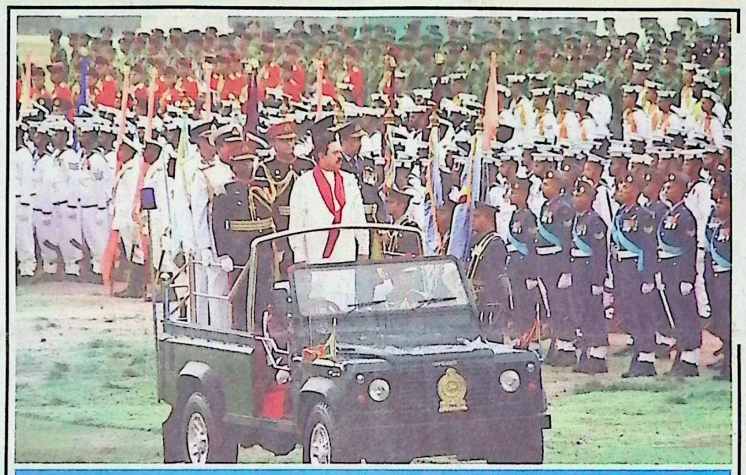
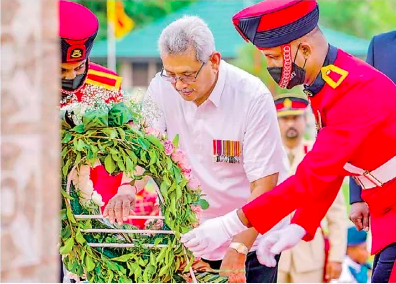
Lankadeepa's lead story featuring Rajapaksas at commemoration events. Photos: Lankadeepa, 28th May 2011 and 20th May 2020
The war is central to the Rajapaksa political identity; be it Mahinda or Gotabaya. Lankadeepa’s layout, when a Rajapaksa was head-of-state, reflects this connection. During Rajapaksa rule, the commemoration was always ‘above the fold’, covering prime real estate on the front page’s top-half. It catches the reader’s eye from a newsstand.
When a Rajapaksa was not in power, except in 2015 and 2018, it never appeared above the fold. In the 16 years since the war ended, the Rajapaksas were in power for a total of eight years. When they weren’t in power, the commemoration made it above the fold following the Yahalpalanaya’s victory and then again, in 2018.
What’s in a name?
The commemoration is more than remembrance, or a celebration of the war’s victors. It’s when society takes stock of the conflict’s causes; and grapples with the complex, decades-long violence that followed.
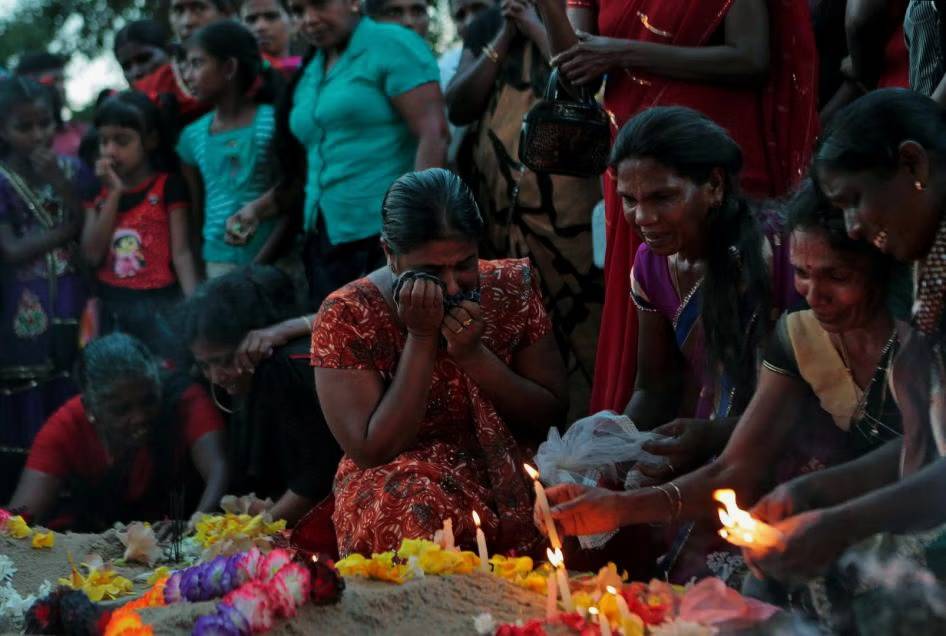
Over the last 16 years, the naming of the commemorative event has itself become a site of this contestation. Mahinda Rajapaksa’s Vijayagrahanaya (ultimate victory) became Yahapalanaya’s National War Heroes Day. Then when the junior Rajapaksa, Gotabaya, came to power, it relapsed to Vijayagrahanaya.