
The Examiner has more opinions than it has staff. We maintain unanimity in our facts, not the inferences we draw from them. This examination is no exception.
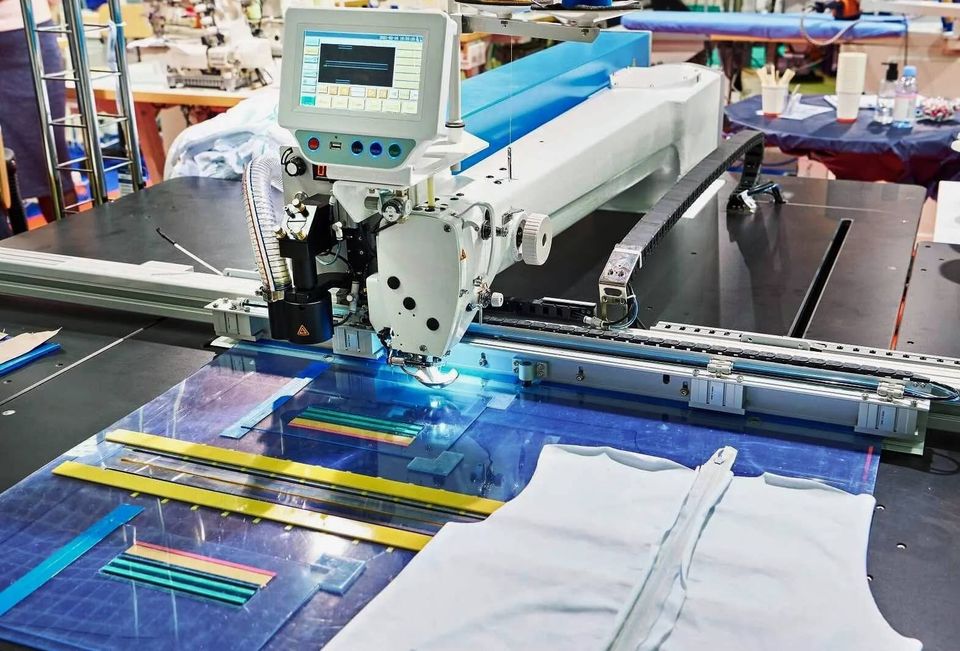
As workers enter a garment factory in China, they put on special glasses, gloves, and microphones. All of them are filled with sensors. Every eye movement, hand gesture, and word they speak are recorded in massive databases — used to train the next generation of garment robots. Even before the AI wave, McKinsey estimated 82% of apparel work hours could be automated.
Meanwhile, in Sri Lanka’s factories, man and machine work together in tandem — human hands deftly feed whirring machines as fabric is cut, dyed, and sewn.
These factories directly employ over half a million workers, most of them women. Apparel is also, by far, the island’s largest export; over three times that of tea or tech/outsourcing exports.
Are the robots coming for these jobs? And is Sri Lanka ready?
Working with machines
Though we don’t have many robots of our own, our garment industry isn’t obsolete or outdated. The likes of MAS and Brandix are sophisticated players in the global apparel industry, and are actively embracing automation.
In the apparel industry, the level of automation depends on three factors: the type of garment, the stage in the production process, and the size of the company making it.
Some types of garments — like sweaters, a knitted garment — are already entirely machine-made. Knitted and crocheted products made up 56% of Sri Lanka’s apparel exports in 2025. But other, more specialised clothing, such as lingerie, which Sri Lanka also focuses on, are heavily reliant on human labour.
Automation is also greater in non-sewing stages of production, like cutting, packaging, and warehousing. For example, MAS has automated its entire fabric cutting process to ensure minimum waste.
Will AI eat garment jobs?
Yusuf Saleem, who headed automation for MAS, doesn’t think robots will replace humans in the sector any time soon.
Currently, robots can only do repetitive tasks that don’t require sensory input — like being able to gauge the changing tension of fabric as it's being sewn.
“You’re never going to get a garment factory that is putting garments together with robots,” he says. Computers are approaching adult levels of intelligence, but still can’t even match a child in motor skills.
Mio Kato, the founder of LightStream Research, an equity research company, agrees. Kato has analysed Japanese robotics and industrial machine companies, including Juki and Shima Seiki, for nearly two decades. He thinks motor functions are far harder to automate than ‘intelligence’, especially in apparel, which relies on touch and feel for millions of unique pieces.
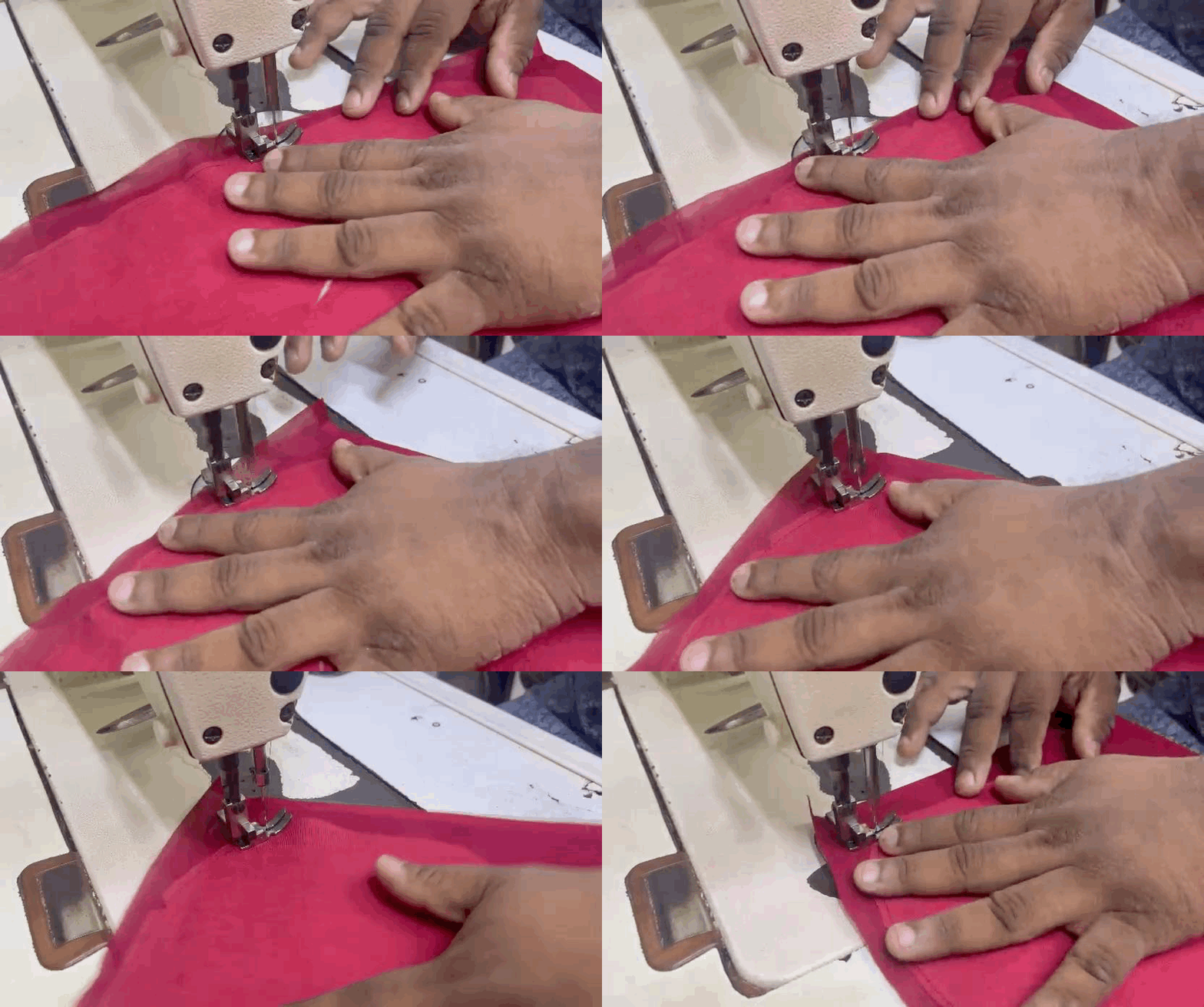
Even in China, a global leader in robotics, the apparel sector is trying to automate everything around the core manufacturing — planning, scheduling, and sequencing. But sewing is still the domain of humans. “What the Chinese have really deployed is a lot of automation on the information side,” Saleem explains.
Robots also need to be re-programmed for every design. This isn’t a big problem for the auto industry for example, where there are a few models. In apparel, there are millions of designs, and fashion changes every few weeks.
“When you develop an automation, it's specific to a style. Previously, a style would run for three or four years. Now a style runs for a few months or a season or two. Which means you have to readjust, and now your engineering cost has gone up,” Saleem says.