
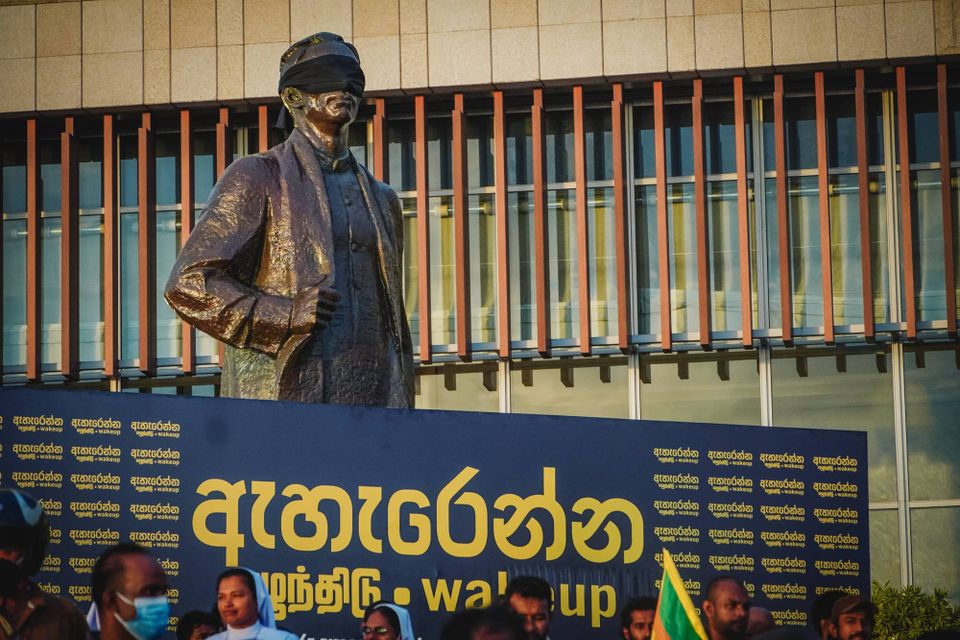
A review of 'Nationalism, Development, and Ethnic Conflict in Sri Lanka,' by Rajesh Venugopal, published in 2018
The Examiner has more opinions than it has staff. We maintain unanimity in our facts, not the inferences we draw from them. This examination is no exception.
Things appear to be improving on the race front. Could Sinhala nationalism be dying?
Minorities tend not to hold their breath. Tamils who lived through the 1956 anti-Tamil riots gave birth to those who experienced 1983’s Black July. They, in turn, raised children who witnessed the massacres at war’s end, egged on by bloodthirsty rhetoric in the South. And as the guns went silent, Muslims faced riot after riot, and, most recently, forced cremations during COVID.
Now too, politicised monks behave as though they are above the law while nationalist politicians appear to be testing their slogans, trying to see which ones will stick.
Nevertheless, applying Rajesh Venugopal’s 2018 political economy analysis to today’s Sri Lanka suggests the lull in Sinhala nationalism might be here to stay. Many of the economic conditions which birthed and propagated it no longer exist. Great structural forces — among them declining birth rates, migration of minorities, and employment opportunities in the Gulf — have undercut some of Sinhala nationalism’s economic foundations.
Lion rampant
Sinhalese nationalism was the dominant force of independent Sri Lanka’s history. Critics reduce it to a caricature: a racist, violent ideology rooted in hatred and bent on domination. Apologists defend it as a legitimate expression of cultural pride, and an act of resistance by a people subjugated by colonial rule.
Both camps have more in common than they may be willing to admit. They explain the ascendency of Sinhalese nationalism, and thus Sri Lanka’s modern history, almost entirely in terms of the hearts and minds of its defenders and detractors.
But not Venugopal. He traces the economic conditions that gave rise to these feelings of grievance and perceptions of victimhood. He shows how competition over government jobs and land nursed Sinhalese nationalism, and then sustained it over decades.
Sinhala nationalism’s economic origins
Two scarcities troubling educated Sinhalese youth — land and jobs — birthed Sinhalese nationalism.
In the first half of the 20th century the population doubled, but arable land did not. Thanks to innovations like DDT spraying, infant mortality rates improved. Many more people were suddenly living on the same amount of land.
Alongside the population boom, farming households were being “hemmed in” by the growth of plantation agriculture, so there was little possibility of expanding cultivable land. Between 1871 and 1959 the number of peasants per acre increased by over two-third, from 1.9 to 3.2.
In Jaffna, this land fragmentation happened earlier. Farmers’ children moved into non-farming careers in the late 19th and early 20th centuries — like the Ceylonese and Malayan civil services, railways, and plantations. As a government report at the time put it: “[the Jaffna farmer] prefers his son to try for work under Government than to follow in his footsteps as a farmer. He is probably right in wishing his son to be freed from the hard work of a small farmer with its inadequate return for all the labour and patience that are required.”
However, the economic transformation that began in Jaffna in the late 1800s only trickled to the South in the 1930s. The South thus felt the land-pinch much later.
The spread of free education, beginning in 1945, nearly tripled the school population in 15 years. Just as their Jaffna brethren had a few decades earlier, newly educated Sinhalese students hoped for government jobs. They too wanted to escape the farmer’s life, which had grown increasingly precarious with land scarcity.
For Venugopal, this “staggered” economic transition, first Jaffna, then the South, meant that the Sinhalese youth felt the pains of transition more acutely than their Tamil counterparts. By the time Sinhalese lands were fragmenting, and their youth were getting educated, there weren’t many government jobs available.
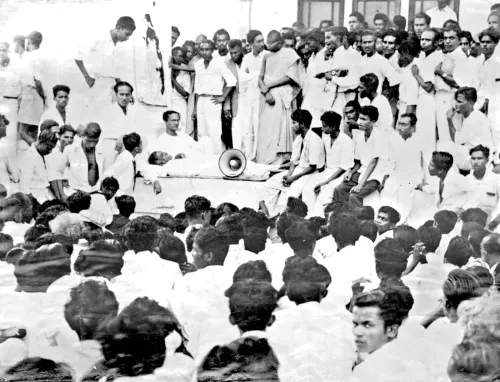
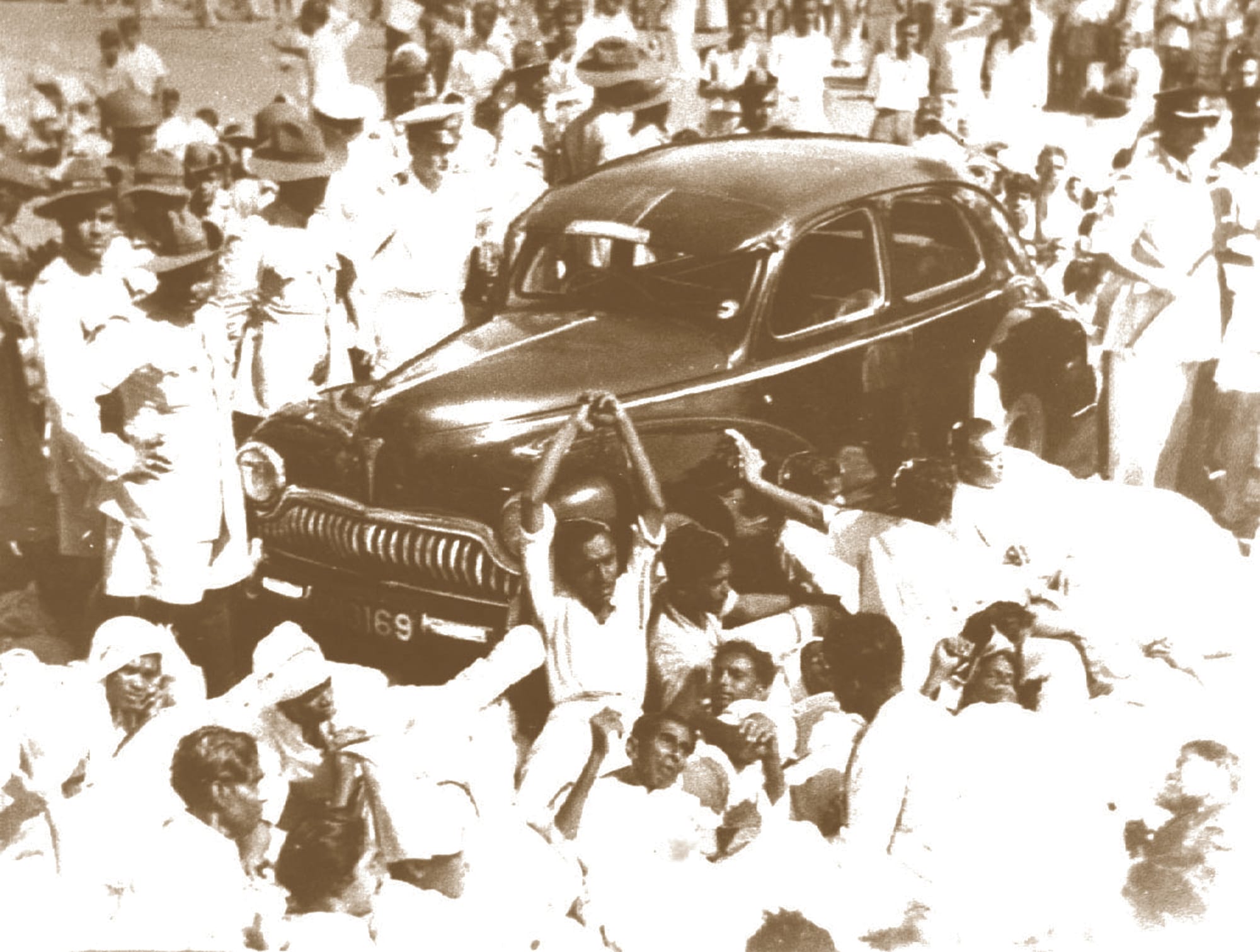
F. R. Jayasuriya's fast in favour of Sinhala Only and Tamil protesters against Sinhala Only attacked, 1956. Photo: Thuppahi's blog and Tamil Guardian
Thus the sole door to socio-economic mobility at the time was largely shut to the newly educated Sinhalese youth — especially those educated in the vernacular. Many posts were already filled by Tamils. As such, competition for government jobs, a common feature of post-colonial countries, had a particularly racial quality in Sri Lanka.
Venugopal traces how ethnic tension in the 1930s, ’40s, and ’50s ebbed and flowed depending on government hiring. Struggling through the Great Depression, the government reduced hiring in the 1930s and competition for scarce jobs sprouted ethnic tensions.
In the 1940s, the public service expanded and ethnic tension fizzled out. But a fiscal crisis triggered by the Korean war led to a hiring freeze by 1953. Tight competition returned, and with it ethnic tensions.
Calls for ‘Sinhala Only’ grew louder, and its agenda to push Tamils out of the public service became more transparent. “The battle of the languages was in reality a battle for government jobs for the respective middle classes,” left leader N. Shanmugathasan wrote.
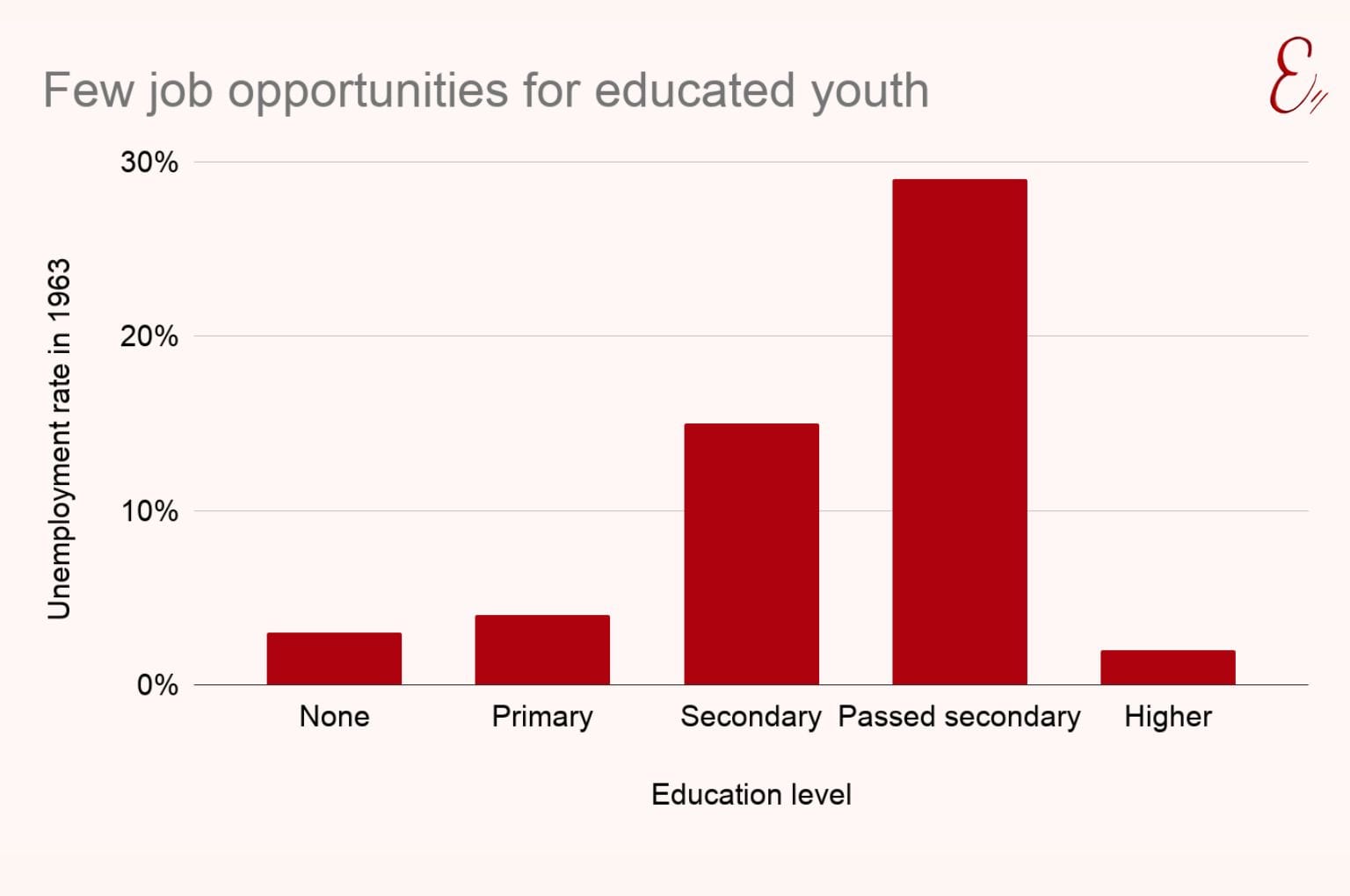
This is well known amongst historians. But Venugopal goes a step further. Despite claims that Tamils had more than their ‘fair share’ of civil service jobs, Venugopal’s rigorous analysis shows that the actual differences were negligible. He shows how this competition was over only a few hundred jobs.
Tamils accounted for nearly half of government accountants and irrigation engineers at independence. These percentages are accurate. Nonetheless, Venugopal digs deeper and finds the ‘surplus’ was just 20 Tamil accountants and ten engineers. The few hundred ‘surplus’ government jobs held by Tamils didn’t significantly dent the Sinhala people’s employment challenges.
And yet it had a serious radicalising effect: the Sinhala Only act was passed in 1956 and in the 1970s, the government introduced racial quotas for university education.
Changing realities, changing perceptions
In the last few decades, both the reality of educated Sinhala youth getting jobs, and their perceptions of who stands in their way, have changed. Civil service jobs are no longer the sole route to socio-economic mobility.
Rapid hiring to the military during the war substantially reduced the unemployment rate among Sinhala men. And slow demilitarisation kept this opportunity open.