
Kavanthissa’s death last week set social media ablaze. Some activists accused the Department of Wildlife Conservation of negligence that cost him his life. Its vets had been treating the tusker’s gunshot wound for weeks before he died.
A post-mortem will determine the exact cause of Kavanthissa’s death. The report will arrive in a few days, the Environment Ministry said.
Kavanthissa was over 45 years old, believed to be the tallest living tusker in the country.
He was a friendly neighbourhood giant, the tallest in a herd of about 250 elephants that passed through Galgamuwa, in Kurunegala district. The tusker often trailed behind as the herd crossed the railway and the Anuradhapura–Padeniya road between Ambanpola and Galgamuwa. As he passed, he would wave his trunk in farewell to Chaminda Kumara, a roadside carpet vendor, who for years stopped traffic to see the elephants safely across. “The villagers loved him a lot. He never caused any trouble,” said Kumara.
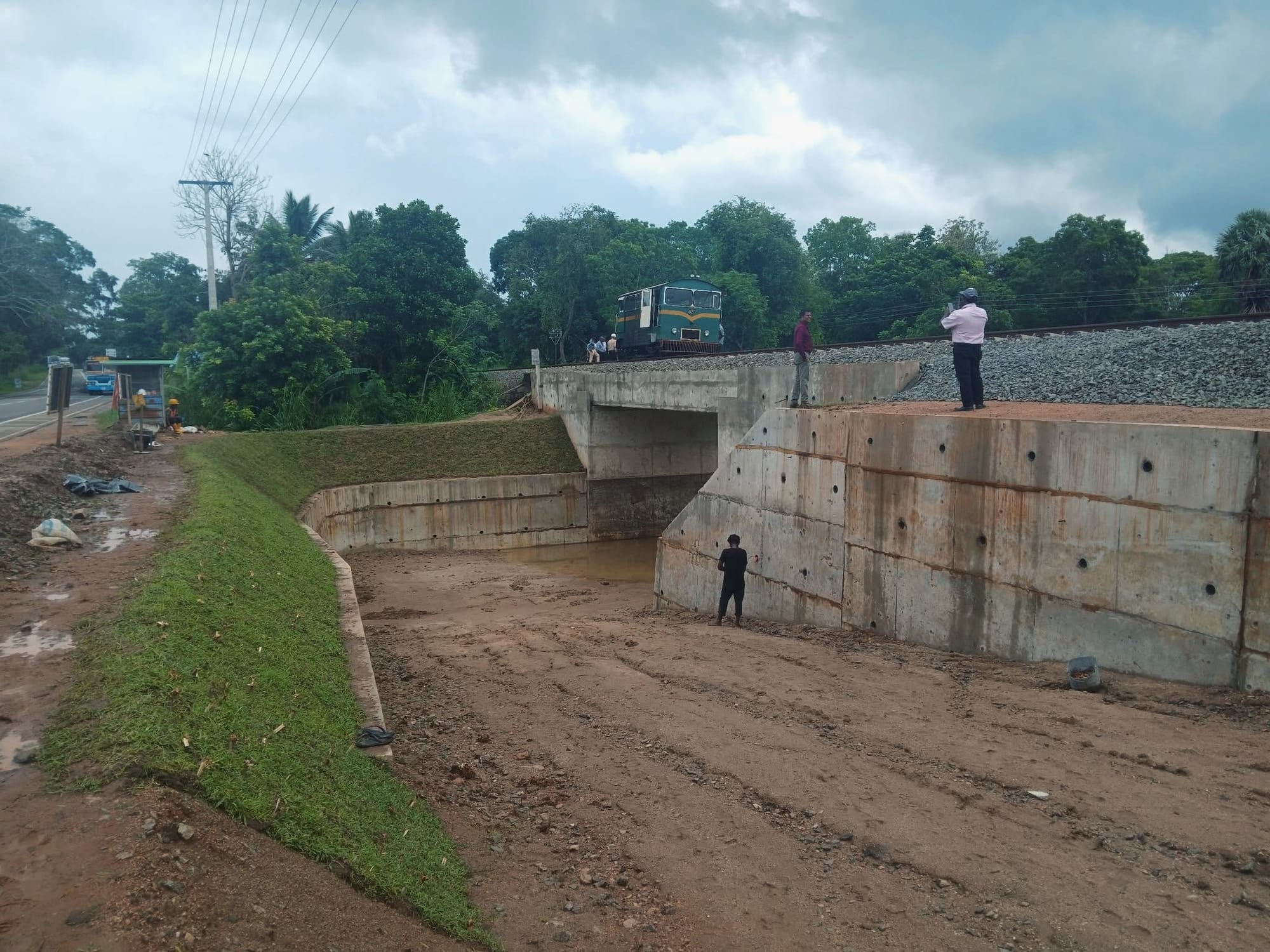
To reduce elephant deaths from train collisions , the transport ministry and railway department just finished building a wildlife underpass near the crossing. . “I was waiting to watch Kavanthissa cross through it, but we won’t see him again”, grieved Vipun Ekanayake. He grew up with elephants at his home near the crossing , about 25km west from the Galgamuwa town, and as a wildlife photographer has been tracking Kavanthissa since 2022.
The government launched at least two inquiries into Kavanthissa’s death so far. The president appointed a committee of academics and civil servants. The other is a routine wildlife department internal investigation. The Environment Ministry says they’re also considering an inquiry.
Treating Kavanthissa
On September 21, villagers saw Kavanthissa in the Karagassana Palukadawala area, and he didn’t seem hurt. But the next day, some children noticed him roaming in the same area with a pronounced limp and a visible wound.
On the 23rd, villagers noticed bleeding from his right leg, and by evening he was struggling to walk. The next day the wildlife department treated him. Two vets from the Nikaweratiya wildlife unit covering the north western region arrived.
“Dr. Pubudu [Adassuriya] came and treated him initially. Dr Isuru was on leave. He cancelled it and came the next day”, Ekanayake told The Examiner.
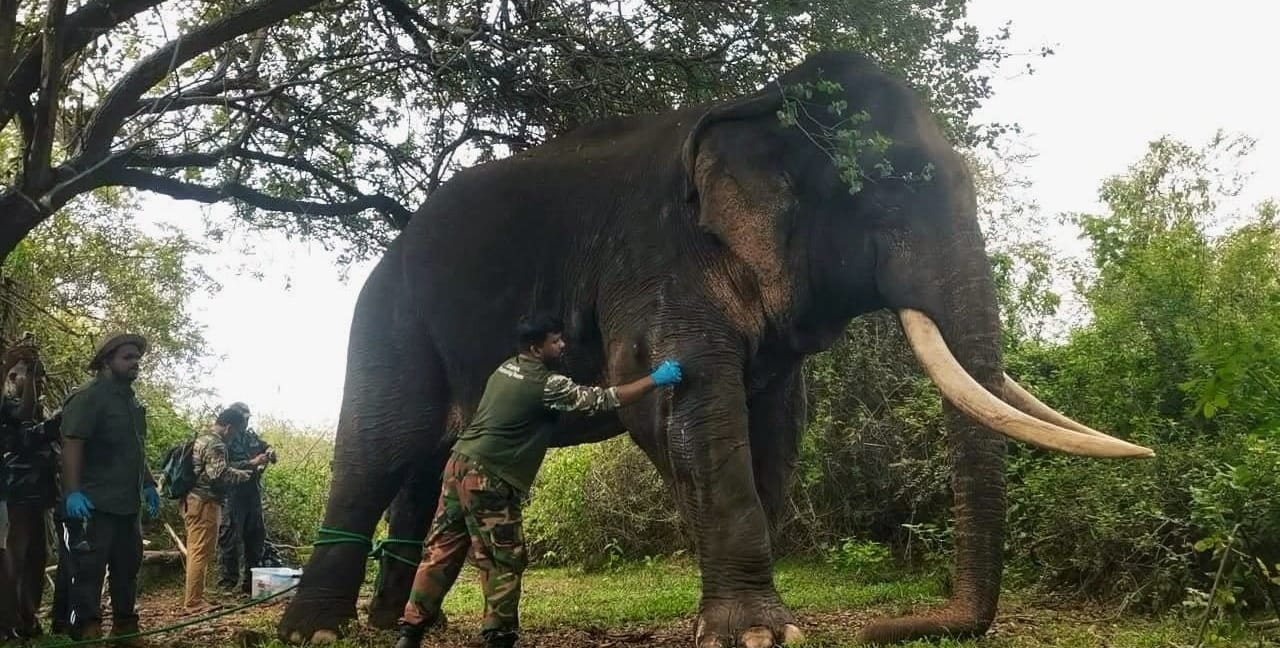
Isuru Hewakottage is facing severe backlash. Critics on social media accuse him of administering excessive antibiotic doses and of not tracking the elephant after initial treatment. The accusations stem in part from two tuskers who died before, who he also treated.
Ranjan Marasinghe, the department’s director general, stands by his officers and vows Hewakottage did his “maximum”. “It's how different animals take the treatment, there are many animals he has saved.”
He defended the field vets, saying they followed standard veterinary protocols and acted to the best of their ability under difficult field conditions. He also added that the field team conducted daily progress reviews and consulted other experts, including Tharaka Prasad, a retired chief wildlife department veterinarian.