This is the second half of a two-part series on Tilvin Silva. Who really is Tilvin? is the first.
Walking into the Janatha Vimukthi Peramuna, JVP, headquarters at Pelawatte, I pass soldiers and ministerial security. They’re decked in white shirts, scrutinising visitors. Following the JVP’s triumph in the last elections, the party that sought to overthrow the state now runs it. Those that once hunted them, are now their guardians.
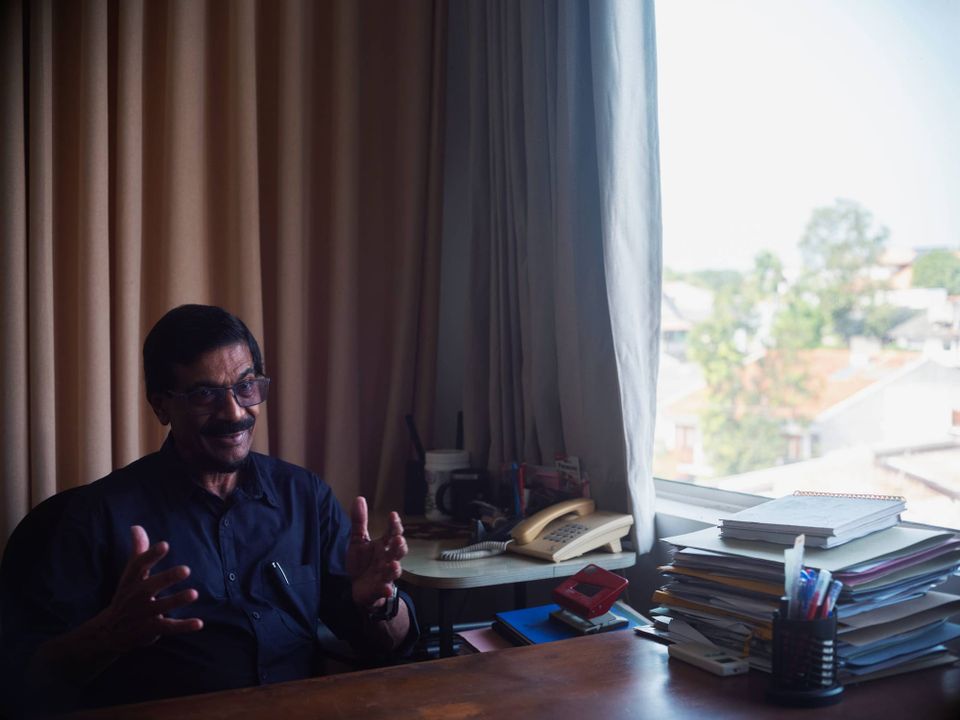
Tilvin Silva, described as the party’s ‘nucleus’, greets me in the lobby and walks me up to his office. It’s small, around 225 square feet, and lined with books, binders, and files.
It’s January — Silva turns seventy in a month. But he shows few signs of aging. His look — tall and slim, with a jet-black goatee — has barely changed over 48 years in politics. The only signs of time passing are new spectacles and a smart-watch. It’s as if he makes an effort to look the same.
Phantom president…?
We need to re-arrange the room for some photos. Without fuss, Silva gets up to move chairs for us. Many politicians try to charm at interviews. Silva is friendly but reserved, giving little clue that he’s the man many claim to be the “real president”.
As the government found its footing, first-time ministers — chatty in their former roles as activists or opposition members — became tight-lipped. Diplomats, donors, and journalists groped in the dark for the ‘right man to talk to’.
Today the question of where power really lies— in the cabinet, the presidential secretariat, Pelawatte’s politburo, or in Silva’s office — remains.
While the answer may not be clear, Silva’s growing public role as a man with power is apparent. His overseas visits to India and China are diplomatically significant, watched as closely as official visits.
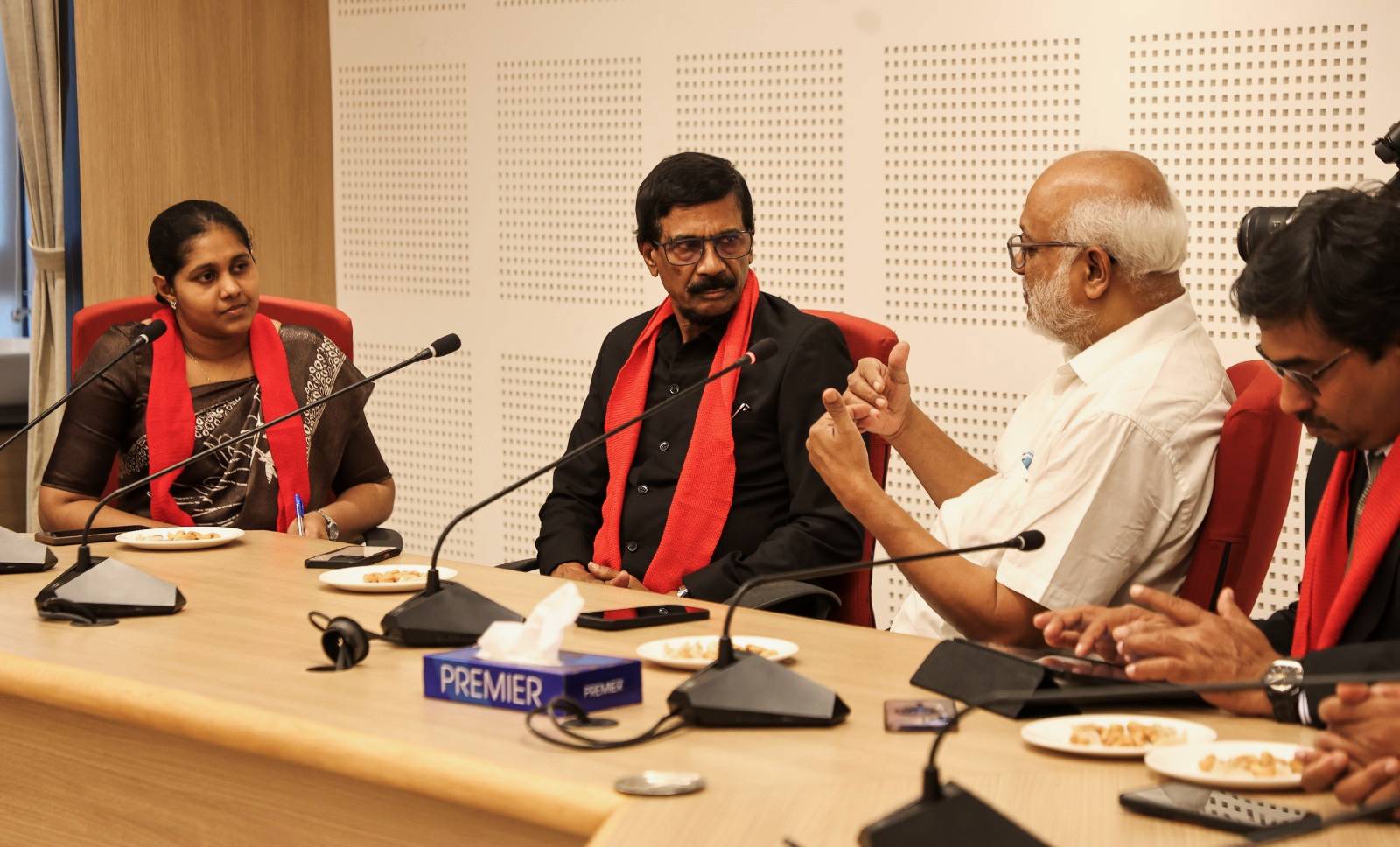
During the 2024 election Silva called on the oppressed masses to rise-up. But after the victory, he didn’t follow President Anura Kumara Dissanayake and his other comrades into government.
Silva could have joined the government if he wanted to but he chose to focus on the party. [If there was a rule that was preventing it], we could have changed it,”he said.
The JVP’s constitution doesn’t allow its general secretary to take government posts — Silva says it’s a communist practice adopted to prevent Stalin-like concentration of absolute power. “If the president, party leader, and military head are all one person, it’s a lot of power in one hand. Even if that person is ‘good,’ it’s risky. By having the presidency and the party secretariat separate, we create a balance.”
The party’s central committee, which holds office for a five-year period, can override this rule under undefined “special circumstances”.
The central committee delegates day-to-day decisions to the politburo. Silva sits on both the central committee and the politburo. In the past, some politburo members’ identities weren’t always made public. Today we don’t know if that’s still the case. The current party constitution also allows Silva to hold all party property in trust under his name.
Of course, kitchen cabinets — unofficial advisors often consisting of trusted family and friends — are features of every government.
“There is nothing excitingly new about the JVP’s involvement in government. If you look at any other democracy, any other country, the party controls the government,” says Jayadeva Uyangoda, political scientist and former JVP insurrectionist.
Chandrika Bandaranaike Kumaratunga, who was in coalition with the JVP during her second term as president, feels that the rumours could be right; that Silva is the man running the show. Despite working closely with the JVP in the early 2000s, he remains an enigma to her: “Tilvin was a real hardliner. He only came to meetings to deliver a stern point from their party.”
Unlike the current president, Silva didn’t join other JVPers in trying to be “charming”, says Kumaratunge. “He has the typical markings of a member of a terrorist organisation. He is very secretive.”
She doesn’t think Dissanayake is a capable organiser, but she doesn’t know if Silva is filling that void. “I suspect Tilvin is the man running it [the government] behind the scenes but I have no evidence.”
…Or mediator?
JVP’s transformation to what it is today began in 2014, when Dissanayake became party leader. The JVP then formed the National People’s Power, or NPP, in 2018, with the intention of expanding the JVP’s base. The NPP was free from the old insurrectionist stigma and appealed to the masses with a more inclusive programme.
In the decade since, Silva struck a balance between JVP stalwarts and the NPP’s ‘progressive populist’ movement, enabling their eventual victory. Since the NPP’s electoral victory, Silva’s influential dual role, in both the JVP and the NPP steering committee, allows him to shape government decisions from the outside.
Silva considered the turn from revolutionary politics to electoral populism as just another path to victory for a “leftist democratic force”. For him, to be a radical is to change tradition: “Radicalism isn’t merely shouting in the street.”
When the NPP was formed, a leading NPPer felt Silva was willing to change. Silva was also a better listener than the other JVPers, he says. “Tilvin had the ability to adapt and work with the new teams that joined in. He didn’t take a hardline view. JVPers usually talk a lot. Tilvin is not like that. He can listen to something and grasp it.”
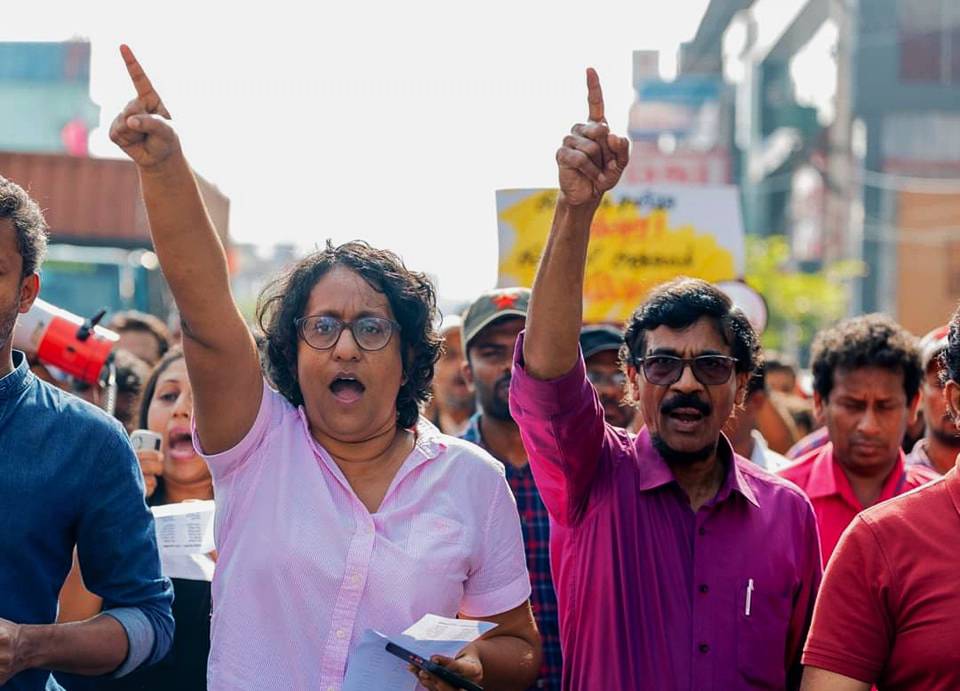
Even today, Silva is the “nucleus of the party,” observes the NPPer.
The electoral victory also means that Silva now mostly gets to speak with Dissanayake on the phone. Previously, the two would spend hours chatting away in Silva’s office.
In the formal party hierarchy, party leader Dissanayake ranks above Silva. But Silva says he doesn’t adhere to the JVP constitution’s hierarchy: “Comrade Anura suggests things, and if I disagree, I tell him that.”
Silva is the party’s role model, a survivor from the old-guard, and has been general secretary for thirty years. The president calls him aiya.
According to Silva, the JVP takes all decisions together. But not everyone shares this view. Another ranking NPPer says the relationship between the JVP and NPP is asymmetrical. The NPPer feels that decision making is one-way: from the JVP politburo to the NPP’s national executive council. “This could be a damaging element for the coalition,” he says.
Soft reformist
In the early days of the second JVP insurrection, when Silva was arrested, critics say he chose survival over heroism. This capitulation was cowardly; and thus unworthy of the general secretary role, they say. He also didn’t experience the worst of the violence. On the other hand, especially in turbulent times, survival instincts are an essential qualification for leadership.
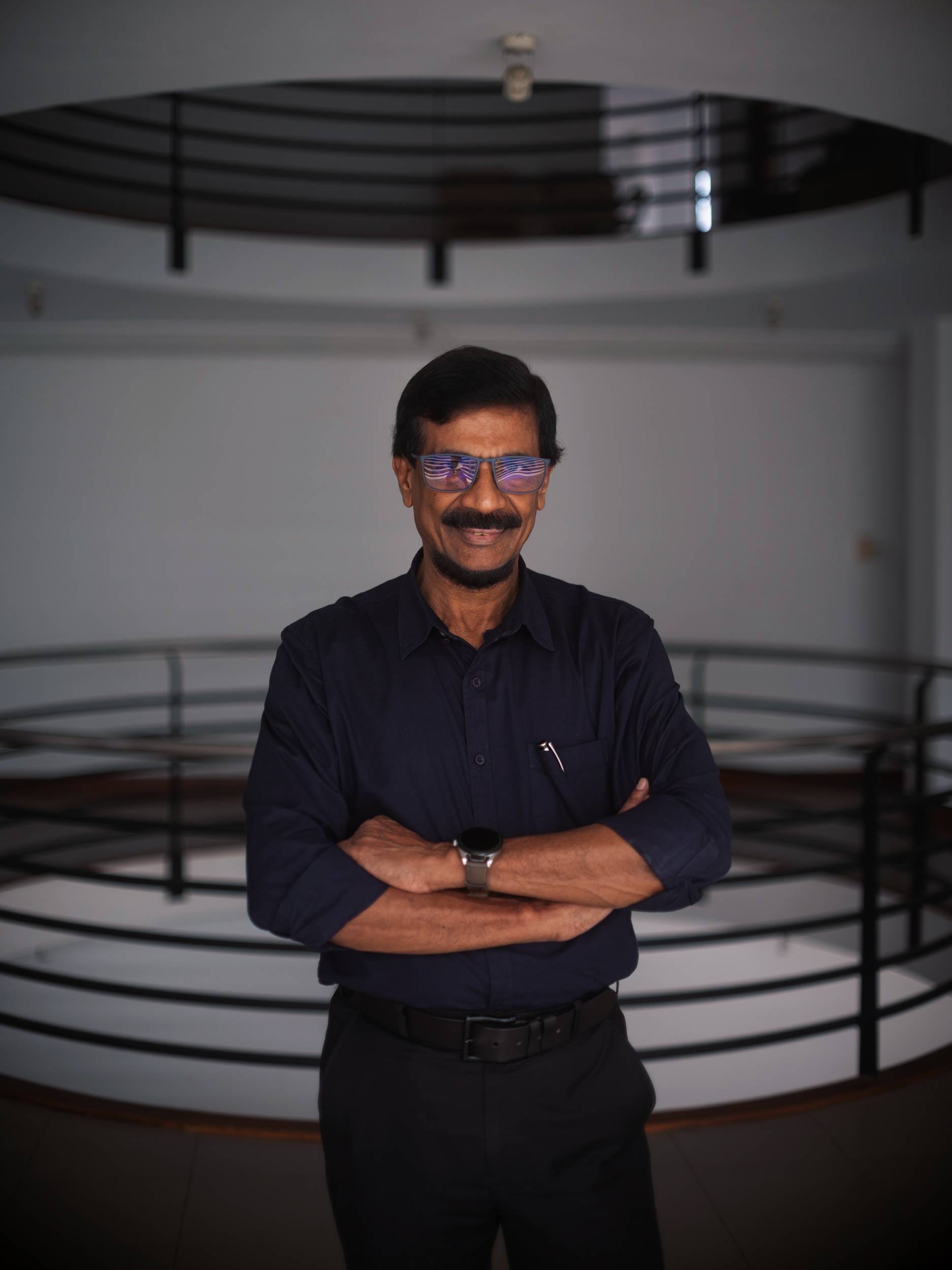
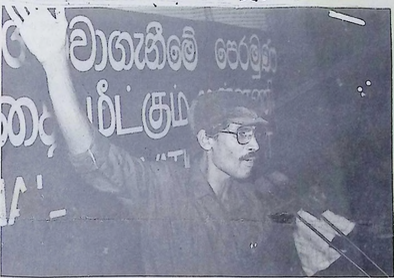
Silva prefers to let new recruits learn from their mistakes.He doesn't guide them closely. Photo: Munira Mutaher, Niyamuva
One prominent JVP dissident feels Silva was a weak-kneed pathola in the face of internal disagreement — he refused to vote when key decisions came up.
In one such case, a fellow comrade asked that Silva not be “like a mother” who refuses to take a side when her children fight, he alleges.