
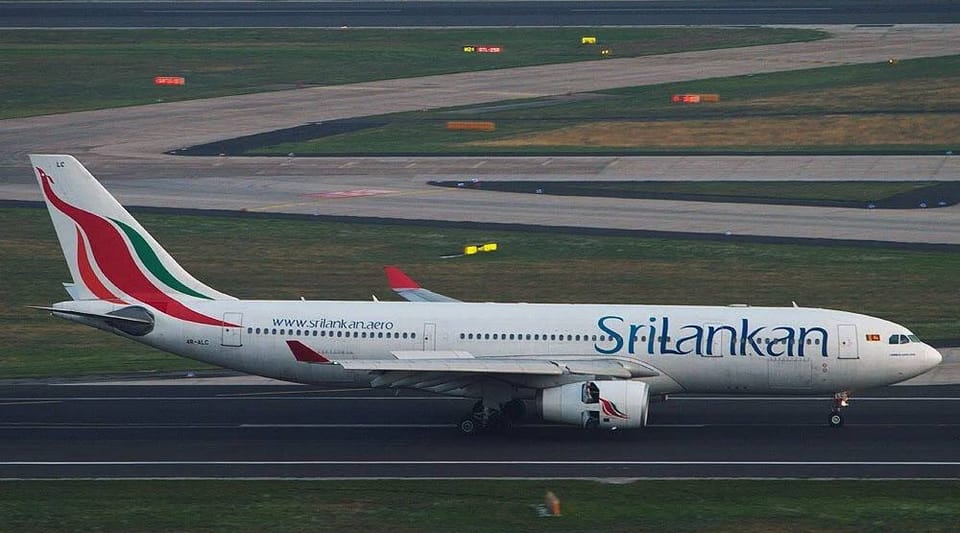
The SriLankan Airlines crisis is usually debated as if the airline has one problem requiring one fix: sell it, restructure it, recapitalise it, or simply “run it better”. But the historical record suggests a deeper issue. SriLankan keeps failing because it has never made — and enforced — a single, consistent rationale on what the airline is for.
Depending on the moment, the airline’s been treated as a commercial enterprise expected to generate profit; a tourism instrument meant to promote Sri Lanka globally; a national symbol; a protected employer; and a political asset whose priorities shift with each administration. Each of these roles is individually viable. Together, they are structurally incompatible.
SriLankan Airlines’ own disclosures describe its dual role as both a commercial enterprise and a national strategic instrument. But while commercial airlines optimise profitability and efficiency, strategic national carriers prioritise connectivity and resilience. Combining both functions, without clear governance separation, produces predictable financial instability.
By August 2025, SriLankan Airlines’ accumulated losses had reached 632 billion rupees, leaving the airline insolvent. The taxpayer is burdened with these losses.
Unclear in its direction, the airline descended into a third, dangerous role: that of the political asset. With politicisation came corruption: the Auditor-General found a number of large procurements violated the law. A former SriLankan Airlines CEO is currently on remand over bribery charges.
Staffing patterns reveal the same effects of politicisation. SriLankan Airlines operates with approximately 264 employees per aircraft, compared with 135 at Singapore Airlines — double that benchmark. Yet the airline has simultaneously faced an outward migration of pilots and licensed aircraft engineers to Gulf and Asian carriers offering higher salaries. The result is an airline that remains overstaffed overall, yet operationally fragile in specialised roles.
As a result, taxpayers have to foot large bills. Two years ago the government assumed Treasury-guaranteed liabilities to clean up the airline’s balance sheet. In November 2025, international bondholders agreed to restructure a defaulted 175 million dollar bond, exchanging part of their claim for Sri Lankan government bonds. These actions clean up SriLankan Airlines’s messy public finances — but only by transferring airline liabilities from the company to the state.
If SriLankan Airlines is to operate commercially, governance must align with commercial discipline. If it is to operate as a strategic national carrier, its costs must be transparently funded as public policy. What has proved unsustainable is the hybrid model — an airline expected to serve commercial, political, and social objectives simultaneously while financial losses are absorbed by taxpayers.
The issue is not merely ownership. It is clarity. Airlines such as Emirates and Singapore Airlines demonstrate that state ownership can coexist with strong performance when management operates within defined commercial mandates insulated from political intervention.
Given the years of debt, SriLankan Airlines should choose to adopt a clear commercial governance mandate, rather than the national strategic instrument one.
During the Emirates management era between 1998 and 2008 the airline was governed by a commercial mandate. It made profits and rapidly increased the island’s connectivity via new routes. During this decade, by far the most stable in the airline’s history, operational decisions were insulated by governance buffers that limited political intervention. Commercial discipline, rational fleet planning, and procurement oversight allowed the airline to function as a commercial airline rather than as an instrument of state policy.
The government often justifies maintaining a national carrier as strategic insurance — ensuring connectivity during crises when foreign airlines may withdraw. During Sri Lanka’s 2022 economic crisis, several foreign carriers reduced services while SriLankan maintained essential routes. But insurance has a cost. And that cost isn’t worth it.
Tourism statistics show SriLankan Airlines carries roughly a quarter of inbound passengers, while foreign airlines carry the majority. There is also no reason the government could not support connectivity by private carriers, such as by subsidizing specific routes. Its role as a national strategic instrument is therefore not justifiable. At the very least, if connectivity resilience is a national policy objective, its financial support should be transparently recognised as such.
SriLankan Airlines is not beyond recovery. But recovery depends less on restructuring debt than on resolving governance ambiguity. Until Sri Lanka decides what the airline is for, the repeating cycle of loss and restructuring is likely to continue.


Comments ()