
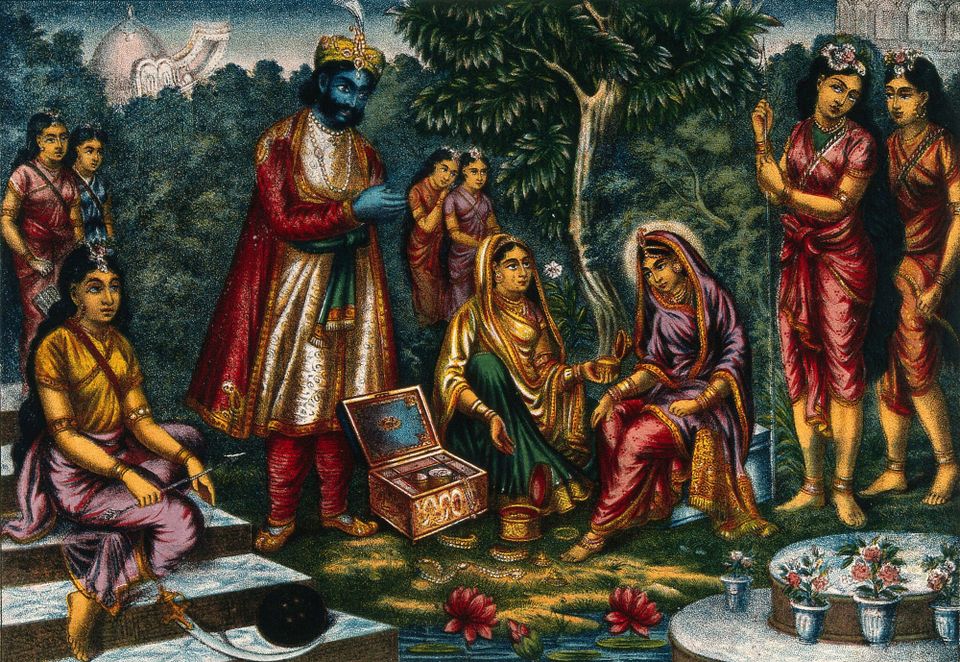
The great Indian poet Kalidasa walks into a brothel in Sri Lanka. He spies an incomplete verse of Sanskrit scribbled on the wall. It is no ordinary poem. The verse was composed the night before by another famous client, the Sri Lankan poet-king Kumaradasa, who has promised a reward for its completion. Kalidasa, of course, finishes it.
But a courtesan watching from the shadows wants the prize. She murders Kalidasa and passes the verse off as her own.
Kumaradasa suspects the truth and soon learns of Kalidasa’s fate. Overcome with grief, the king throws himself on Kalidasa’s funeral pyre. And so, by a poem and a prostitute, two great poets go up in smoke.
Or so the story goes.
It is almost certainly untrue. The tale appears only in much later sources, and no version of the fateful verse itself survives in any reliable form. And yet the story persists. What has not persisted in the same fashion is the work of the poet that ties them together: Kumaradasa’s “Janakiharana.”
A poet ‘not inferior to the Indian Shakespeare’
Kumaradasa’s “Janakiharana” (The Theft of Sita) is a poetic Sanskrit retelling of the Ramayana, composed in Sri Lanka around the sixth or seventh century AD. Unlike the story of Kalidasa’s death, the poem is real, surviving to various degrees across assorted palm leaf manuscripts. It was well-known both on the island and in India for centuries. But today, the local epic has largely dropped out of wider memory, being hard to access and even harder to read.
Little is known of Kumaradasa himself. While he is often identified with the sixth century Sri Lankan king Kumaradhatusena, his precise biography remains uncertain. What is certain, however, is that he was an exceptionally good poet.
Highly influenced by Kalidasa — the so-called “Shakespeare of India”— Kumaradasa was in turn praised by “learned Ceylonese” as a poet “not inferior” to the Indian bard. That the Sri Lankan Kumaradasa’s “Janakiharana” is counted among a slim, elite, and otherwise Indian-only canon of mahakavya (great literature), indicates the height of its artistic achievement.
Same story, different genre
Kumaradasa’s “Janakiharana” retells the story of Rama and Sita, but in a different note. There are hundreds of tellings of the Ramayana, yet the Valmiki version dominates. It is not the ‘original’ — there is no original — but provides a convenient standard of comparison to other versions.
The “Valmiki Ramayana” took shape over many years, accreting layers as it moved from oral traditions to written forms. Composed in comparatively unadorned Sanskrit, its earliest verses predate the “Janakiharana” by at least a millenium . While broadly similar to the Valmiki version in content, the “Janakiharana” differs markedly in style. Kumaradasa’s poem is heavily descriptive, prizing extravagant scene setting over action and plot. Same story, different genre.
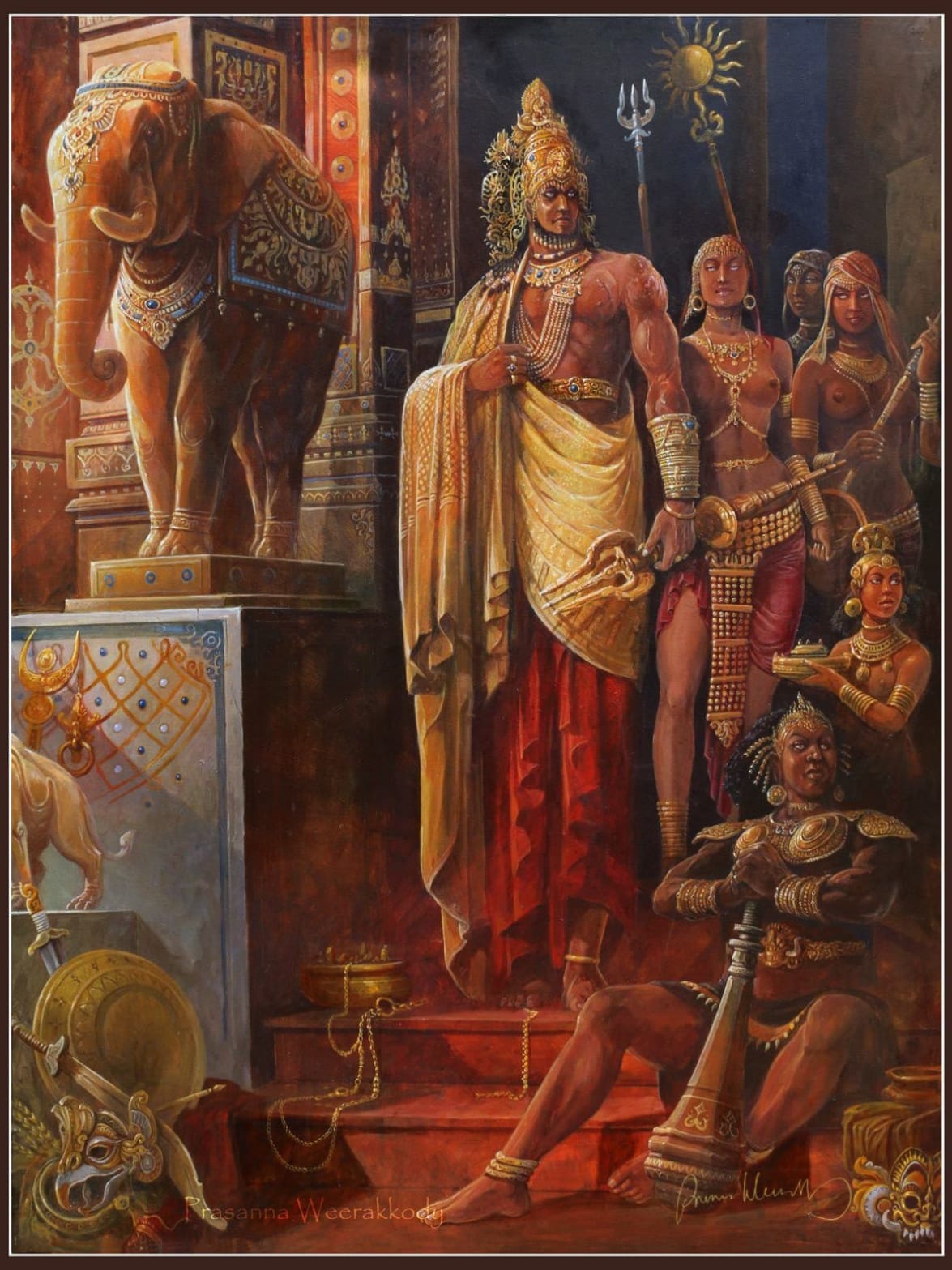
Kumaradasa amplifies the sringara rasa (erotic mood). This is signalled from the outset, where the first sarga (canto) lingers on descriptions of Rama’s parents. His father, King Dasharatha, is unsurpassed in valour and virtue. His mother, Queen Kaushalya, is equally exemplary: virtuous, obedient — and sexy. Kumaradasa praises Kaushalya with the flow and objectification a rapper might recognise, though the rhythm of the Sanskrit metre is lost in translation: “The fullness of her hips reached the utmost limit that her slender, stalk-like body could bear/ As though the cord of her girdle were tightly bound to prohibit further growth/ It is my guess that from the exertion of holding up her pair of breasts, which had increased with/ the advance of youth, the waist of that lotus-eyed woman became very slim.”
Following the conventions of Sanskrit high literature, Kumaradasa includes scenes of amorous jalakrida (water-play), where the king frolicks in a lake with a retinue of women. Waves playfully strike their ample hips. The clarity of the water is both friend and foe: it reveals the absence of a woman’s undergarments, but also the presence of an illicit embrace. The fun is followed by a night of drinking.
Wine, water, and women. The scenes feel oddly familiar, their pleasures recalling the excess of a modern music video. The richly sensuous tone is in keeping with the aesthetic conventions of court poetry. Influenced by Kalidasa’s famously explicit description of the union of Shiva and Parvati in the “Kumarasambhava”, Kumaradasa’s eighth canto offers extended scenes of Rama and Sita’s love-making.
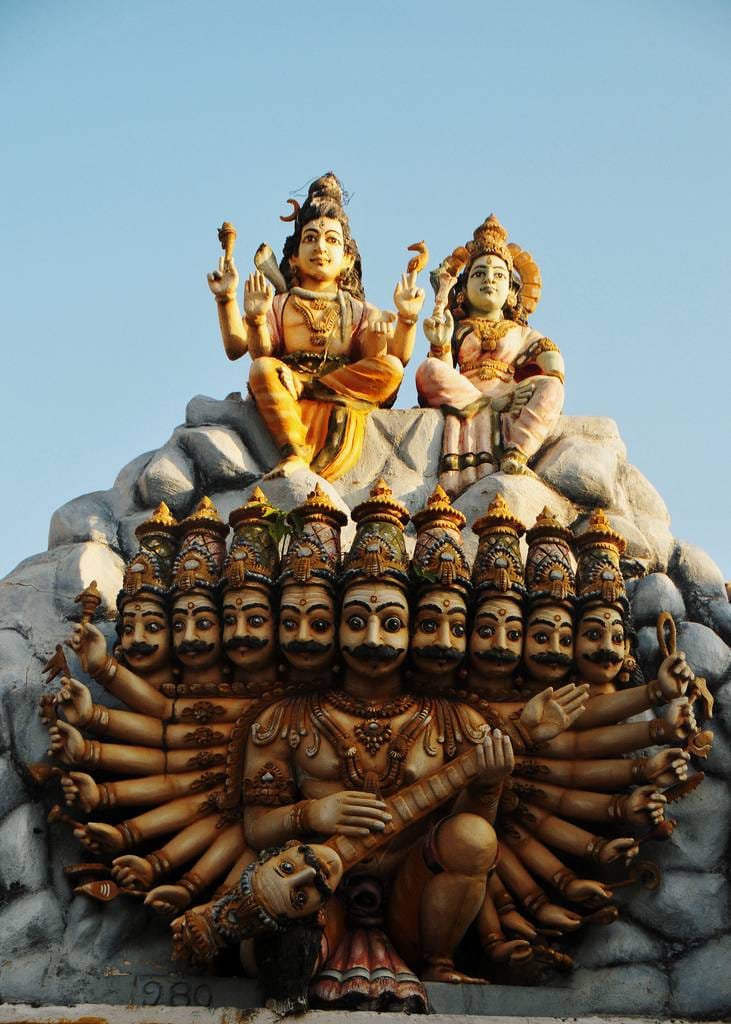
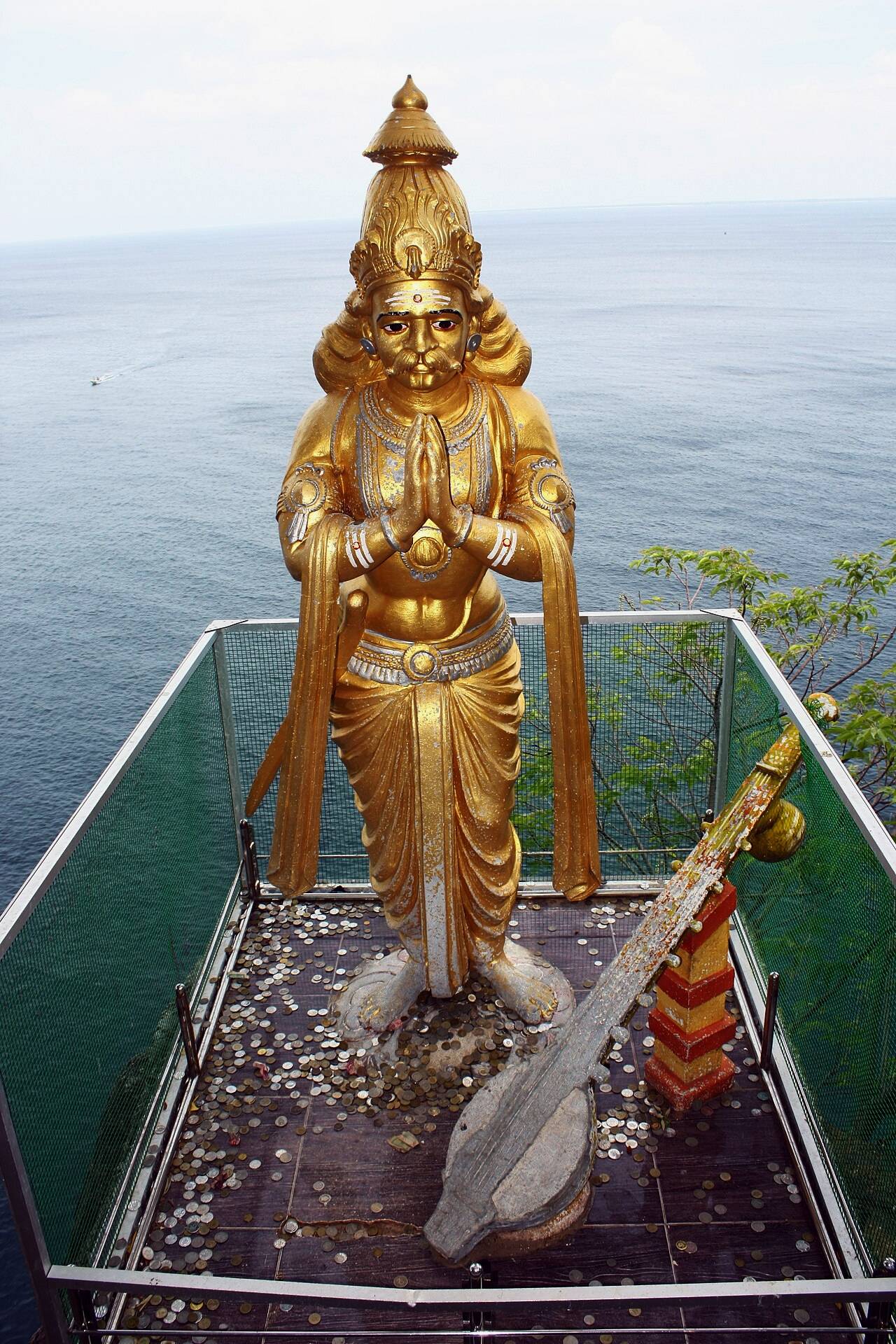
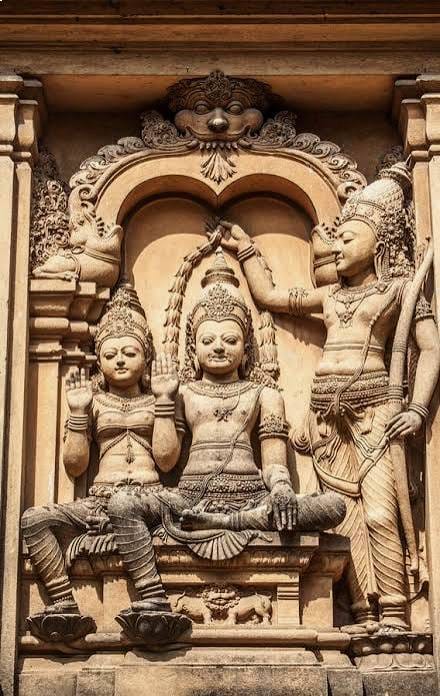
Ravana at Koneshwaram in Trincomalee, and Rama crowning Vibhishana as king of Lanka at Kelaniya Raja Maha Vihara.
An Indian editor steeped in the Western tradition finds these scenes “lewd and loathsome,” but the judgement is misplaced. Such episodes are not gratuitous but conventional, conforming to the formalised requirements of courtly Sanskrit literature. As Dandin’s treatise on poetics, the “Kavyadarsha” states, a proper mahakavya must include not only kings and battles, but also love-making, water-play, and drinking. Yet while the 20-canto poem introduces bathing queens and bedroom scenes to the Ramayana narrative, it does not present a radically reimagined Ravana.
Still a villain
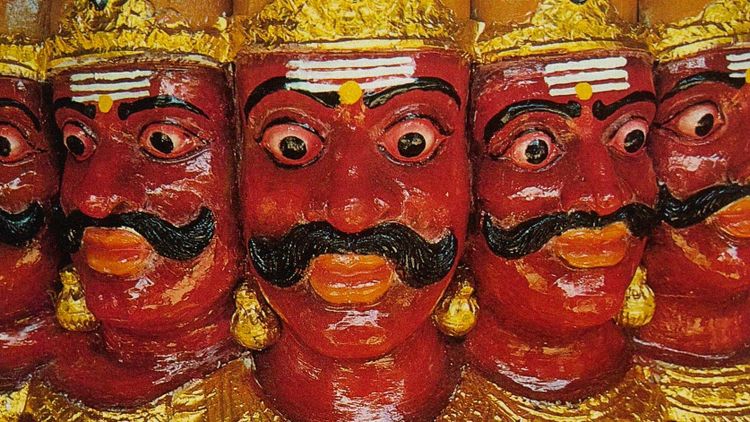
Ravana is still the villain — and we would not expect otherwise. The image of Ravana as a misunderstood hero is relatively recent. It is only from around the mid-14th century that he begins to be treated as a historically real and somewhat sympathetical figure on the island. His elevation to Sinhala Buddhist hero is more recent still, taking shape in the post-war period.
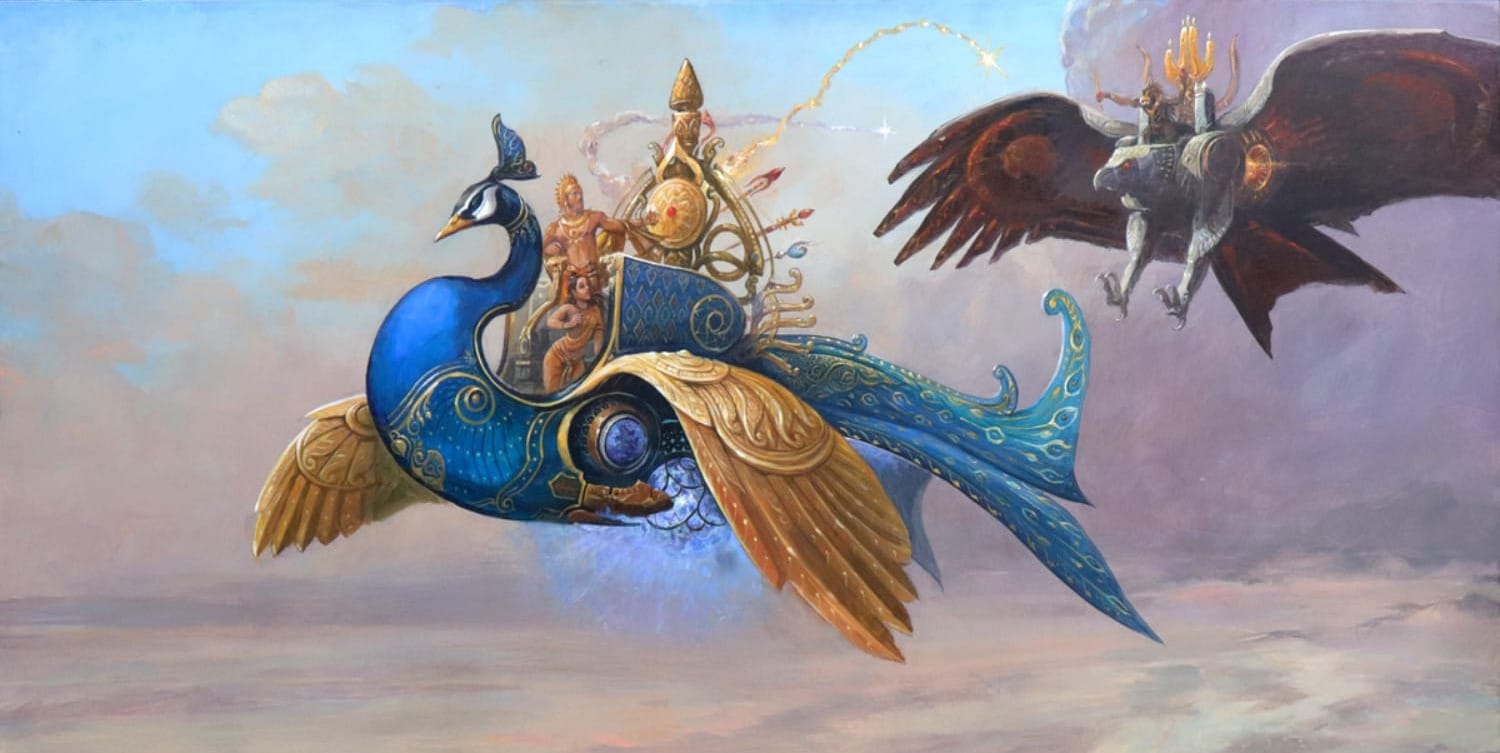
Today, Ravana has as many facets as faces, including the aspect of Sinhala nationalism. But while modern TikTok theorists claim a real Ravana flew a real dandu monara (flying wooden peacock), Kumaradasa’s Ravana remains the classic Sanskrit villain: magnificent, powerful—and bad.
Why aren’t we reading this?
Unlike the “Odyssey” or the “Iliad”, the “Janakiharana” cannot be purchased at Sarasavi. The most obvious barrier is language. The poem is composed in highly ornate Sanskrit, far removed from everyday speech. But so was Homer’s Greek. The difference is in translation — and canonisation.
The “Janakiharana” lacks an accessible modern translation. This has effectively kept it out of reach for general readers. Admittedly, the text is challenging, frequently using complex techniques such as shlesha. Where English puns play on a single word, shlesha plays with entire sentences. A verse — or more — can hold multiple meanings at once. Rendering this into readable English is not straightforward. An example, taken from a verse about Kumaradasa himself: “Jānakīharaṇaṃ kartuṃ Raghuvaṃśe sthite sati kaviḥ Kumāradāsaś ca Rāvaṇaś ca yadi kṣamaḥ.”
The verse can be read in two ways at once. Once with Kumaradasa as the subject: “Only Kumaradasa could compose the Janakiharana while Kalidasa’s Raghuvamsa was around”.
And again with Ravana as the subject: “[Just as] only Ravana could abduct Sita while the descendents of Raghu prevailed”.
A parallel is drawn between two equally daring feats. Only a poet as skilled as Kumaradasa could try his hand at Kalidasa-level poetry, just as only a demon as powerful as Ravana could dare claim the hand of a god’s wife. The example illustrates the type of language tricks at play in the poem. But complexity alone cannot account for absence.
Much early Sri Lankan literature was preserved and transmitted within monastic contexts. It is tempting, then, to attribute the obscurity of the “Janakiharana” to a kind of Buddhist puritanism. Monks were not supposed to compose, let alone enjoy, poetry. The Pali commentator Buddhaghosha dismissed the Ramayana and Mahabharata as “purposeless”, “idle talk”. The Buddha declared poetry a “debased art”.
But there are problems with this view. Monks did write poetry. Some compositions even included sensuous detail. For example, the Sinhala “Kokilasandeshaya”, attributed to the 15th century monk Irugalkula, vividly depicts the moving breasts and jewelled waistbelts of dancing girls in a royal court. Moreover, until 20th-century discoveries of ola leaf manuscripts in London and India, the “Janakiharana” was known to scholars only through its Sinhala translation. This was then translated back into Sanskrit by a Sri Lankan monk in 1891.
What seems more decisive is not monastic disapproval, but neglect.
Sanskrit, overshadowed by Pali, occupies a marginal place — in understanding both Sri Lanka’s history and literary past. The “Janakiharana” has fallen outside the networks of interest that carry texts into modern circulation. Outside Sri Lanka, the Sanskrit canon that came to be translated, taught, and globalised was largely shaped in colonial India, where works by Kalidasa and mainland poets were privileged. Sanskrit compositions produced outside the Indian mainland have been less studied.
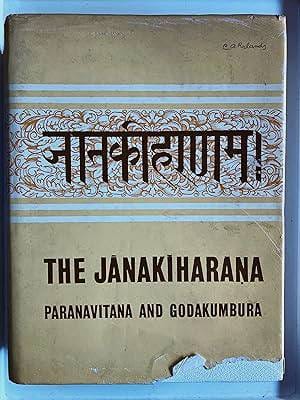
A few published editions of Kumaradasa’s work do exist, but these are dated and largely unavailable at local bookshops. The 1967 Sanskrit edition by Senarat Paranavitana and Charles Godakumbura is the most rigorous attempt at a critical text to date. However, Paranavitana’s introduction, exhibiting early strains of his later controversial theories, must be approached with caution.
Critical editions like this, based on all available manuscripts, are an indispensable first step towards modern, accessible translation.
Though fashioned from the familiar ingredients of great literature — gods, demons, wars, and sex — the “Janakiharana” remains a specialist text, removed from general readers. It is largely forgotten, but not lost. To recover it is to recognise sophisticated Sri Lankan engagement with Sanskrit literary culture, an important and often overlooked part of the island’s literary past. Kumaradasa’s sensuous reimagining of the Ramayana deserves not only be remembered, but to be translated, read, and — above all — enjoyed.
A footnoted version of this article can be found here.
Comments ()