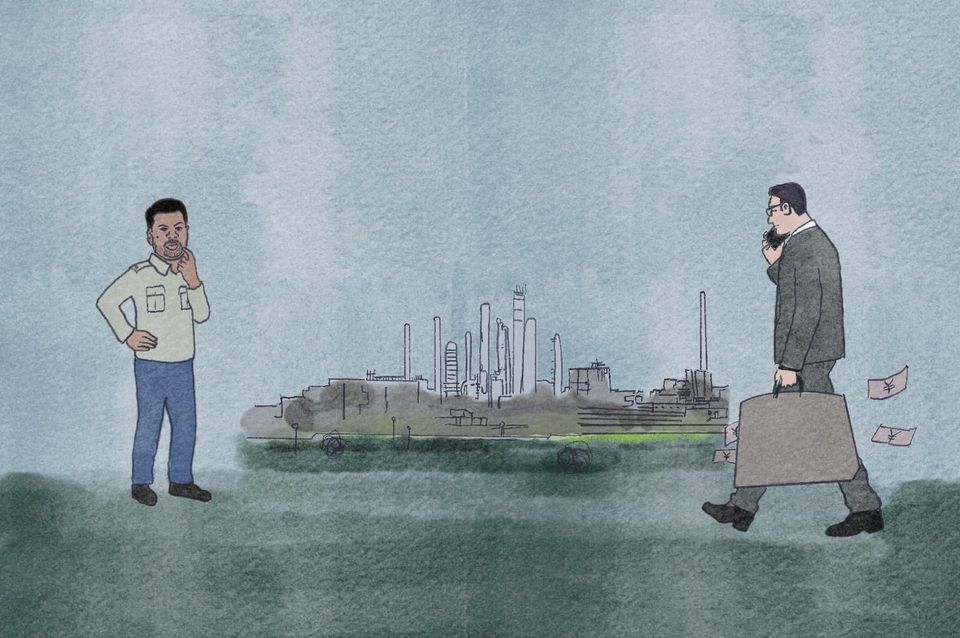
Last month China Merchants withdrew from its logistics hub project at the Colombo Port. Now Sri Lanka may also lose Sinopec’s $3.7 billion oil refinery investment in Hambantota.
The proposed refinery has run into a major – potentially decisive – obstacle. The Cabinet Appointed Negotiating Committee, or CANC, tendered its recommendation a few months ago, though it wasn’t made public. They advised the government to cancel its agreement with Sinopec Unredacted learnt this week.
The key sticking points in negotiations, which lasted over a year, were tax holidays and how much of the refinery’s output could be sold domestically.
The committee’s recommendation raises questions about the government’s handling of the largest foreign investment proposal in Sri Lanka’s history, especially at a time when countries are vying to attract refinery investment.
The idea of an export-oriented refinery in Hambantota has been pushed by multiple governments. Initial discussions were held during President Gotabaya Rajapaksa’s tenure. After calling for expressions of interest, which attracted seven proposals, Sinopec was selected in 2023, during President Ranil Wickremesinghe’s government. When President Anura Kumara Dissanayake visited Beijing in January last year, the government signed an agreement with Sinopec. Some details were left open, and the CANC and Sinopec have been hashing out the fine print since.
The last time they met was on February 3rd. Three Sinopec executives represented the energy giant at the Zoom meeting. CANC members representing Sri Lanka included Udayanga Hemapala, who was the energy ministry secretary, and a couple of other civil servants. Duminda Hulangamuwa, the president’s economic adviser, also logged on.
Sinopec wanted the government’s nod to sell 40% of the refinery’s output domestically, as well as a 25-year tax holiday and more land. The government was willing to lease more land, but wasn’t willing to fully concede on the other points. Citing Sri Lanka’s economic sovereignty and long-term energy security, the CANC offered to explore allowing 20% of the output to be sold domestically, half of what Sinopec asked for. It also rejected Sinopec’s tax holiday demand.
Chinese negotiators would no doubt have expected some give and take, which makes their unwillingness to compromise on these points hard to decipher. Government and industry insiders suspect Sinopec might have wanted to exit anyway by this point. An industry insider complains CANCs aren’t generally equipped with sufficient technical and negotiating advice. Even when negotiating complex, big-ticket deals, CANCs don’t usually hire transaction advisers — often consultancy firms or investment banks.
Ultimately, the end result is Sri Lanka’s refinery expansion plans are back at square one. The CANC has backed upgrading the state-owned Sapugaskanda refinery. The government says it will call for tenders in the next few months.
FSP’s game plan
The Frontline Socialist Party, or FSP, which broke away from the JVP in 2012, has been making concerted efforts to attract disillusioned sections of the JVP, especially trade unions. Its star is rising among left political circles, and the government is beginning to feel the pressure– both from within the party and on the outside.
The breakaway group’s campaign is gaining momentum among grassroots JVP organisers, who are starting to feel betrayed by some of the JVP’s bigwigs. Unredacted learns they believe some leaders, by cosying up to businessmen, are corroding the JVP’s values and identity.
The FSP has seized on this opening. Their cadre are courting the JVP’s more radical leaders and trade unionists — organising discussions with these disgruntled groups to try and build alliances. During these meetings, they’re reminding their former comrades of those who sacrificed their lives to uphold the JVP’s principles, which they say are now being abandoned.