
The last hurdle in the way of the government’s organised crimes and anti-terrorism bills becoming law was the Supreme Court. Just over a week ago the court ruled the new anti-terror law was broadly constitutional. It could be passed by a simple majority of MPs, so long as a few amendments were made. The Supreme Court’s judges are now deciding if the organised crimes bill clears the same bar.
Even if it does, the two bills aren’t likely to reach the House floor soon. Following condemnation by the EU, the UN, and local human rights activists, President Anura Kumara Dissanayake declared that the government would put the bills on hold and open them up for consultation.
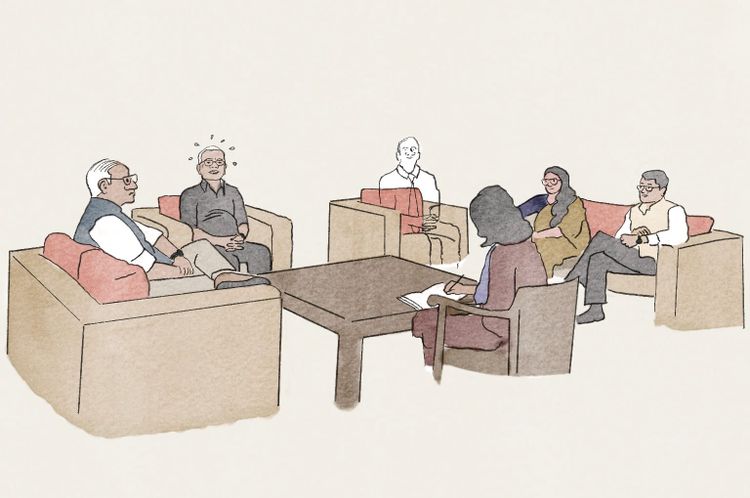
The government’s rethink emerged from pow-wows within the ruling party, chiefly among the JVP’s senior ranks. Civil liberties activists and more moderate party members had briefed the leadership at Pelawatte and made their case through quiet advocacy. After listening to them, AKD and Tilvin Silva, the party’s general secretary, were among those who decided their objections deserved a fuller hearing.
For the anti-terrorism bill at least, it won’t be the first time the public are asked for their views. The Justice Ministry solicited public feedback in December 2025. They then extended the deadline for submissions to February. In the organised crimes Bill’s case, there were no public consultations. The bill was drafted by a shadowy committee in which the police played a leading role.
Other than public consultations, the government has also fallen into the habit of tinkering with controversial bills even after they’re supposed to be finalised, and ready to become law.
At last week’s Supreme Court hearing on the organised crimes Bill, the Attorney General’s Department said the government would amend some of the bill’s most controversial sections.
The department’s lawyer told the court the government would amend the bill’s provisions that allowed the police to arrest people based on their looks — tattoos specifically have roused public ire. The department also referred to the clause enabling the police to take legal action against those who associated with gang members. No mention was made of the controversial provision allowing confessions to police to be admitted as evidence.
The government is “not in a hurry” to get the bills passed, a President’s Office official said.
The NGO Bill, in the works for around a decade, has been another touchy topic. After talks with non-governmental organisations, the government agreed to drop the clause requiring NGOs to “align with the policies of the government”.
Although the decision to remove that contentious clause has just been reported, it isn’t groundbreaking. Unredacted learns the government promised such a revision as far back as June.
Other concerns, such as the absence of an independent appeals mechanism and the requirement that NGOs secure defence ministry security clearances, are still being negotiated. In recent months the NGO Secretariat’s district coordinators have been pushing for even more scrutiny. In some districts, coordinators are even demanding that NGOs inform them every time they hold an event.
IMF redux
For the government at least, things are going more smoothly on the economic front.
A five-member committee tasked by the cabinet to advise on another IMF programme will meet in the coming days.