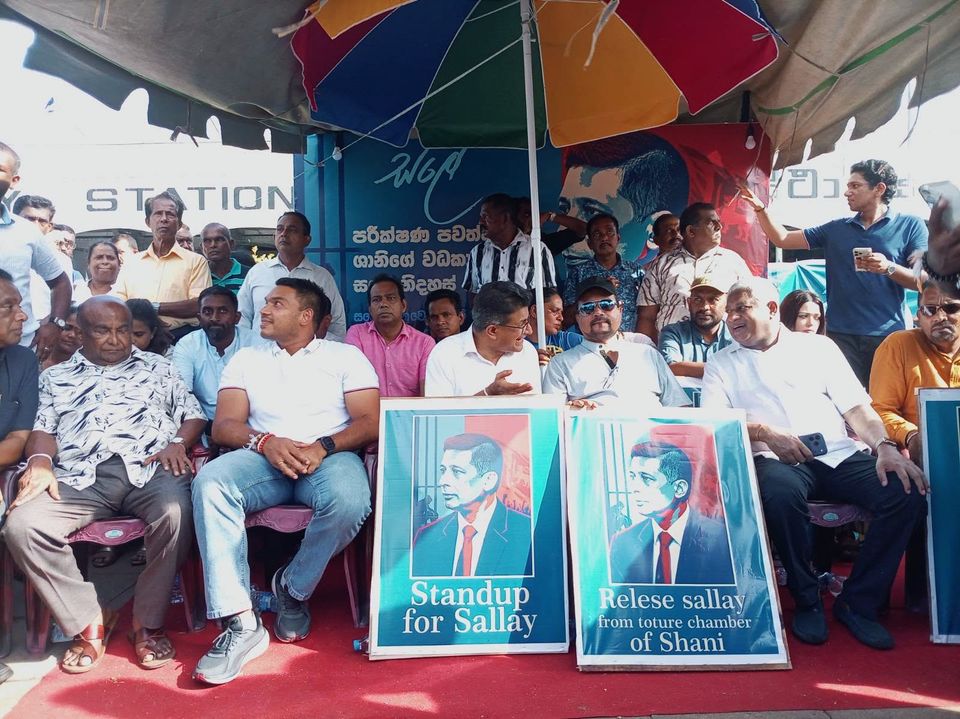
Suresh Sallay, the detained ex-spy chief, continues his hunger strike even after being hospitalised five days ago. The court expects a medical report on his allegations of mistreatment next month.
Sallay’s family also complained to the Human Rights Commission. After the complaint, and about three weeks before Sallay was admitted to hospital, commission officers visited Sallay at the CID’s 6th floor detention facility and obtained a statement from him, said Nimal Punchihewa, a Human Rights commissioner. At the time, Sallay didn’t say he was beaten up — the allegation had been degrading treatment. Officers also hadn’t observed any physical injuries.
Human Rights Commission investigators also took statements from other 6th floor detainees, Punchihewa added. After he was admitted to hospital, commission officers visited him again.
CID officers are expected to appear before the commission next week.
In parallel, two days ago, Pasan Amarasena, the Fort magistrate, ordered a five-member panel composed of psychiatrists and judicial medical officers to inquire into Sallay’s allegations. The panel is to submit their report to court in a fortnight.
Two days after he started his hunger strike, Sallay’s blood sugar levels dropped and he was admitted to the National Hospital. Asith Siriwardena, Sallay’s counsel, says his health has improved. “There is a slight improvement as he’s been given saline.”
But he claims doctors are worried, and they’re trying to convince the patient to stop the fast through his wife.
“We also want to get him to stop this action, because to fight his case he must live,” added Siriwardena.
Both Sallay’s family and his counsel have written to Shani Abeysekara, the CID director, requesting permission to visit him in hospital daily. Siriwardena said that currently, they have to write to Abeysekara each time they want to go see the detainee.
Restricted access to lawyers and family is a common complaint of PTA detainees. In some cases, they’ve been denied access to lawyers for months.
The letters cite “exceptional circumstances” of Sallay’s health condition as grounds for such a request. In detention at the CID, Sallay’s counsel and family were allowed to see him once a week, says Ananda Wijepala, the public security minister.
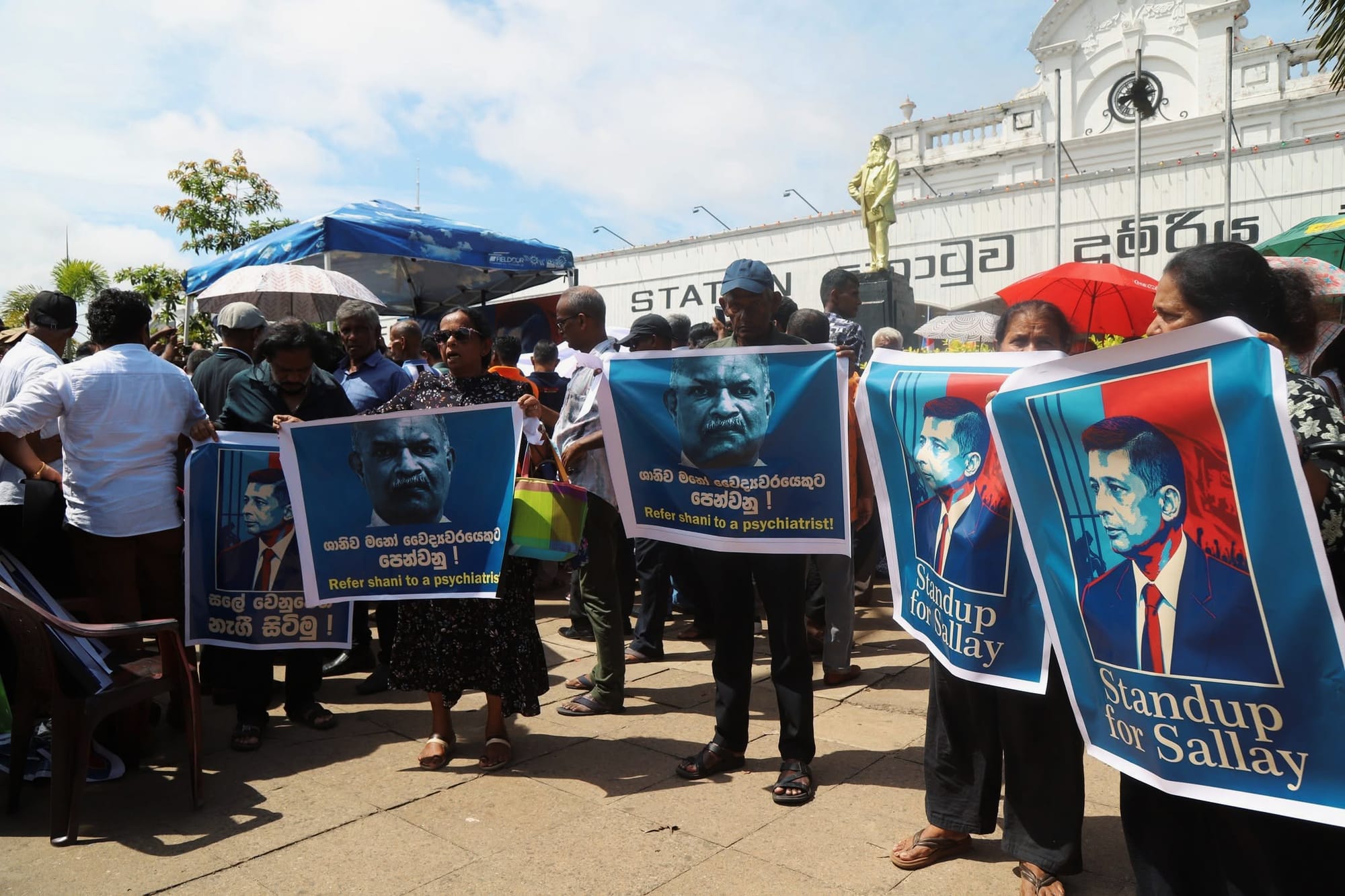
Fast-unto-death
Sallay began his fast-unto-death campaign last Friday night, refusing food, water, and medicine. He demands that his case be transferred out of Abeysekara’s purview and his place of detention be changed. Sallay's counsel has earlier alleged that officers supervising the investigation have a conflict of interest, leading to a biased investigation.