
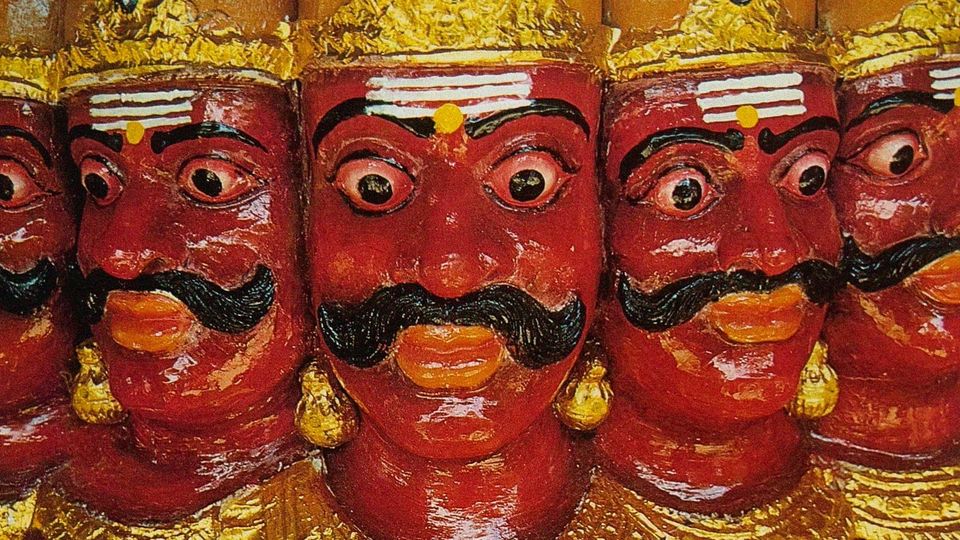
Part II of Flights of Fantasy, an essay by Richard Simon, which reviews
Ravana’s Sri Lanka: Redefining the Sinhala Nation? by Dileepa Witharana,
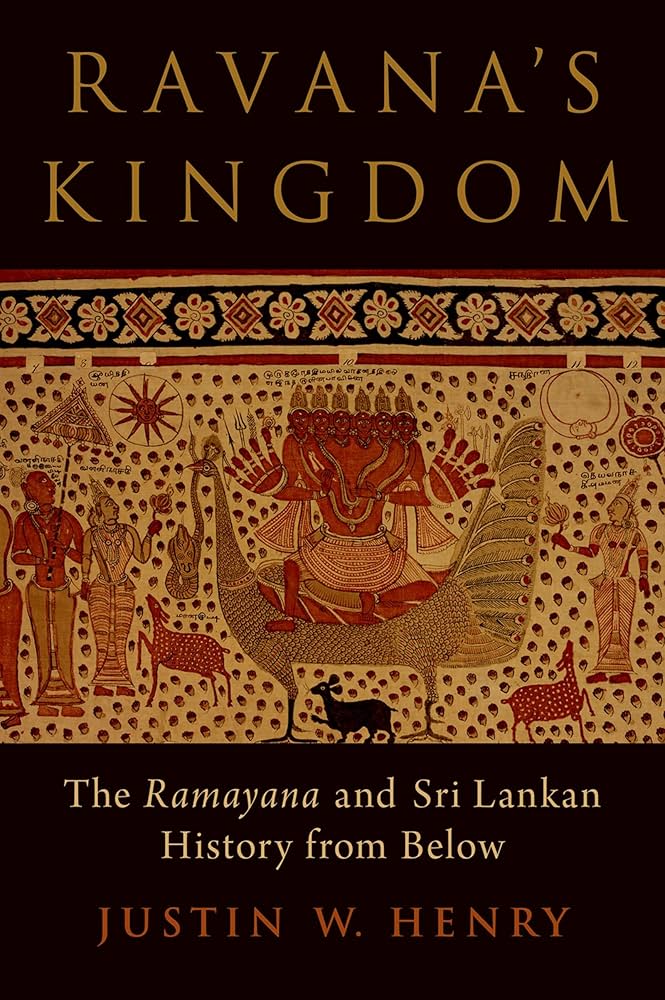
Ravana’s Lanka: The Ramayana & Sri Lankan History from Below by Justin W. Henry, and
The Line of Lanka by Sunela Jayewardene.
4. History from Below
Last week’s article, about my discovery and exploration of the cult of Ravana in popular history and ethnic politics, ended with a review of Dileepa Witharana’s analysis of its growing power in present-day Sri Lanka. Witharana devotes only a few paragraphs to its earlier, pre-twentieth-century history in Sinhalese culture, however. For further enlightenment on that score — together with a parallel assessment of its appearance in Tamil folklore and literature — I turned to Justin W. Henry, an American religious historian whose Ravana’s Kingdom provides a sceptical counterweight to the fabulism of the enthusiasts in the form of a detailed, indeed exhaustive account of the phenomenon. Henry is sympathetic towards Witharana’s thesis that the victory of the Lankan state over the LTTE was "a catalyst for the twenty-first-century Ravana revival," but he is also interested in the influence of the Ramayana among Lankan Tamils. The Chola sangam poets of South India, who in the tenth century CE became the first Indian writers to identify Ravana’s Lanka with our island, saw in him and his rakshasa hosts a fiendish metaphor for the King of Anuradhapura (whom the Cholas were in the process of overthrowing) and his Sinhalese army. To later, Lankan Tamils, however, he was a heroic figure; the Arya Chakravarti dynasty of Jaffna, one of whose titles was "guardians of the bridge," regarded him as their ancestor — asserting a lineage to which some high-caste Jaffna Tamils still claim a connexion. Temples and shrines to Rama, Sita and the monkey-god Hanuman dot the Tamil-speaking parts of the island. Many of them are explicitly connected with the Ramayana – Munneswaram near Chilaw where Rama fashioned his lingam of sand, Koneswaram in Trincomalee where he raised a temple to Shiva after slaying Ravana (and where a larger-than-human statue of Hanuman now leers up at you as you gaze down Lovers’ Leap – truly a case of the abyss staring back). And, of course, Seetha Eliya in the chilly hill country, where Tamil-speaking estate workers of South Indian origin, confusing the Sinhala word for "cold" with the name of the Ramayana’s kidnapped princess, raised a shrine to her among the tea-bushes.Ravana himself, however, is "an ambiguous figure for Sri Lankan Tamil Hindus today," venerated as "the architect of Koneswaram" and "the founder of a number of Shiva temples around Batticaloa" but also condemned as the demonic foe of the divine Rama. With the coming of war between Tamil separatists and the Sri Lankan state, in which some supporters of the latter adopted Ravana as their ancestral champion, his status among Tamils was further degraded — but the author is careful to note that "the uniquely sympathetic image of Ravana was most likely incubated in Tamil Puranic and oral literature" before its later adoption by Sinhalese nationalists.
It is with those nationalists that "Ravana’s Kingdom" is mainly concerned. Witharana and Henry agree that the adoption was relatively recent, for the Ramayana and its characters are almost wholly absent from ancient Sinhalese literature. The great Pali chronicles of the ancient Sinhalese, the Dipavamsa and the Mahavamsa, "say nothing of the historicity of the epic, and nothing about it in relation to the island," though their authors must surely have been familiar with it. Today’s Hela Ravana partisans have, of course, an explanation for this ready made: the epic was deliberately suppressed by the ruling class of the Sinhalese ancient kingdom in order to establish the counter-narrative of the Sinhalese being a people of Indian origin — the very story, in fact, that the Pali chronicles tell. But Henry suggests that the actual cause of suppression may have been religious rather than political:
Buddhist resistance to the Ramayana is documented as far back as the fourth or fifth century CE, when Buddhaghosa refers to the "Theft of Sita" (Sīta Haraṇa) as a "pointless story" (nirattha kathā), categorising it along with the Mahabharata as mere "senseless babble".
It seems unlikely that an august Tamil Buddhist monk who censured the archetypal Indo-Aryan myth as "senseless babble" would have been very strongly committed to a campaign to recast Vijaya — an Indian and, notionally at least, an Aryan — as the Sinhalese ancestral hero. His objections were moral objections.
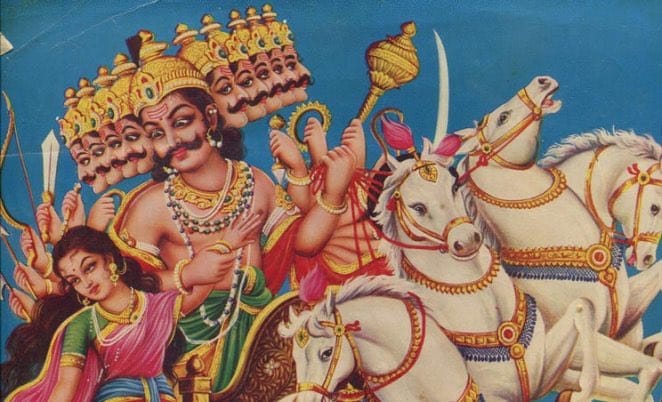
Whatever the truth of the matter, it is inarguable that references to the Ramayana, only commence, with a few negligible exceptions, from about the 14th century – and even in these early examples, which include some of the famous Sandeshaya poems, Rama is the hero, not Ravana. The same is true of formal Sinhala literary works up to at least the beginning of the modern era. But in folk-tales and dramas connected with non-Buddhist rites such as the Kohomba Kankariya, a new distribution of roles was emerging: "a tendency… to elevate Ravana at the expense of Rama." By the Portuguese era the trend was firmly established. Hatan kavi, a genre of popular war-poems celebrating the noble and martial qualities of Sinhalese kings and chiefs, often compare their subjects to the heroic and mighty Ravana. These poems sometimes enlist folkloric elements from the Ramayana itself: the "Sitavaka Hatana", which tells the story of the tripartite division of the Kingdom of Kotte in 1521, explains the origin of the name Sitavaka in the form of a story found, says Henry, "in a number of Jain, Sanskrit, and Indian folk versions of the Ramayana." The city of Sitawaka thus became associated with the epic, and today a number of places around Avissawela — the modern-day town nearest the site of the mediaeval Sinhalese city — are claimed as habitations of the captured princess.
Ravana and his legend also make repeated appearances in the kadayim poth or "boundary books", which described the provincial and village boundaries into which mediaeval Sinhalese kingdoms were divided. The best-known of these works, the "Srī Laṅkādvīpayē Kaḍayim", "begins with a short invocation to the Buddha, followed immediately by an account of the birth of Ravana." According to the author of this late-mediaeval document, Ravana"deviated from the law of kings (rājadharma): without protecting the religious orders, without paying respects to the gods, the Buddha, monks or Brahmins, he instead levied taxes on them, demanding [tribute] even from the recluses and the pacceka buddhas living at the top of Nandamūla Mountain. Thus he established one hundred kingdoms in Lanka, subordinated the Indian rulers, imprisoned the rulers of the dēva world, asura world, garuḍa world [and] nāga world, and levied tributes from them. He captured the kingly planets of Moon and Sun and forced them to serve him by shedding their light over his city."
This text, Henry notes, "offers an important reference point with which to plot the gradual incorporation of Ravana’s kingdom into Sinhala Buddhist conceptions of the island’s distant past." Following the trail still further, he comes at last to the 17th century "Sinhala Rajavaliya", the first document to give a specific date for Ravana’s reign: 1,844 years prior to the Buddha’s enlightenment. Hela Ravana, in this text, is moving out of mythic and into historical time. He is almost ready for a direct confrontation with that other historicised myth, Prince Vijaya; but before the contest begins, there is an unavoidable intermission during which the lands of Sinhalé are subsumed by the British Empire.
The hopeless totality of this final defeat by foreigners, more comprehensive even than the 10th century fall of Anuradhapura to the Cholas, was to the Sinhalese a psychological as well as a historical catastrophe. The national vision of a people of heroic origins — descendants of a lion and a lion-hearted princess, karmically chosen to be the preservers and defenders of the most philosophical of all the world’s faiths, a people whom no foreign attacker had ever before been able to subdue entirely — was shattered for ever. It had been nurtured and defended among the Sinhalese for 2,000 years or more; it was accepted as true even by the British, who obligingly reinforced its veracity with their archaeological digs and translations of ancient documents. Vijaya had never been more real to his putative descendants than he became in the 19th and 20th centuries — or less inspiring. Even the uniqueness of Sinhalese Buddhism was compromised, for European archaeologists working in India claimed to have produced decisive evidence showing that the Buddha had been born, lived and finally passed away in that country. The Mahavamsa story seemed to be losing its potency; perhaps another was needed.
In 1881, a Sinhala newspaper, "Lak Mini Kirula", ran an article portraying King Ravana as ruler of Hela Diva – "Sinhalese Island" – in the year 2837BCE. The new ancestral candidate, claiming some 2,000 years’ seniority over his opponent, had at last stepped forward. All that he now lacked was a great military victory, a conquest that could be celebrated in new hatan kavi composed by his triumphant followers. But that would have to wait until the British were gone and the Sinhalese were again free to pursue their own destiny. The desired victory finally came in the month of Vesak in the 2,552nd year of the Buddhist era, shown on Western calendars as May 2009.
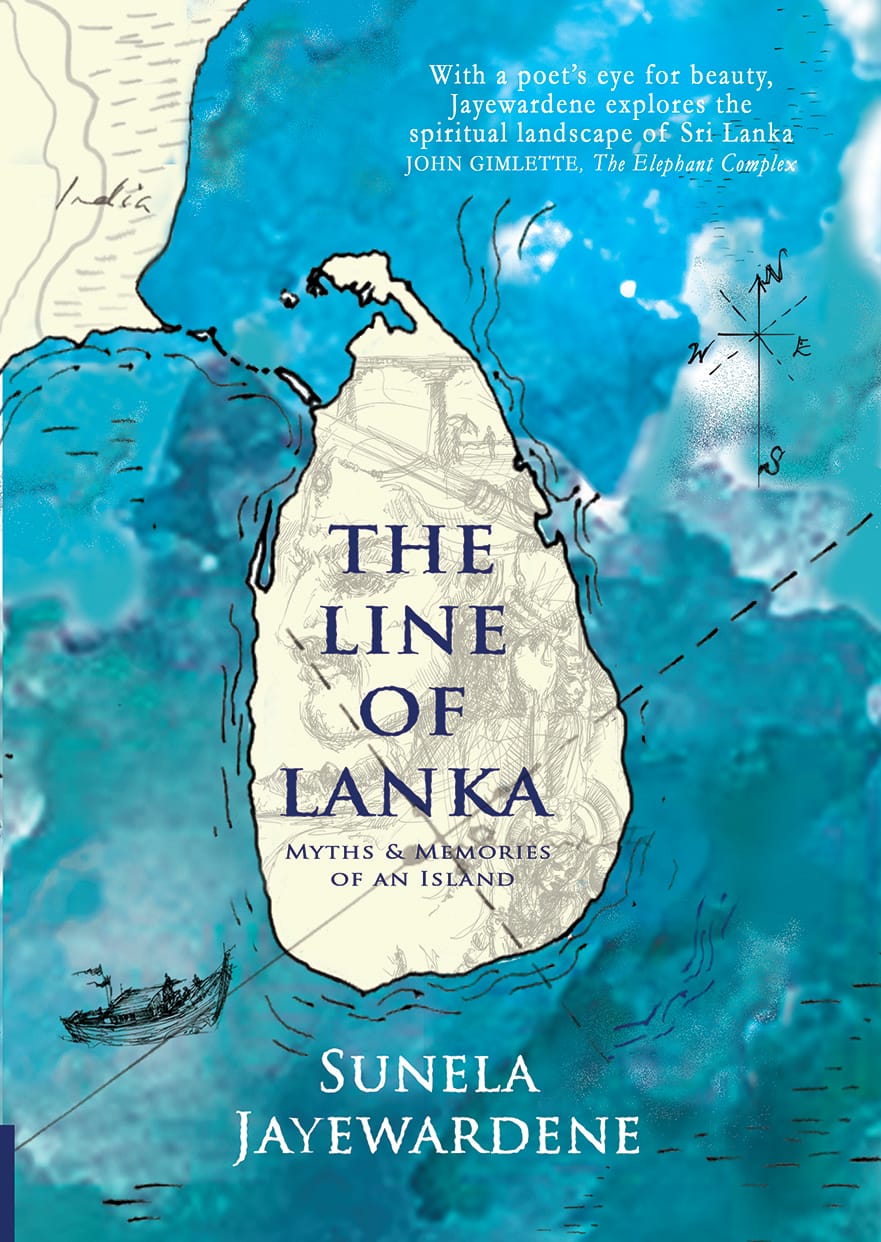
Though anyone who reads the Sinhala popular press or watches Sinhala television will be well acquainted with the Ravana movement's manifestations, the first inkling our deracinated little rump had of it was Sunela Jayewardene’s genre-fluid book, The Line of Lanka, in 2017.
5. Nuking the Knuckles
Lanka’s dwindling English-educated minority lives in a kind of postcolonial bubble, into which new developments in vernacular society only penetrate when they become impossible to ignore. This is why we are always taken by surprise when great national events occur: the political revolution of 1956, the JVP uprising of 1971, Black July, the Aragalaya — all these, for many of us, seemed to come out of nowhere. The rise of the Hela Ravana movement, too, has largely passed us by. Though anyone who reads the Sinhala popular press or watches Sinhala television will be well acquainted with its manifestations, the first inkling our deracinated little rump had of it was when Perera Hussein, publishers by appointment to Colombo high society, brought out Sunela Jayewardene’s genre-fluid book, "The Line of Lanka", in 2017.I had less excuse for ignorance than most, having received my own personal introduction to the cult at Maligawila some years earlier. But when my informant of that day mentioned his "movement", I had pictured a small group of dope-smoking enthusiasts making up tall tales in Badulla. I simply had no idea that Hela Ravana was a national phenomenon, endorsed by senior academics, popular media figures, controversial Buddhist monks, nativist politicians and the then president of the republic himself. Unforgivably for an ex-adman, I even failed to register much of the controversy over the Ramayana Trail.
It has to be said that Jayewardene’s book doesn’t go into any of this, either. She presents her exegesis of the Ravana legend as an interpretation she has arrived at largely on her own, stitching together rural folk tales, family lore and evidence from the internet like a patchwork quilt. This, I am afraid, is not quite true. Most if not all of the claims in the book have — as shown above — already appeared in Sinhala. What is unique about "The Line of Lanka" is that it is in English.
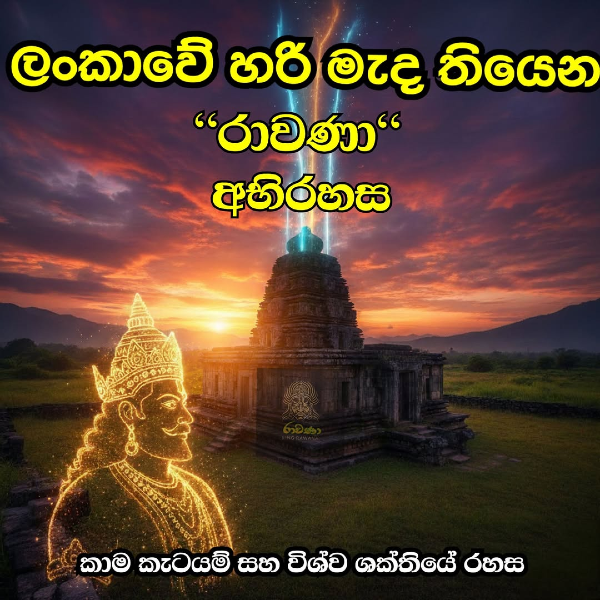
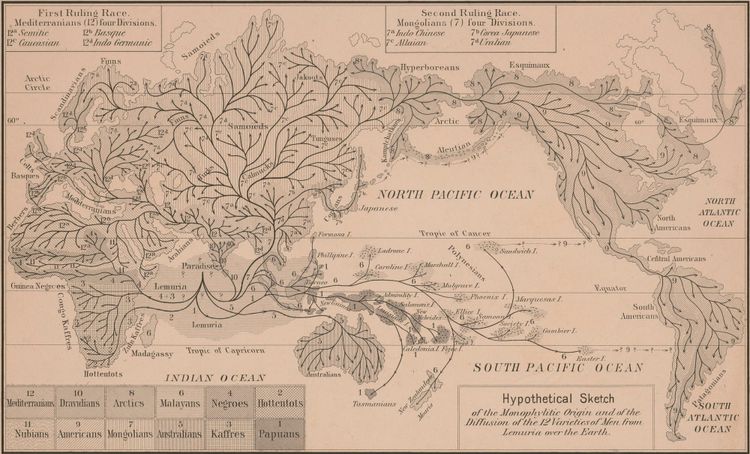
I fear Jayewardene’s intentions go beyond the merely literary. Her book is yet another step in the organic, not always conscious process of historifying the mythical Ravana, turning him into the ruler of an advanced ancient Lankan civilisation (equipped, in true 21st century style, with combat aircraft and guided missiles) whose power extended over the Indian Ocean basin as well as much of Asia south of the Himalayas. It is Madame Blavatsky’s Lemuria all over again, and the semi-divine monarch who rules over it all is once again Ravana, the rakshasa King of Lanka in the Ramayana — no evil fiend, as the Indian version of that epic portrays him, but a noble, arguably divine monarch and hero.
Inevitably, "The Line of Lanka" makes a good deal of the legends and folk-tales of Ravana and his magic flying machine that abound in the hinterlands of Lanka, descanting on place-names in different parts of the island that can, with a little torturing, be translated as "airport", "aircraft workshop" and so on. But this is not what you could call positive evidence of an ancient technological civilisation — especially when you consider Justin Henry’s point that the stories of the Ramayana have been known and retold all over South and Southeast Asia for centuries. Aware of this, the author of "The Line of Lanka" has gone to some pains to provide additional support for her story. This takes the form that the average person probably thinks of as "scientific", though it would be kind to call it dubious. Jayewardene may not be able to imagine why a rock-face in the Knuckles, a range of mountains above Matale, collapsed in the particular way it did; but if she had ever bothered to ask a geologist, she might have received a satisfactory explanation that did not involve prehistoric guided missiles.
We no longer live in the Middle Ages, and any nonfiction author writing today has to be accurate and well-informed about scientific matters if they hope to be taken seriously. It would have been wise of Jayewardene’s publishers to have the manuscript of "The Line of Lanka" vetted by someone knowledgeable about the physical sciences before it was sent to print. This plainly was not done, and the result is a riot of rabbit-hole-diving and dot-connecting worthy of Qanon. We find the author getting gravity mixed up with something she calls "geomagnetic energy" (it isn’t), failing to understand the axial precession of the earth, getting elemental calcium mixed up with calcium carbonate and perpetrating a number of other elementary errors. Had she been better advised, she would certainly not have suggested that Mohenjo-Daro was destroyed by a giant (by implication, nuclear) explosion four thousand years ago. This is a well-known tall tale spread by online conspiracy theorists, based on hilariously false evidence; it has been debunked repeatedly but superstition never dies. Better advice might also have kept her from mistaking the Vaimanika Shastra, a 20th century Sanskrit fabrication, for a genuine Vedic document "explaining" how Ravana’s flying machine worked, or from propagating internet claims of prehistoric drowned cities off the coasts of South India and Japan. Much of this bricolage is borrowed from the online promoters of "Vedic science": Hindu chauvinists for whom every tale of a magical or supernatural event in some old Indian literary work attests to the existence of some marvellous but inexplicably vanished desi technology.
Less forgivably, Jayewardene gets important dates in Lankan history wrong. Gillian Juleff’s work on wind-powered blast furnaces in the southwest of Lanka dates them to the first millennium CE, not BCE — a difference of as much as two thousand years. Likewise, the heyday of Sigiriya was the 5th century CE and not, as she states, the fifth century BCE — a thousand-year difference, and one that artfully moves the dating of the site back from history into prehistory, where it fits her story better. And while the Surya Siddhanta, the Hindu mathematical text for which she makes such extravagant claims, may well be very ancient, it is worth noting that the oldest existing version dates from only c. 350CE.
In spite of all the fantasising, I found much to enjoy in "The Line of Lanka", and much to praise. Lankans, especially those who think our history began with the coming of Vijaya, do need to be reminded, as Jayewardene reminds us, that there was a settled culture in this country centuries before that, even if it didn’t wield nukes and chemical weapons. I agree with her contention that the worship of animist and Hindu deities by Sinhalese Buddhists stems from the desire of ordinary folk to enjoy the supernatural favour and protection which strict, post-Olcott Sinhalese Buddhism does not offer. I was charmed by some of her imagery, such as the "pouting lip of land" she invokes in an early chapter. I even learned something worth knowing from her book, namely that the word ‘Maldive’ is probably derived from the Sinhala words for "chain" and "island", mala+diva — though by the time I came to the page on which I found this nugget, I had grown so suspicious of any claim made by our author that I took pains to corroborate it from a reliable source before accepting it as true.
If Sunela Jayewardene had chosen to write a straightforward account of her explorations of the Lankan interior and the folklore of its inhabitants, she might have produced a pleasant and instructive work in the lineage of John Still or Leonard Woolf. Her prose is by no means up to their standard but is far from objectionable. The erratic punctuation and odd malapropisms — leeches gathered in "swathes", mountains "arraigned" rather than arrayed or arranged, temples "subsumed" rather than submerged or consumed — are funny enough to be forgivable. As an example of English prose by a Lankan writer, "The Line of Lanka" is well above average. Pity, then, that it isn’t the revolutionary historical exposé it purports to be.
In the end, I wasn’t able to finish it. This had nothing to do with its political slant, of which I was ignorant when I read the book; it was the scientific and scholastic implausibilities that made it impossible to stomach. I’m sorry about this, because her subject is of great interest to me. As for the propaganda angle, well, I’ve always been quite fond of conspiracy theories. Her book came highly recommended; I should have liked to endorse the recommendation, but I cannot in good conscience do that. Still, if you are the kind of person who cares little for ethnic politics and still less about scientific and historical accuracy, but loves mysteries, nature rambles, wilderness treks, jungle shrines to half-forgotten gods, and the tall tales with which rural folk and Sinhalese chauvinists while away their idle hours, you may enjoy "The Line of Lanka" very much indeed. Just be careful not to swallow the hook at the end of it.
This essay is drawn from Richard Simon’s forthcoming book of essays on Sri Lankan writing in English, Cocktails by the Volcano.
Comments ()