It’s been two months since former spy chief Suresh Sallay was arrested in connection with the Easter Bombings. The CID has been updating the Fort magistrate’s court on the investigation’s progress via B reports. The latest report details how four Muslim men Sallay sent to Negombo surveilled churches right before the bombings. One of these men has since been linked to ISIS.
A war-time army informant, named in the reports but whose identity The Examiner has withheld due to the case’s sensitivity, told the CID that three weeks before the Easter Bombings, Sallay had directed him to accompany four Muslim men to Muslim villages in Negombo. But instead, this witness says the four men had scoped-out Negombo’s Catholic churches, gathering “sensitive information”.
The State Intelligence Service, or SIS, linked one of the men to ISIS. But he has not been arrested so far, and remains wanted.
So far, over a hundred witnesses have made statements to the CID in connection with Sallay’s arrest, as detailed in the latest three B reports obtained by The Examiner.
The B reports, spanning over a hundred pages, detail the police’s investigations into allegations that Sallay had a role in coordinating the attacks. They point to him “directly and indirectly” supporting “circumstances that led to Islamic extremists organising from fundamentalism to violence, and to eventually, terrorism”.
To date, Sallay is the highest profile arrest in connection with the bombings. Sallay’s arrest also brings intelligence agencies, and their informant networks, into the limelight.
The war-time army informant, who is mentioned in all three B reports, told the CID he initially met Sallay in 2010, right after the war ended. With the end of the war in 2009, his pay from the army had also ended. Yet, Sallay, who headed military intelligence until 2016, continued to give him odd jobs.
One of these was Sallay calling him to take the four Muslim men around Negombo. After the attacks, he became suspicious that they had been planned with Sallay’s knowledge.
In January, he had also been instructed by his contacts in military intelligence — three corporals — to take photographs and grid references of Catholic churches and temples in Negombo. He adds that the corporals acted on instructions from two majors.
The B reports don’t only implicate Sallay, they also suggest that multiple other military intelligence officers had prior knowledge of the attacks, were involved in its cover-up, and are now threatening witnesses.
Cover ups
In two key instances — one leading up to the attacks and another immediately after — the CID found evidence that suggests intelligence officers conspired to shift blame away from Islamic extremists.
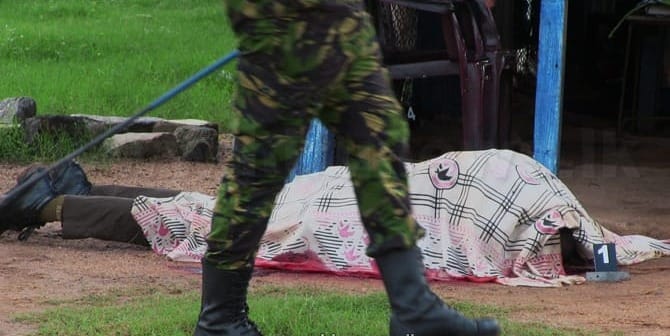
The first involves the murder of two police officers in Vavunathivu in 2018, a year before the bombings. The CID told court last week their investigations found that Islamic extremists, including Easter Bombing plotter, Mohamed Zahran, were behind it.
The B report contains evidence of how, soon after the murders, some officers from SIS, army intelligence, and police intelligence conspired to shift the blame on to a former LTTE cadre. They also spread the idea that the LTTE was regrouping. The reports suggest this cover-up opened the field for National Thowheed Jamath, NTJ, members to then bomb churches and hotels in 2019.
Shortly after the attacks, Gotabaya Rajapaksa became president and appointed Sallay as SIS’s head. Witness statements, including from then senior CID officers, allege that Sallay used his new position to influence the authorities into believing that a key witness, Pulasthini Mahendran, alias Sarah Jasmine, had died five days after the attacks.
On April 26th 2019, police and army surrounded a house where relatives of the bombers had been hiding. The occupants in the house blew themselves up, instead of surrendering. During the gun fight, a key suspect was shot dead, preventing him from being taken in for questioning. Jasmine, the wife of one of the bombers, was also allegedly there, but could not be found. The controversy is whether she died there, or had disappeared.