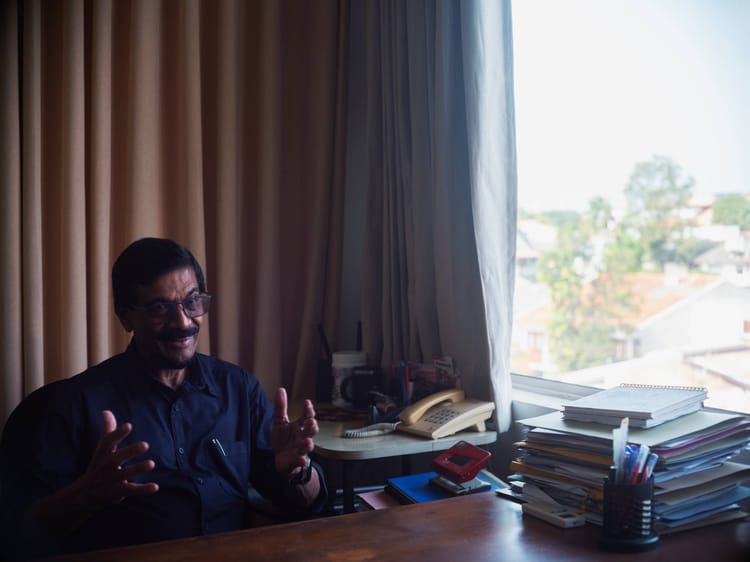
The leader of Sri Lanka’s Telugu people, Ramaswamy Chandraswamy Anettakka, can only look towards a ‘temporary’ future for his community’s culture. In their seven villages, youth are rejecting traditional ways of living. With each passing day, more and more identify themselves as Sinhalese.
The Telugus of Sri Lanka trace their lineage back to the days of the Kandyan Kingdom. The last king of Kandy, Sri Wickrama Rajasinghe, married a Telugu-speaking Nayakar princess from India. Her descendants still live in Kandy; Anettakka says he visits them from time to time.
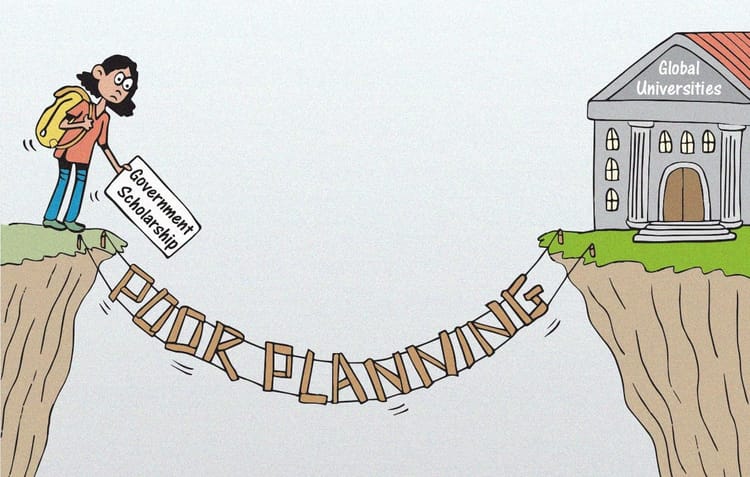
Recently, Indians attached to a university in Tirupati visited Anettakka at his village in Anuradhapura. They’ve offered scholarships for the youth to travel to India and learn to read and write in Telugu.
“Our language is Telugu. But in Sri Lanka, there are no Telugu letters,” says Anettakka. “Usage is slowly ending. Since there are no letters, we only speak Telugu a little, and mix Sinhala and Tamil into it. If we had letters, we could use the language properly.”
Elected by village seniors for life, he’s the traditional leader of a community of about one lakh people, spread across the seven villages. His hope is that the youngsters would learn the written form of their language, and bring it back to Sri Lanka. For seniors in the community like Anettakka, preserving their mother tongue is important. They’ve all changed with the times, choosing different faiths and adjusting to the modern world. Language remains one of their last connections to their forefathers.
Misunderstood, misrepresented
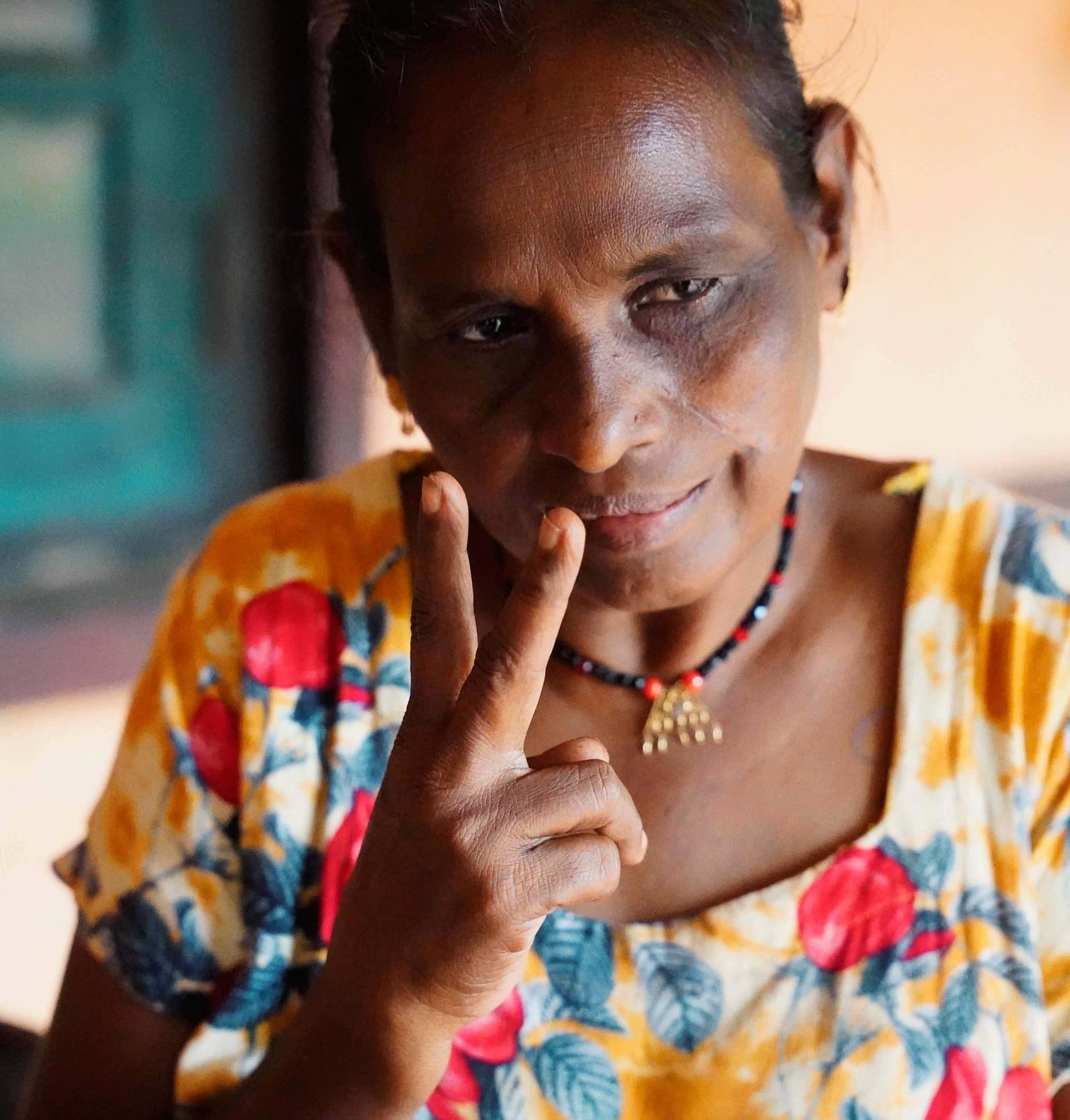
But S. Malkanthi says her two daughters don’t know how to speak Telugu. Nor is she interested in teaching them their mother tongue. “I want them to pass their O Levels, and then maybe go for an English course so they can do a job. There’s no point in learning Telugu in Sri Lanka. Our race is in India,” she says.
Malkanthi and her family live “like the Sinhalese”, celebrating the Sinhala and Tamil new year in April and following Buddhism. Telugu culture and language isn’t “necessary”, she says, adding that as society modernises, their own children must also “go forward”.
Her niece is at the visual and performing arts university in Colombo. She had been asked to take the India trip, to study their language. But Malkanthi says her niece isn’t interested.
“There’s nothing for Telegu here. If something like that was there, then it’s okay to continue the language. But there’s no point in learning Telugu here because in Sri Lanka things don’t happen the Telugu way. Why spend six months in India learning a language that isn’t used here? She [niece] doesn’t want to waste time as that won’t help her in doing a job here,” reflects Malkanthi.
Malkanthi’s rejection of Telugu culture stems through generations of misunderstanding and systematic discrimination they’ve faced from most Sri Lankans.
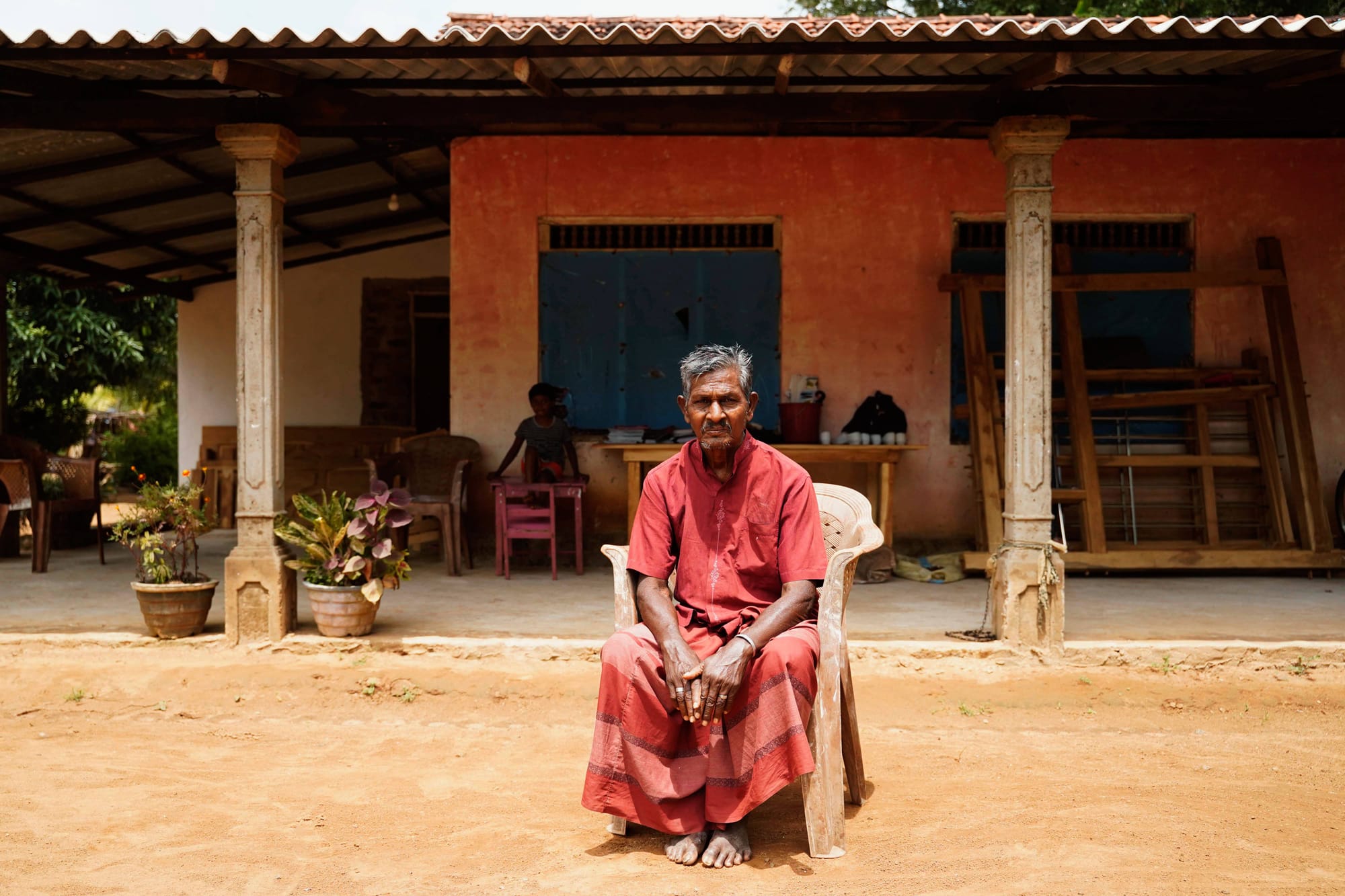
Their community is diverse, says Nihal (name changed). Nihal, a resident of the largest Telugu village, Kudagama, is also one of its most respected members – he serves in a government office. His family were traditionally like arachchis in a Sinhala village — native headmen tasked with keeping the peace, representing the central government, and generally administering village affairs.
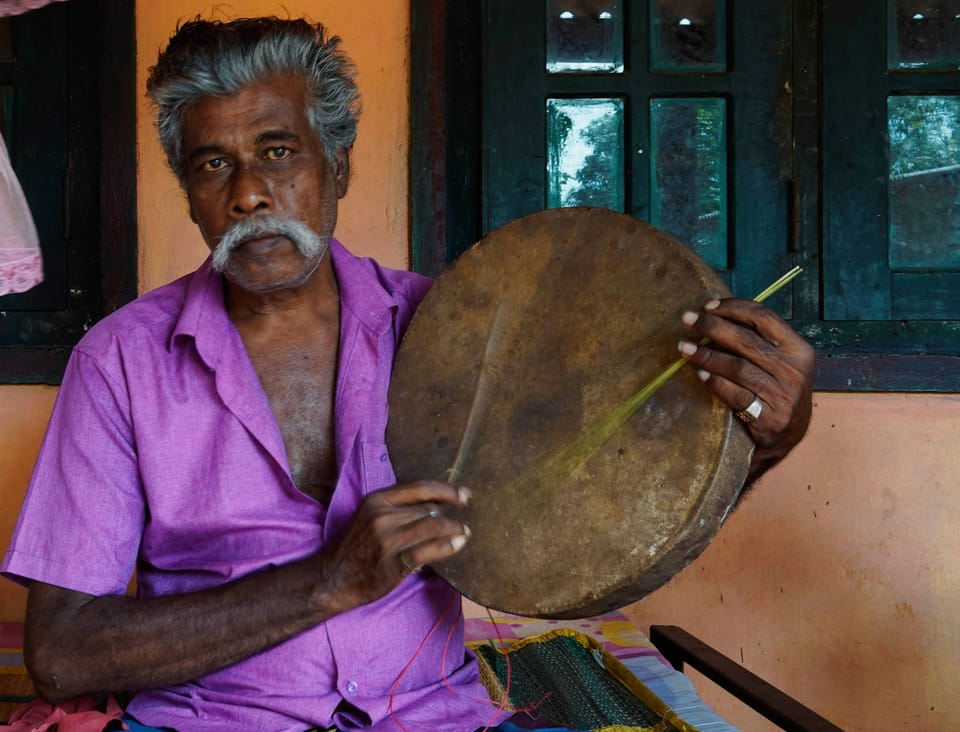
His own family’s history is a testament to diversity within Sri Lanka’s Telugu community, says Nihal. Like the Sinhala and Tamil people, caste and lineage determined their traditional professions, like hunting and farming. Unlike the Sinhalese and Tamils, some in the Telugu community also engage in snake charming and soothsaying. But popular culture has reduced the entire community to these two ‘exotic’ professions.
Nihal resents this slighting. “There was a Sinhala teledrama recently, depicting a Telugu man. The opening scene was him stealing a chicken. There aren’t thieves like that in this village. We don’t steal,” he says.
Popular culture and media misrepresent the Telugu people in the country by calling them ‘Ahikuntaka’. But the Ahikuntakas are only a group within the Telugu community; this group charms snakes and tells fortunes.
Anettakka is a snake charmer too. He says they got their name of ‘Ahikuntaka’ from a king when he saw the control they had over the ahinsaka or innocent snake.
But it has also led to stigma. An old Sinhalese saying still warns people to not drink water from an Ahikuntaka house — for fear that it would be charmed with curses or magic.
Only about ten percent of the community lives the ‘Ahikuntaka’ way today; travelling to popular tourist spots like Sigiriya and Galle with their snakes and their palm reading prowess.
Saman’s (name changed) wife still does fortune telling. He greets us warmly at his home in Kudagama, Anuradhapura, but apologises for his wife’s absence. “She’s gone walking to tell fortunes,” he says. “Gone walking” is the common idiom for their traditional profession.
This profession itself has changed over the decades, his mother tells us. Her age prevents her from working often now. In the past, they used to live in tents — leading to them being called ‘gypsies’. They now rent houses for short periods when they go walking.
But when Saman sees his three younger daughters, he envisions a different future. “We hope they’ll do a job.” He adds proudly that his eldest daughter is a nurse.
“These kids go the Sinhala way, as they interact with the Sinhalese, and go to work in Sinhalese places. So it’s easy for them to live that way — otherwise it’s a problem. The new generation is educating themselves at school,” he says.
Records, perceptions
Government officials recording their children’s birth certificates often don’t know how to record their ethnicity. Some birth certificates list their caste for their race. Some birth certificates cross out Sinhala to write Telugu. Others call them Ahikuntaka. This shows the state’s failure to recognise the Telugu-speaking community properly.