The rupee started depreciating rapidly two weeks ago, leading to panic in the markets. Banks even stopped buying and selling dollars to each other.
When the war in the Gulf began, the rupee was at 310 a dollar. Two months later, it declined to 322. That’s when the rout started. Just nine days later, last Thursday, it fell to levels not seen since the economic crisis. Although the rupee recovered, it left markets and authorities spooked.
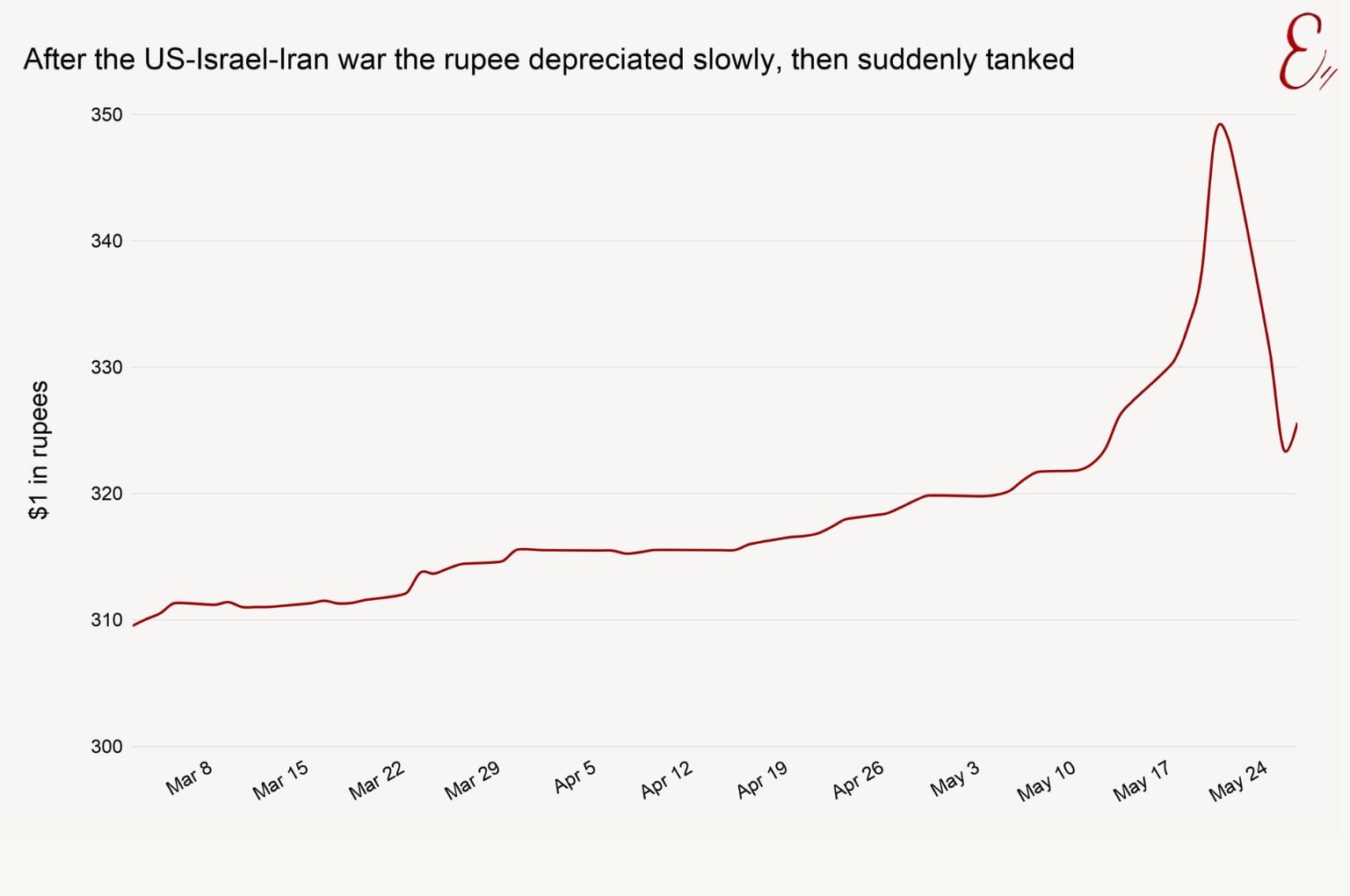
The rupee’s slow decline in the war’s wake came as no surprise. Rising oil prices meant Sri Lanka needed to buy more dollars to pay higher fuel bills.
Tourists and tea buyers also sold fewer dollars to buy rupees — fewer tourists travelled to Sri Lanka and buyers ordered less tea. This year’s April tourism earnings were 39% less than April last year. Analysts at Standard Chartered predict this year’s tourism earnings will be 20% less than last year’s earnings.
As a result, there was greater demand for dollars, combined with lower supply, resulting in the rupee’s depreciation.
But the sudden collapse, starting May 12th, was still a shock. For at least a day this month, with all the uncertainty, banks even stopped buying and selling dollars to each other.
Stability narrative shakes
The Examiner read investment notes from four investment banks, and spoke to economists and bankers to understand what happened. Most requested anonymity as they weren’t authorised to speak to the press.
They attribute the sudden collapse in the rupee to recent events — primarily a loss of confidence in the “stability” narrative. Large fuel payments in April and May appear to have been the trigger.
Fearing major supply disruptions, Sri Lanka bought fuel at very high prices in April and May. Some CPC diesel shipments in April cost 50% more per barrel compared to March.
The CPC also prioritised supply continuity, purchasing larger quantities of fuel and oil than usual. Normally Sri Lanka holds about a month of fuel stocks, but the CPC says current fuel stocks cover two months worth of consumption.
As a result of buying more fuel at higher prices, the CPC's import bill ballooned. Last year’s fuel import bill was $1.5 billion. This year, the bill for the first four months alone was $1 billion, with April’s cost alone exceeding $500 million.
These payments were so large the CPC had difficulty sourcing the dollars from commercial banks, leading to discussions with the Central Bank on potentially buying dollars from them, said an official familiar with the matter.
This pressure on the rupee led to some depreciation, which then created expectations of even further depreciation. Importers started panicking. They stocked-up and front-loaded their purchases, a banker said. This in turn placed further pressure on the rupee, creating a self-perpetuating cycle.
Chayu Damsinghe, think tank Frontier Research’s macroeconomics head, thinks the market over-reacted. He thinks the market hasn’t fully understood just how different Sri Lanka’s fundamentals are now.
After being a “twin deficit” country for decades, Sri Lanka has been in a “twin surplus” for the last three years. “We’re living in a different macroeconomic reality,” says Damsinghe. The government earns more than it spends, and Sri Lanka brings in more foreign money than it sends out.
IMF intervenes
The government tried to stabilise the rupee. The Finance Ministry increased vehicle import taxes on May 16th to reduce vehicle imports, and thereby reduce pressure on the rupee. But vehicle orders continued to be robust, though weaker than before the surcharge. And the rupee continued to slide.
Over the last two months, the Central Bank defended the rupee by selling dollars — selling around $300 million from reserves. But the bank’s intervention was limited. It had committed to the IMF that it would largely allow markets to determine the exchange rate, and limit dollar sales to “truly disorderly market conditions”.
Last Friday, following statements from senior IMF staff, the market started to stabilise. Krishna Srinivasan, its Asia director, indicated that the IMF would approve its latest review for a disbursement of $695 million, and reiterated that Sri Lanka’s “policy framework today is considerably stronger than in the past”. That same day, the rupee had its highest single day appreciation in three years.