

“Salt beef has gone out of fashion. It’s always been on a traditional table for Christmas. But it’s been replaced. We got more western — going for the turkeys,” says Angelo Gonsalves, a Portuguese Burgher who caters traditional Burgher dishes come Christmas time.
His home in Dehiwala is a bustle of activity, and decorated with bursts of festive colour. On the day we visited him, his wife and daughter sous chef. But he says it’s usually a combined family effort; his other daughter and mother pitch in too.
Gonsalves’ grandmother was an expert at fermenting milk wine with kasippu — generally paired with a very boozy Christmas cake on Christmas eve.

Today, milk wine has been usurped by its more luxe (and alcoholic) successors — imported reds and whites. But Burghers who grew up around independence remember looking forward to the cloyingly sweet liqueur every year. As children, they would sneak in a few additional gulps that were left in guests’ glasses.
The Burghers are the leftovers from Portuguese and Dutch conquest. When the dust settled on colonial rule, some of it settled in softer corners like food. Today, though, many Burgher traditions may be on the verge of dying out.
The Burghers are an eating, drinking people. The traditions they grip and hold most tightly revolve around food, especially at Christmas. Though, as history gives way to the present, the Christmas table too keeps changing — at Burgher and other Christian homes too. Caterers working out of their home kitchens like Gonsalves — one of an ever-dwindling few — are trying to keep traditions alive.
Gonsalves first tried making a bottle of milk wine after he got married. “For heck’s sake, we thought. And then a couple of my friends tried it out.”
Encouraged by promises that they would put their money where their mouth was, he began to sell the wine on a small scale about fifteen years ago. Over the years, he has tweaked his grandmother’s recipe, moving from muslin cloth to filter paper for the tedious filtering process, in order to perfect the texture.
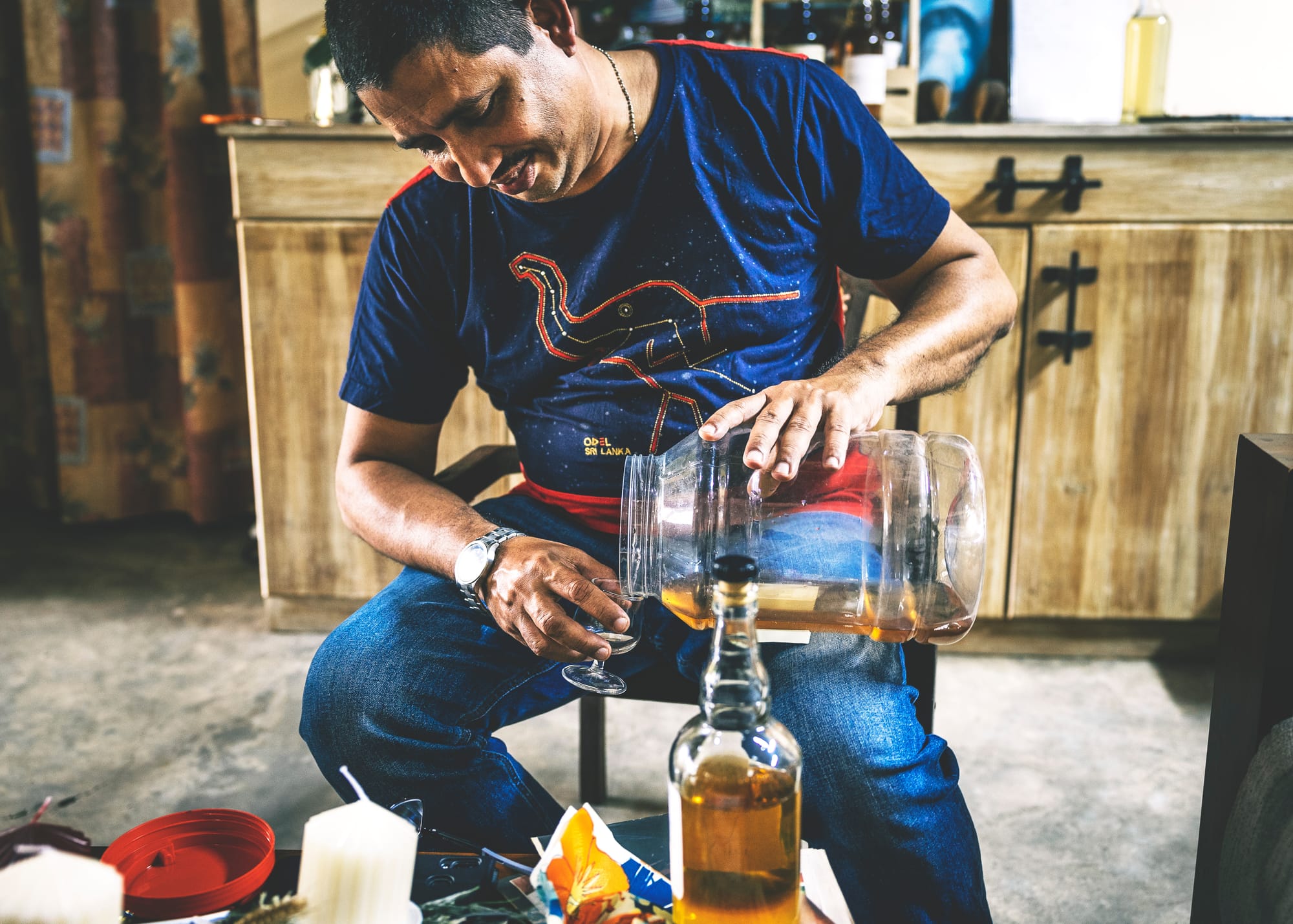
Gonsalves would make the mixture in bulk batches and go to his day job while his parents would filter the mixture, drop by drop. After his father passed away, this time-consuming filtering process became near impossible. Good quality filter paper was also difficult to come by after the economic crisis in 2022. So, Gonsalves adapted.
He uses a ‘power’ filter — a type of modified water filter — to make the wine now, and every December sells about a hundred bottles of the traditional liqueur.
But Gonsalves’ small family business isn’t just limited to the festive season these days. Around the year, all manner of customers make their way to his doorstep, craving this nostalgic trip down memory lane.
One of his constants is the St. Nikolaas’ elders’ home. He tells us that the “Burgher aunties” are an exacting lot: one likes her wine darker (more caramelised sugar lends a smokey kick), another demands a lighter, more delicate palate. With a good-natured laugh, he tells us how he patiently indulges them. The cases he ships to St. Nikolaas’ have milk wine bottles spanning from amber to gold.
His clientele is largely elderly; young people “don’t have a taste” for milk wine. Retirees have a different issue — the milk wine they adore is becoming increasingly expensive due to the rising cost of arrack.
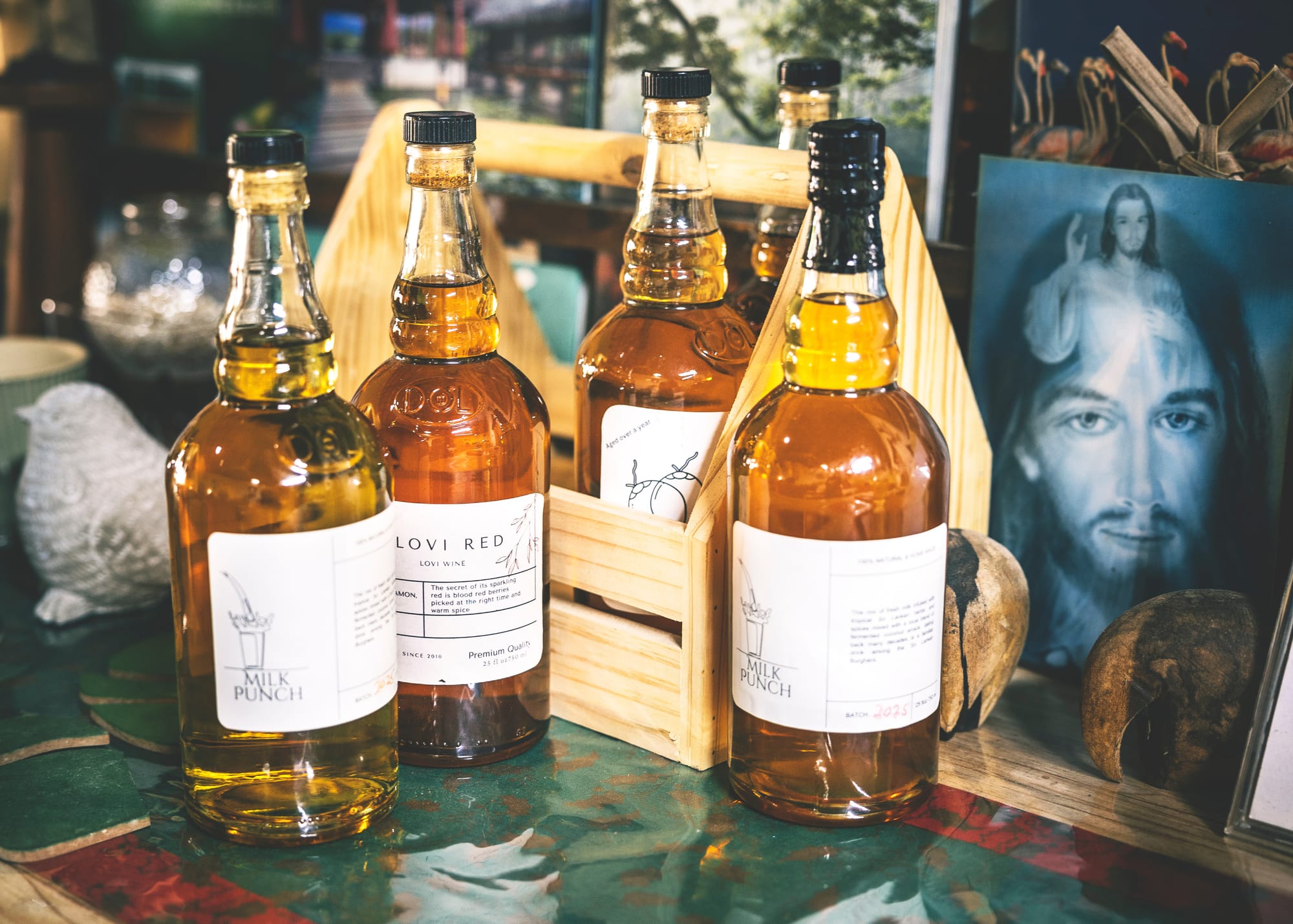
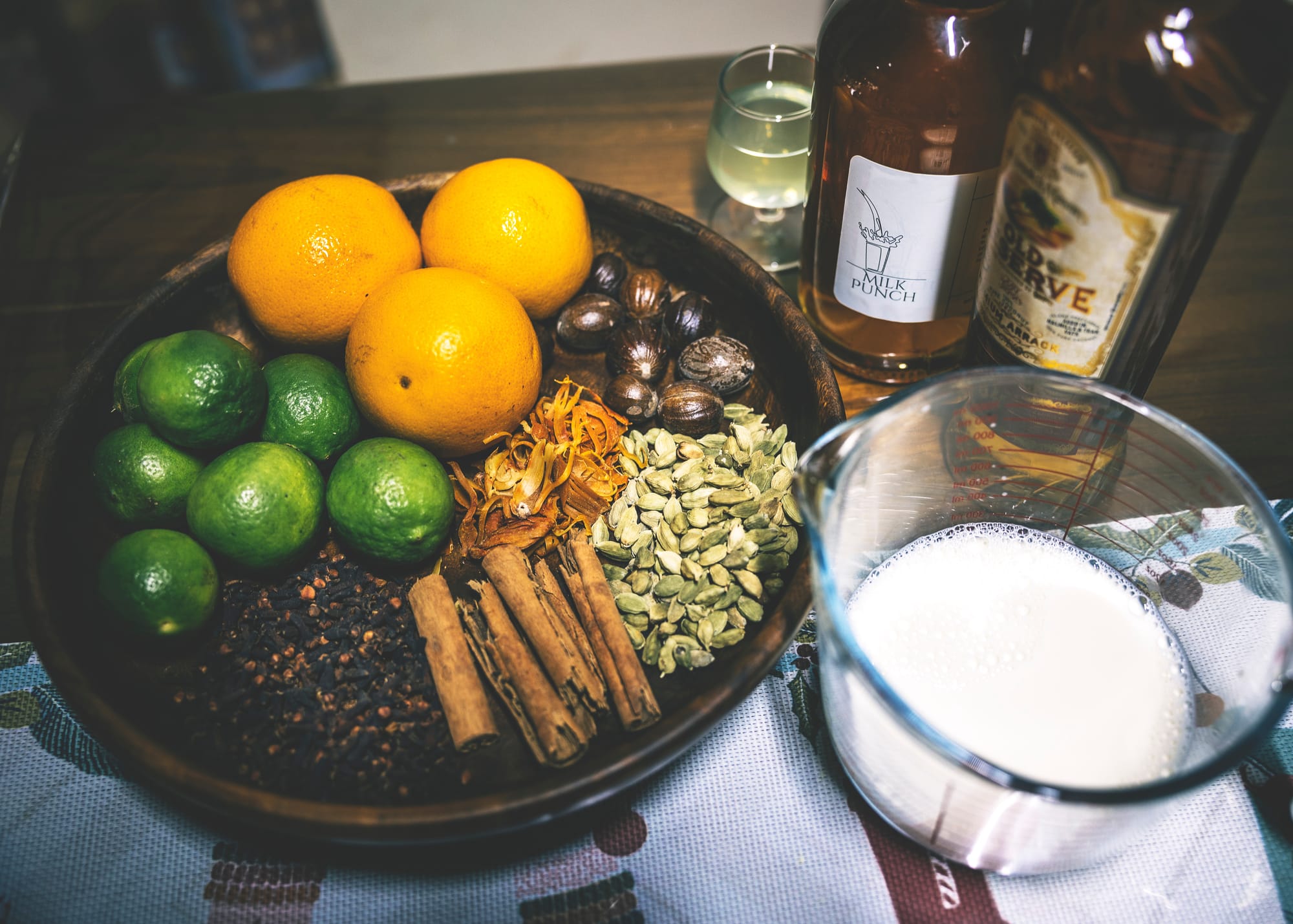
Water into wine. Arrack, spices, lime juice, orange rinds, and milk combine to make the sweet liqueur. Photos: David Blacker
The generational divide is felt across his other delicacies too. He’s astounded at requests to make traditional Christmas dishes like salt beef as a curry. But his mission is to keep these dishes alive for the younger generation.
Expansive, exploding lunch
Migration of the Dutch Burgher community likely played a role in halting these traditional dishes, says Anne-Marie Kellar. At her childhood home, Elie House, in Mutwal, Christmas would begin in June with milk wine prep.
Milk wine doesn’t make it to Kellar’s Christmas table any longer, but another heirloom from her childhood — salt beef — does. It was difficult to come by during the civil war as it includes saltpeter, also used in explosives and hence, banned.
The beef is cured with salt and saltpeter, rubbed with spices, and turned in the fridge for over a week. Finally, it is washed and boiled.
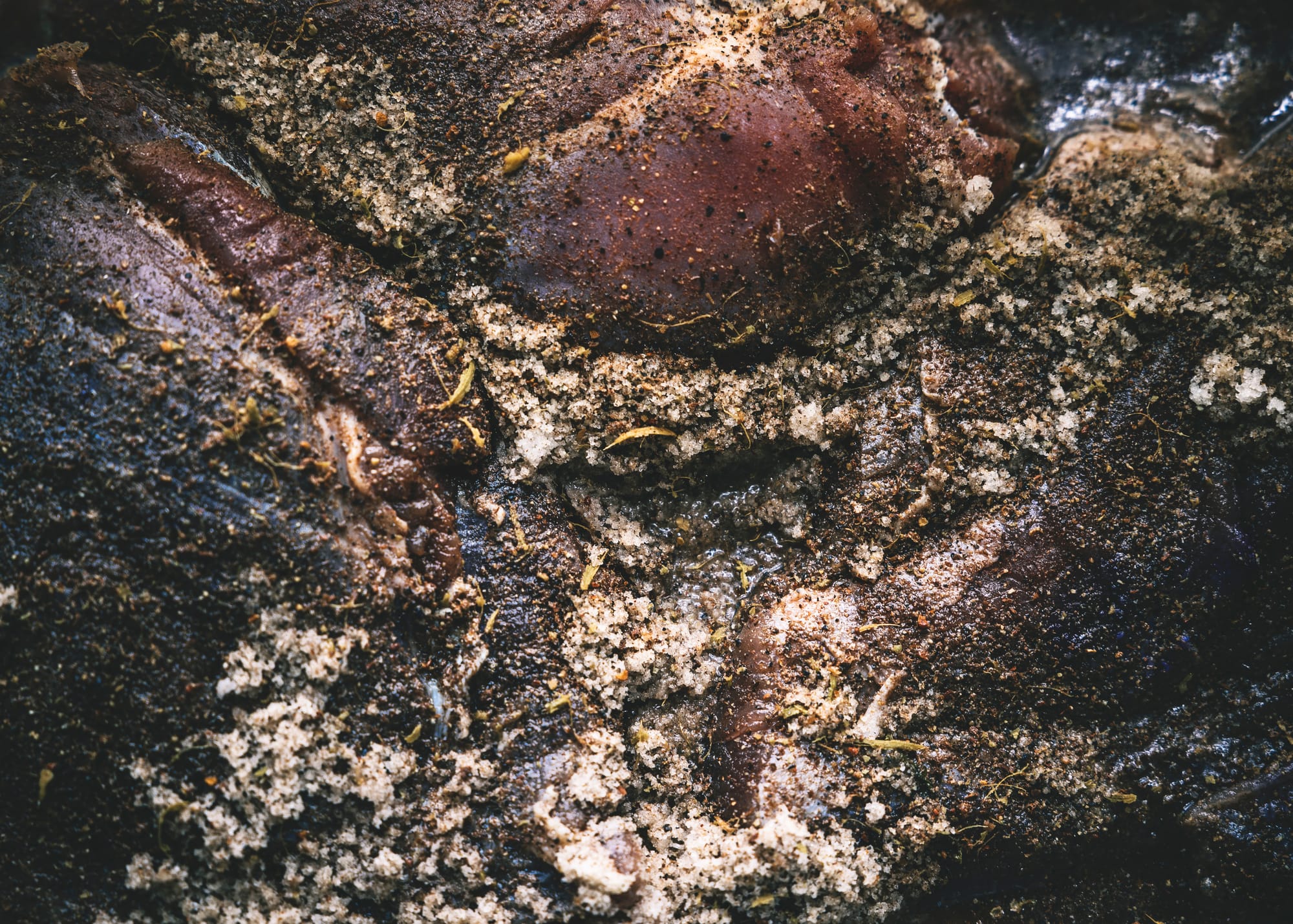
“And it becomes beautiful like red and we generally have it with mustard. Ground mustard.”