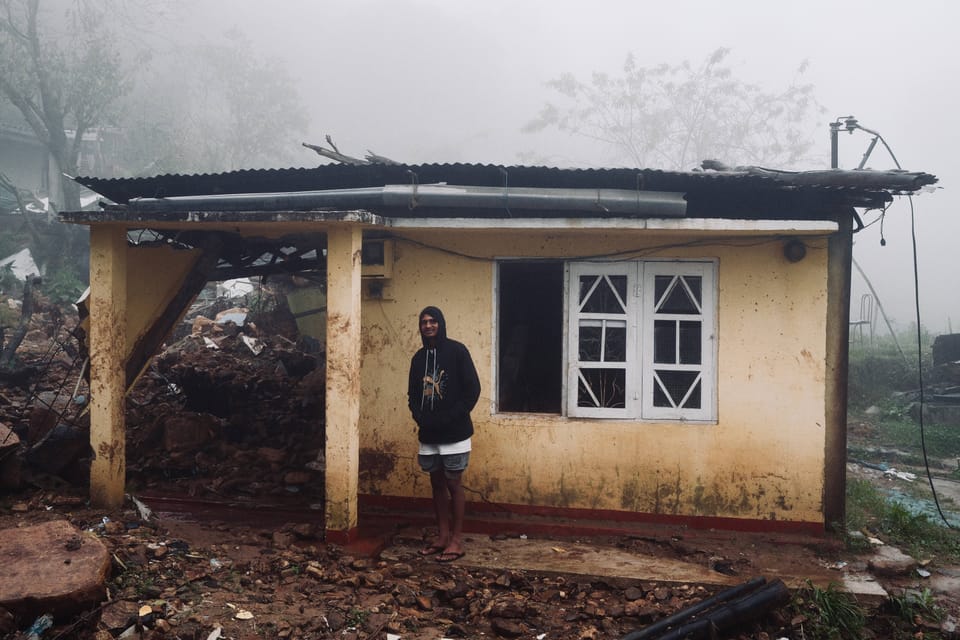
Ditwah wasn’t the first time that Jayanthimala Ramachandra was displaced from her family’s tea estate line room. After a landslide in 2017, her line room in Badulla was classified as a danger zone, so the government gave her land. Promises of a house followed, but they never materialised. Whenever heavy rain poured down, Ramachandra, along with her husband and three teenage children, took shelter in the village school.
When Cyclone Ditwah tore through the hill country, their line room’s walls cracked. Yet again the school sheltered them. But this time, they weren’t able to return home — it’s too dangerous now. They’ve moved to two tents, given by an NGO, on the plot granted to them by the government in 2017. They use one tent for cooking and a mobile toilet for sanitation. But at least, it’s close to her husband’s work on the estate, she says.
This month’s heat wave has made the tent almost unbearable, she says. But her biggest worry is the rainy season that’s just around the corner: “Will the tent survive heavy rains?”
Transitional shelters
The National Disaster Relief Services Centre, a defence ministry institution, is tasked with ensuring those like Ramachandra get transitional shelter, and then permanent housing after. But this mammoth task is facing extra difficulties upcountry.
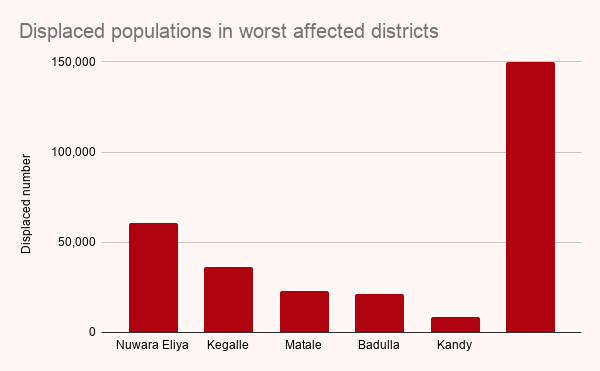
About a lakh displaced in the hill country are living with relatives and friends, or temporarily renting houses. As emergency shelters are shutting down, the most vulnerable have shifted to tents. 74 families are living in tents in Badulla alone.
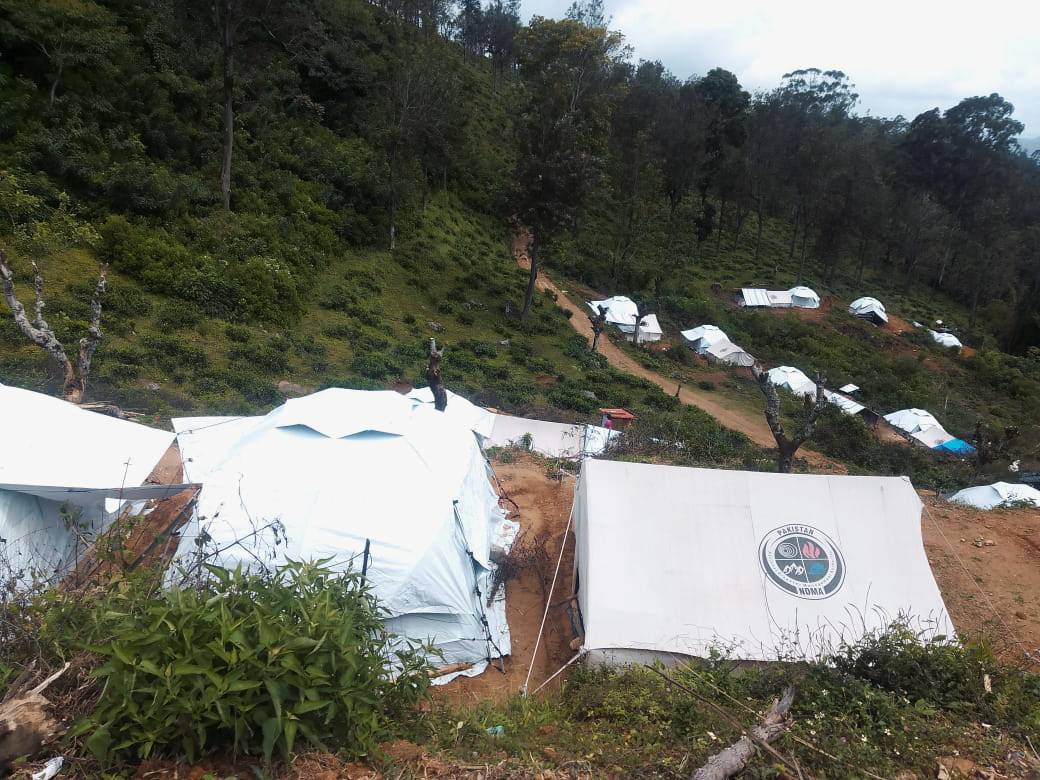
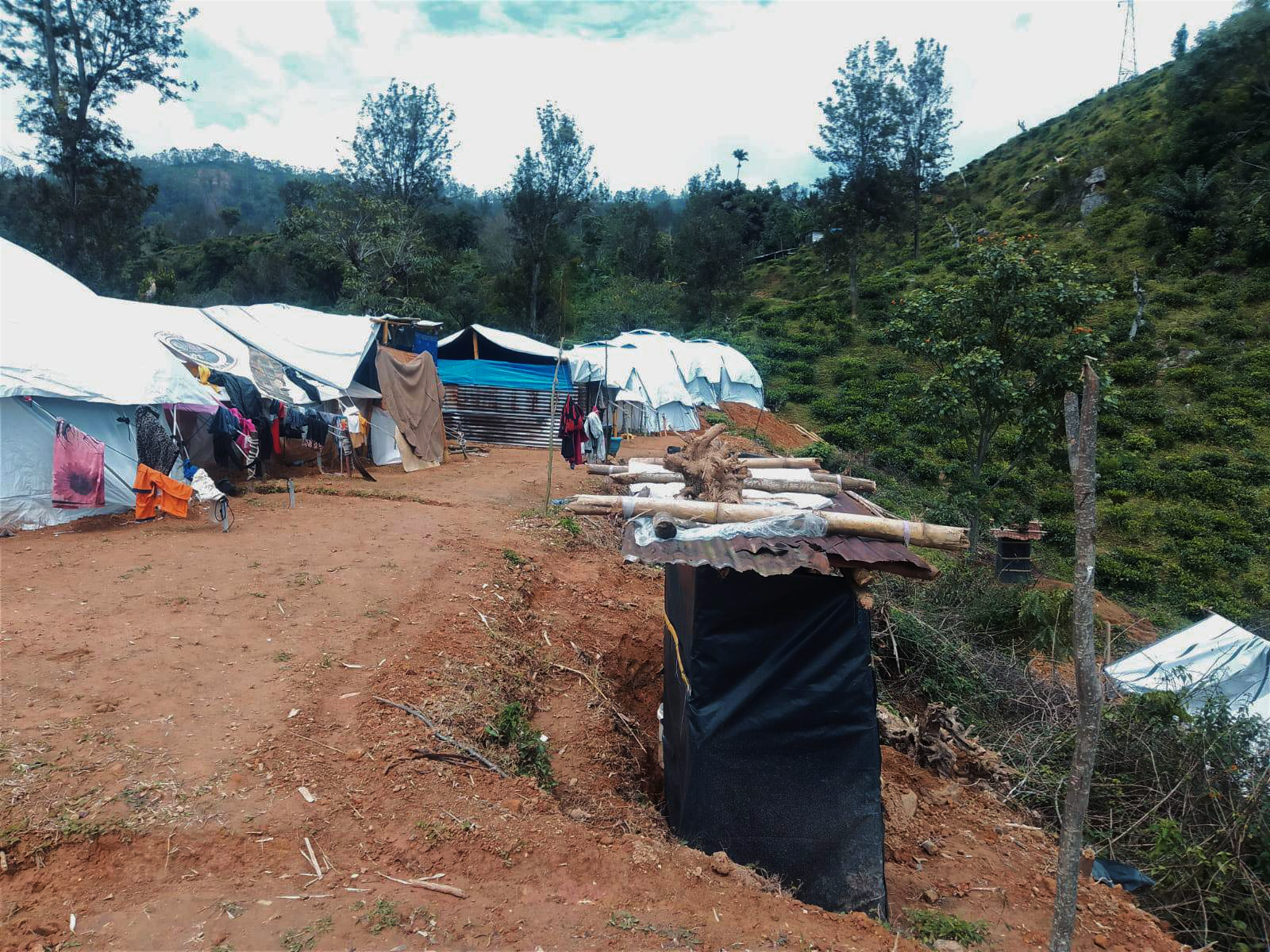
This month’s heat wave has made the tent almost unbearable, but the biggest concern is the rainy season around the corner
Transitional shelters — temporary housing for displaced people after they leave emergency shelters like schools — are yet to be built. Humanitarian organisations generally recommend that they be wood or bamboo structures, so they can last a couple of years. Tents are also vulnerable to the weather, and lack security and privacy.
During the 2004 Tsunami relief efforts, relief agencies were forced to quickly move displaced people to timber shelters. Tents couldn’t withstand the heat and rain.
“The government doesn’t seem to have a plan,” says Gowthaman Balachandran of the Civil Society Collective for Malaiyaha Reconstruction, adding that the absence of a plan, or sense of urgency, means the timeline for adequate shelter keeps being pushed further and further back.
The Examiner spoke to relief services centre officials from the four main upcountry districts. They’re yet to begin transitional housing procurement, like for roofing sheets. Once procurement is done, the army will build the structures. Construction will take about one and a half months. With this rough timeline, it’s unlikely shelters will be ready before the monsoon arrives at the end of May.
In a meeting with Malaiyaha activists last week, the prime minister, Harini Amarasuriya, said that a paper on relief and infrastructure facilities for the Malaiyaha people will be put to cabinet soon.
Land
The other, more complex issue, is land. When the cyclone ravaged through the hill country, it permanently changed the terrain. The number of landslides — over a thousand — and their intensity shut the hills off for days.
Entire villages were buried permanently. Waterways changed course, and new ones took shape. Roads and railway lines are no more. Ditwah’s viciousness prompted the National Building Research Organisation, the landslide authority, to return to the drawing board. They’re now re-evaluating which areas are landslide-prone, and which are safe.
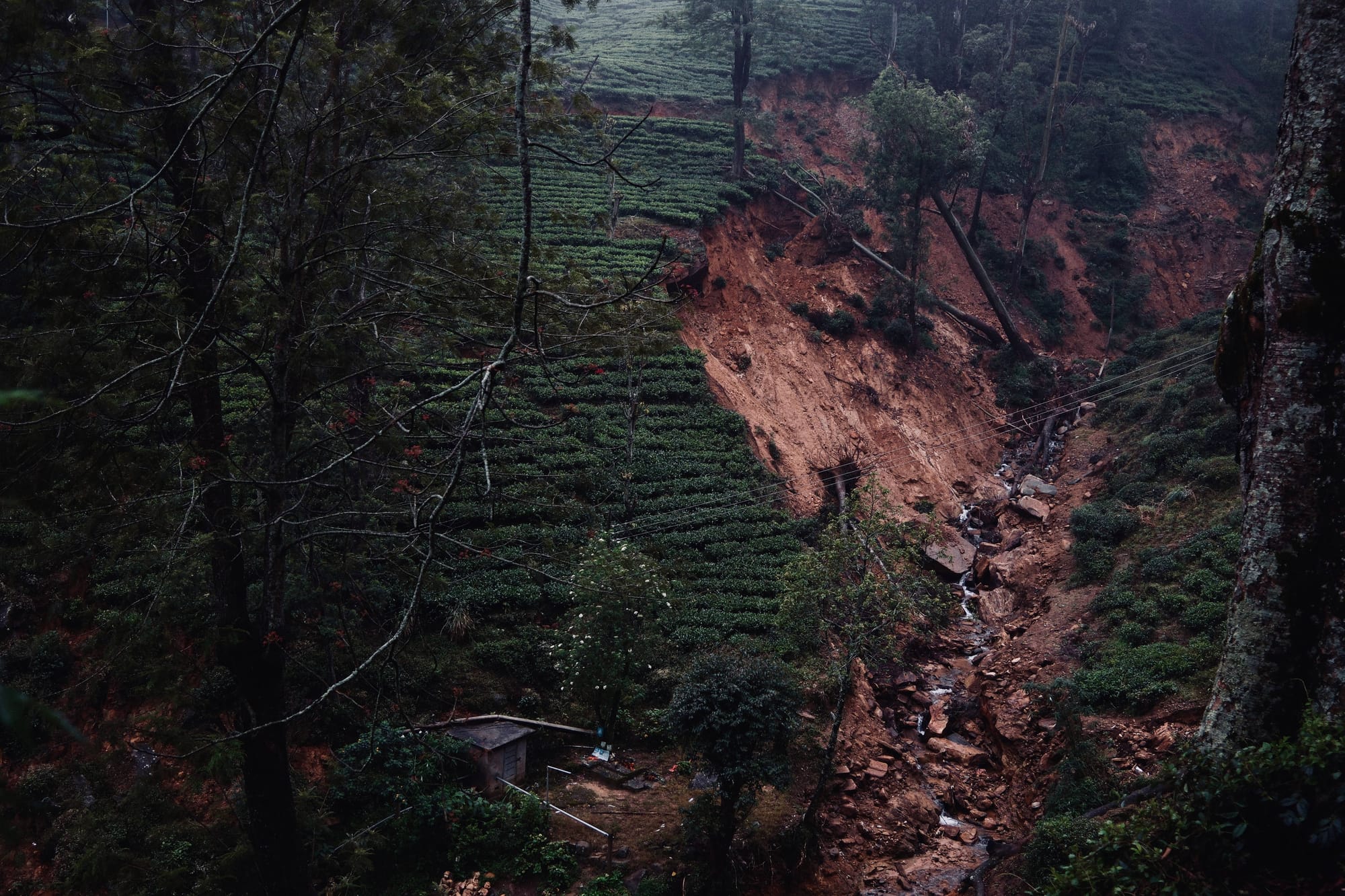
While safety is the primary criterion when choosing land for resettlement, the relief services centre also considers people’s livelihoods — in the case of the estate workers, proximity to estates. This allows them to continue their work, and the lives that were built around it.
“Many in safety shelters are from the plantation community, and they have to work in estates. They also do farming in nearby areas,” says one relief services centre official. This means that some displaced people can’t take the government’s temporary assistance for rent and move to urban areas at the foot of the mountains — their work remains high-up. Also, in towns like Nuwara Eliya and Matale, rents doubled after the cyclone.
The British brought Malaiyaha Tamils to the island to work on plantations as bonded labour. Living in two hundred-square-foot line rooms on estate land, they toiled the same land for over a century. Their labour grew the tea industry into one of the country’s main exports. The horrific labour conditions they experience continue, their demands for a living wage go unanswered, and they’ve received little redress for their landlessness.
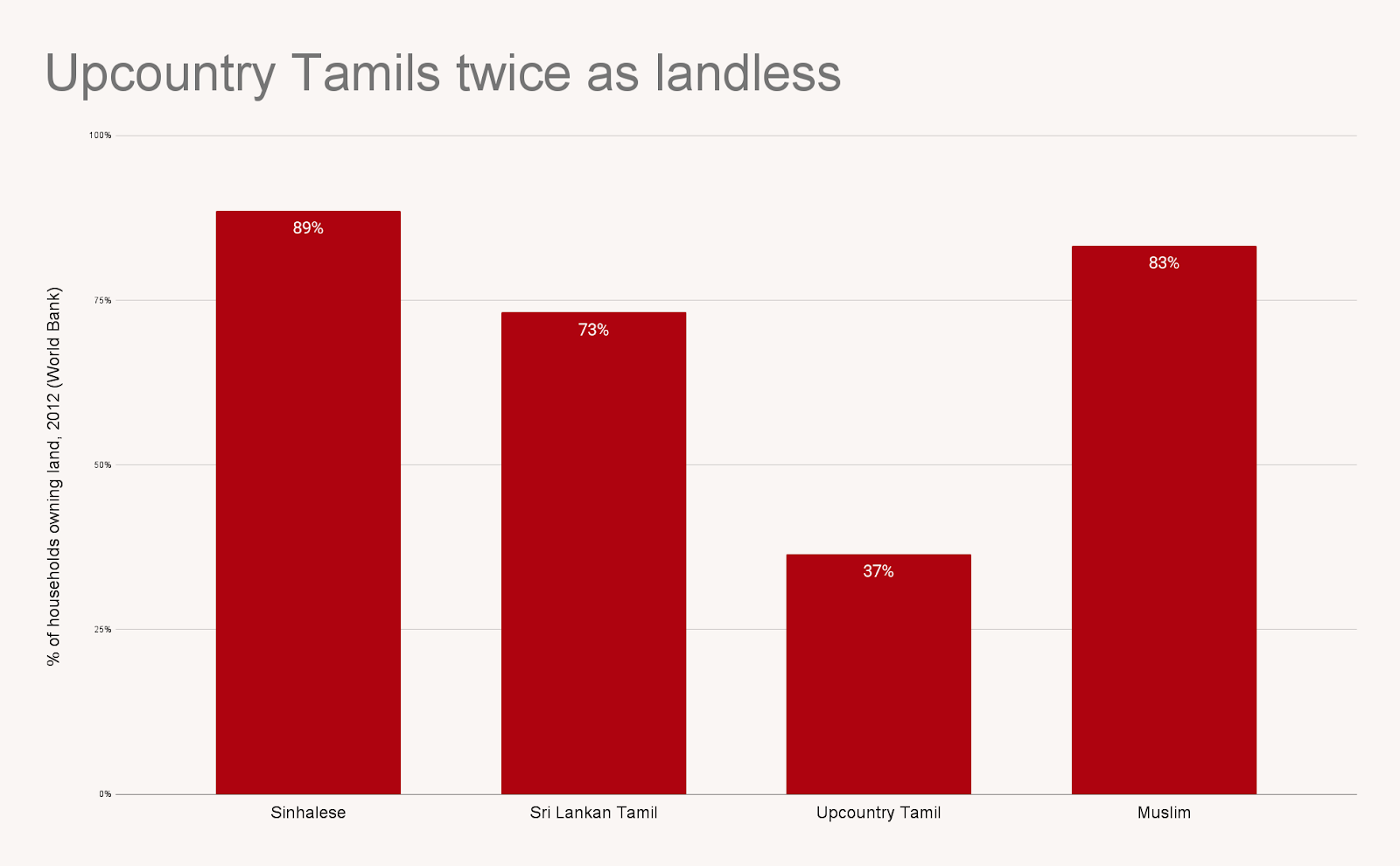
Though the estates were nationalised in the 1970s, almost none of it was redistributed to the estate workers. Most of the land went to state corporations or to the Sinhalese peasantry.
Before Ditwah, the only substantive attempt to distribute land to Malaiyaha Tamils was during the Yahapalanaya era. An Indian grant offered houses, and the government set about finding land to build them. But the project remains incomplete, and implementation is slow.