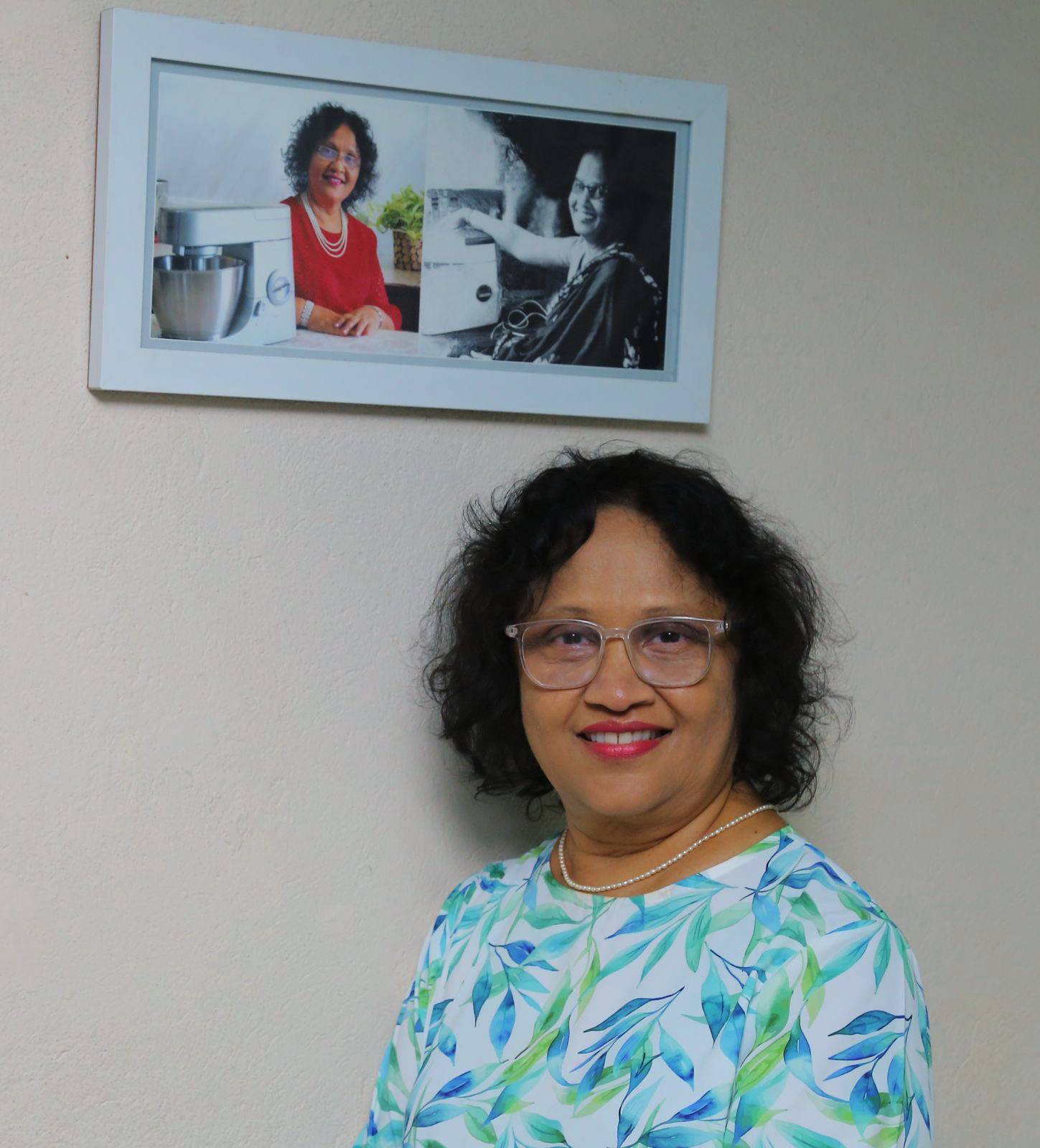
The cookery show host Anoma Wijetunga, one of Sri Lanka’s most viewed YouTubers, only encountered ‘roast curry powder’ when she moved to Colombo. In her childhood village — Welipatanwila in the deep south — curry powder is rarely roasted. Its rawness makes it subtle. In curries, it surrenders in the face of flavours emerging from the vegetables.
She makes her curry powder with four parts coriander, two parts cumin, one part sweet fennel, and a bit of cinnamon. A handful of curry and pandan leaves are also ground together with the show’s protagonist — coriander. Store-bought curry powder doesn’t have the same taste because it includes other ingredients like fenugreek seeds, she complains.
Wijetunga has always been a foodie; her connoisseurship expanded after starting her YouTube channel. And there’s a special place in her heart for Sri Lankan food. But she doesn’t think of it as a monolith: different regions on the island boast of different flavours, cooking methods, and preservation techniques. She teaches the ‘southern’ way of cooking to a million subscribers on her channel.
After moving to Colombo she was surprised that Colombo folk prefer to coat all their curries, with a temper of fried onions, garlic, curry leaves, and chilli flakes. In Avissawella, she has seen people mixing even chilli into their curry powder. In the north, roasted curry powder, blackened and eyewateringly spicy, packs heat into dishes.
“When you roast the curry powder, the taste of the curry is completely different,” she says, opining on how southern food flavours differ from the rest of the island. “In the south, dishes don’t feature that curry powder taste as much. For every curry, regardless of the vegetable, the curry powder measurement is the same. Each vegetable retains its unique taste.”
Food beyond the Bentota river — or Bentara gangen eha, a common Sinhalese marker for the boundary of the region — is mainly a result of its geography and trade along the coast, observes Sulakshana de Mel, a food anthropologist. Other elements like politics and faith also influence the cuisine.
“Something we can’t do without is food, and when you look at food as a lens of your analysis, there’s so much you can read,” she says.
Goraka and smoke
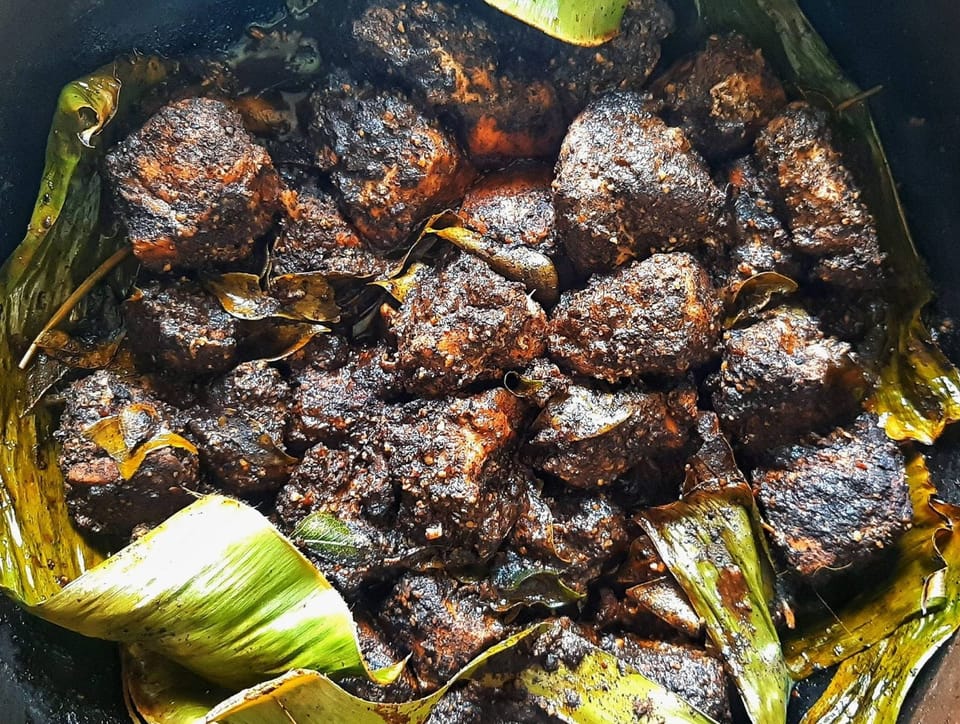
“A country’s cuisine is its landscape in a pot,” said Josep Pla, the Catalan writer. In the south, fish ambulthiyal reflects this intimate connection between food and geography. It’s the reason ambulthiyal takes pride of place in southern cuisine; no other region on the island makes a similar charred fish dish.
“That’s [geography] linked to what grows in your neighbourhood. That determines what you eat,” says De Mel.
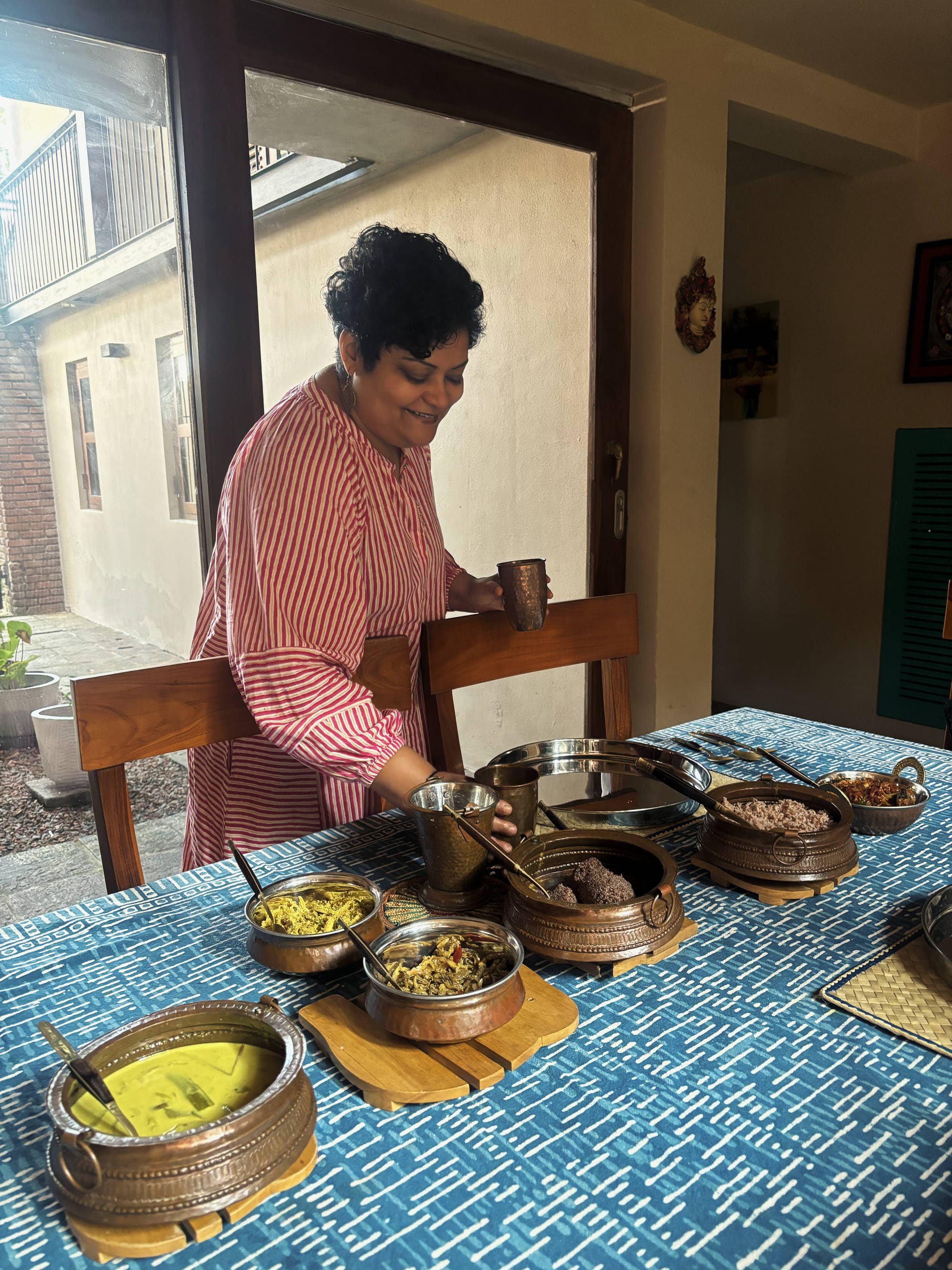
Every southern household lays claim to a slightly different version of ambulthiyal. But the base ingredients are the same: salt, pepper, and goraka. The availability of these ingredients in the natural environment, coupled with easy access to an abundance of fish, has resulted in this dish.
The key to a successful ambulthiyal is to remove the moisture from the fish by charring it in a clay pot. First, the fish is sliced and each piece is separately coated in a salt-pepper-goraka mixture. The slices are placed in a single layer in a pot, and cooked on high heat. Afterwards, it’s closed with a lid and slow cooked at low heat for about thirty minutes, while regularly turning the pot. When the lid is opened after about thirty minutes, the water evaporates in smoky steam — signalling the successful creation of a fish that’s perfectly crispy on the outside and tender on the inside.
Removing moisture in this way helps preserve the fish; usually for a week in a dark cupboard without refrigeration. To more effectively remove moisture, Wijetunga’s mother would even keep an empty pot with coal on top of the dish, to form an oven of sorts.