
Crude oil prices spiked over the last two weeks. The latest surge was driven by the closure of Saudi Arabia’s East-West oil pipeline and Houthi advances in the Bab el-Mandeb Strait. In Sri Lanka, this most likely means higher fuel prices at the end of September.
Following Hormuz’s initial closure in March, Saudi Arabia, the world’s largest oil exporter, rerouted much of its oil via its Yanbu pipeline. The pipeline bypasses the blockaded Hormuz, transporting oil from Saudi Arabia’s east to the western port of Yanbu. It was shut last week after a drone attack.
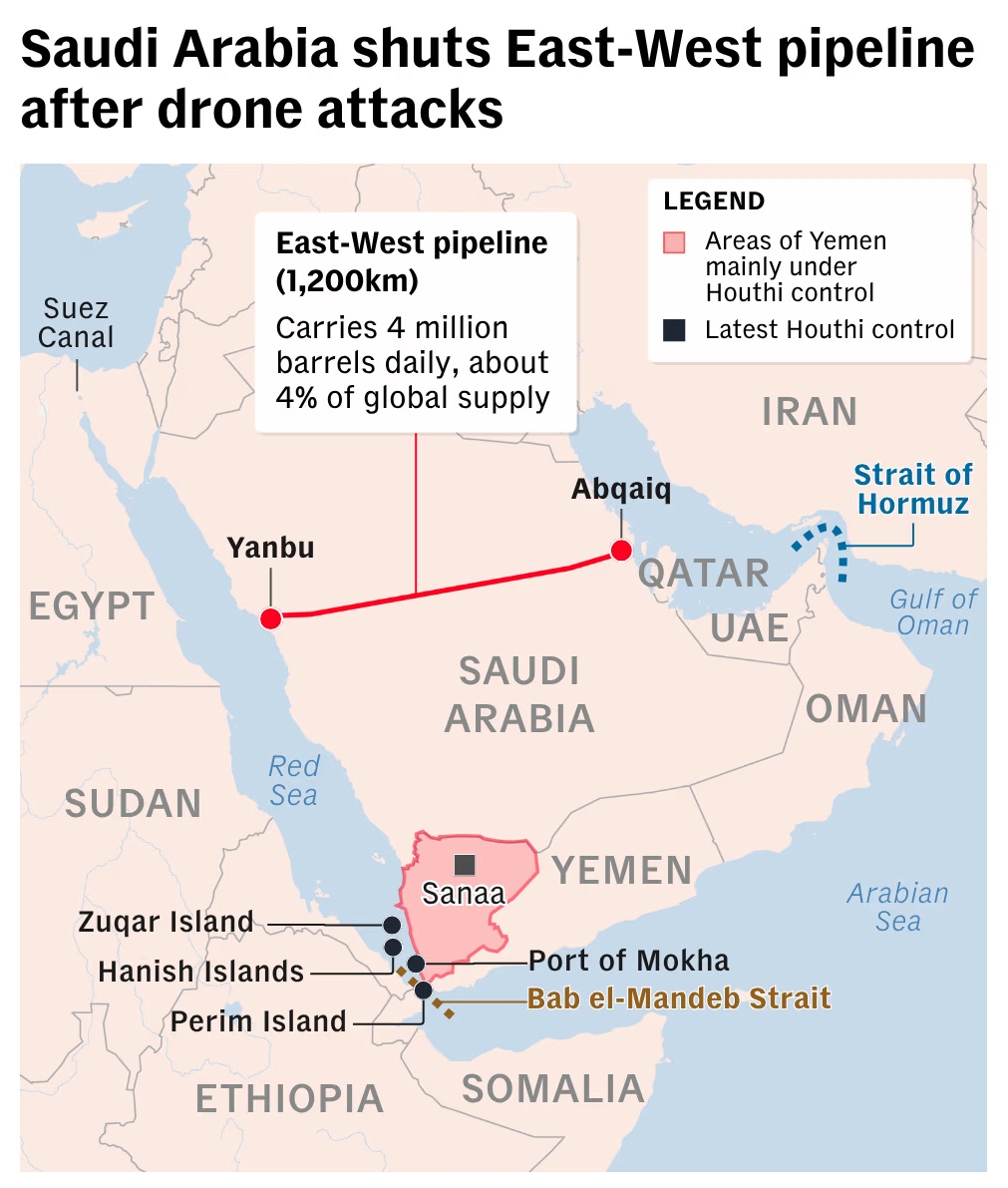
The Houthis, a Yemeni militant group backed by Iran, are also consolidating their control over the narrow Bab el-Mandeb Strait connecting the Red Sea and the Indian Ocean. Following a Houthi attack on two Saudi Arabian tankers at the end of July, Saudi Arabia suspended oil exports through the strait.
Meanwhile, shipping in the Hormuz Strait remains limited to a trickle due to the war in the Gulf. The International Energy Agency doesn’t expect it to re-open this year.
In response to these events, crude oil prices rose from around $90 a barrel to over $100 in the last fortnight. Oil remains well above its pre-war price of around $60 a barrel in February this year.
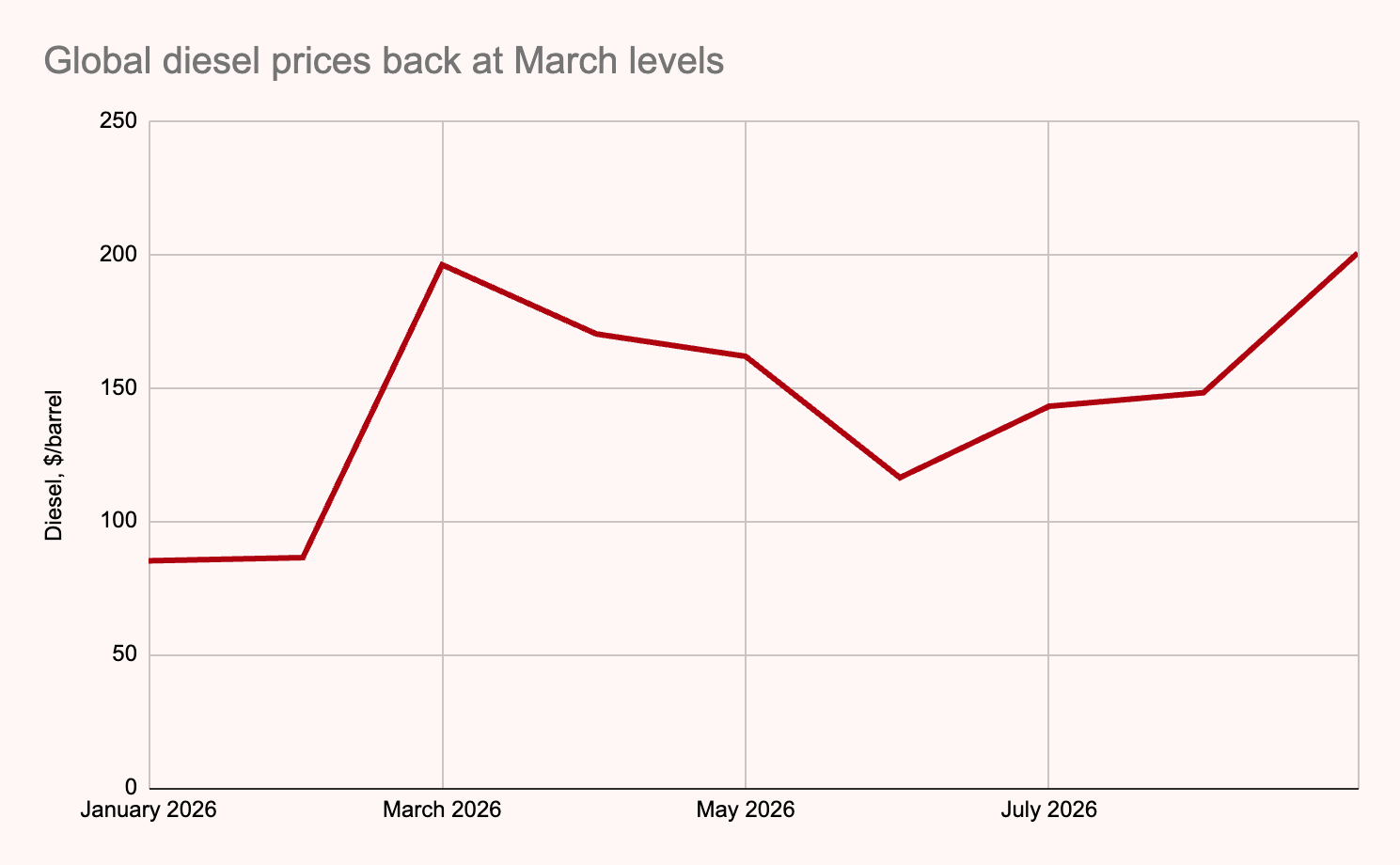
More importantly for Sri Lanka — which imports most of its fuel as refined products like petrol, diesel, and jet fuel — refined product prices increased even more. On the world market, diesel cost 67% more this week than in July, and petrol 33% higher.
Private players stop diesel supply
As prices rose, supply shortages started emerging at sheds in Sri Lanka. Earlier this week fuel distributors complained that private suppliers — Lanka IOC, Sinopec, and Shell — have restricted diesel supplies to over 500 sheds in total.
“We are not seeing a supply constraint” so far on the world market, said one of these players. According to him, the shortages at Sri Lankan sheds were caused by a “product shortage” which is being resolved.
However, Anura Karunatilaka, the energy minister, told The Examiner, that private players were struggling to sell diesel saying they were making losses of over 100 rupees per litre. He added that companies are free to set their own prices.The state-owned CPC was making losses of around 60 rupees a litre for diesel, with no losses for petrol.
An industry insider argued that private players, which are part of large multinational companies with refineries and trading desks of their own, should always have a lower cost-base than the CPC.
Fuel prices likely to rise
The spike in global fuel prices means diesel and petrol prices at sheds are likely to rise at the end of September. A price revision at the end of month “is possible”, Karunatilaka said on Monday. As the government is committed to cost-reflective energy prices under the IMF programme, this likely means higher prices.
The programme requires the government to set fuel prices using a formula that reflects costs. If prices are set below cost, the Treasury must pay the difference, so that the CPC doesn't run losses.