
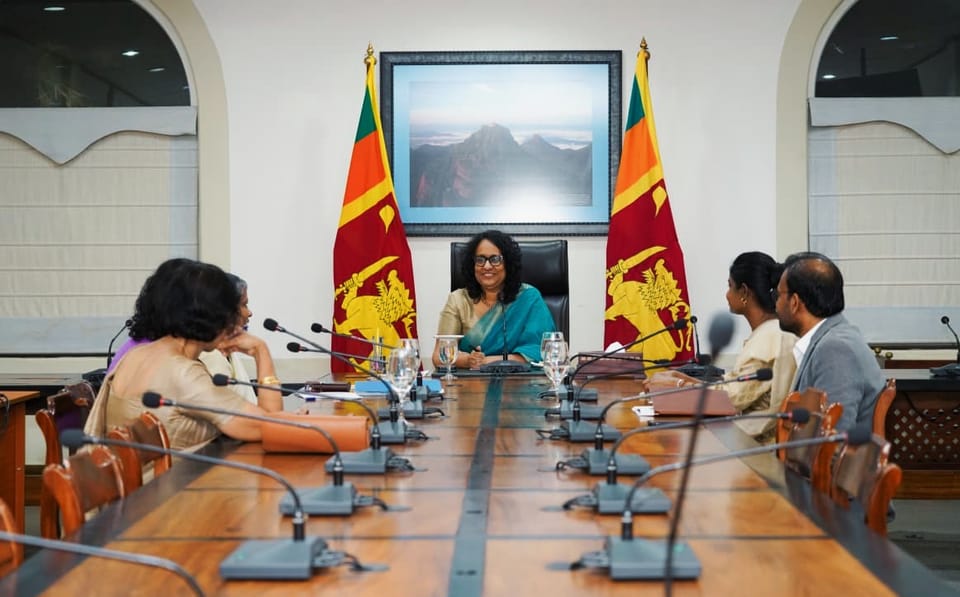
Ramani Jayasundere, chair of the inaugural National Commission on Women, resigned from her position today, barely four months since her appointment.
Jayasundere told The Examiner that she sent her resignation to the President today.
Her departure follows the government’s failure to operationalise the commission.
The commission is the first of its kind for Sri Lanka — established under the women’s empowerment act which came into force in 2024.
Shreen Abdul Saroor, a commissioner appointed with Jayasundere in September 2025, says their hands have been tied from day one. The government, she says, failed to pass funds for the commission, provide them with independent office premises, or allocate staff.
Among other things, the commission is tasked with formulating and implementing the national policy on women’s empowerment. They are also mandated to investigate infringements of women’s rights.
“Women politicians are being attacked — not only Prime Minister Harini Amarasuriya, but also local authorities. We are the only authority who can investigate these complaints specifically with regard to women. The independent women’s commission is part of the thirty-year women’s struggle,” said Saroor.
“The government is doing reforms like the prevention of domestic violence act, microfinance bill, prevention of terrorism act, but we, as the women’s commission, are unable to contribute to these reform processes independently,” she added.
The commission met with Prime Minister Amarasuriya in November 2025, raising the issue of funds, independent office premises, and staff. The following month, Saroor and Jayasundere also wrote to President Anura Kumara Dissanayake informing him the commission was unable to function independently. Therefore they have taken a step back until it becomes operational.
Another commissioner told The Examiner that tension existed between the commission and the women’s ministry; the ministry believes the commission comes under them. The commissioner further blamed the Presidential Secretariat for appointing the commission before operationalising the office — “it should’ve been done the other way around”.
These roadblocks prompted over 130 women’s rights activists to write to President Anura Kumara Dissanayake last month.
“You, as the Executive President responsible for appointing the commission, violate your constitutional mandate by deliberately leaving the national women’s commission inoperative,” said the letter.
The government has proposed that the commission use the women ministry’s office space. However, Saroor says that would directly impede the commission’s ability to independently carry out its mandate.
In an interview with The Sunday Observer last week, Kaushalya Ariyarathne, the deputy minister of mass media, said the ministry’s premises for the commission was only temporary, and that the commission would have its own location by next year.
Comments ()