
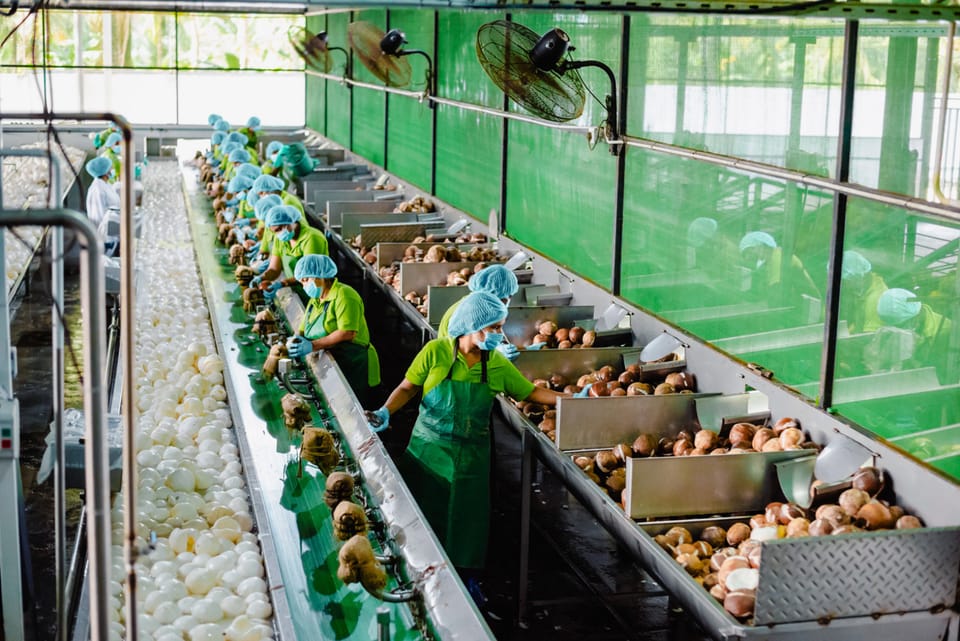
Coconut export revenue hit one billion dollars, a huge jump from previous years. This year, one industry expert expects it to beat tea, the mainstay of Sri Lanka’s agricultural exports for nearly a century and a half.
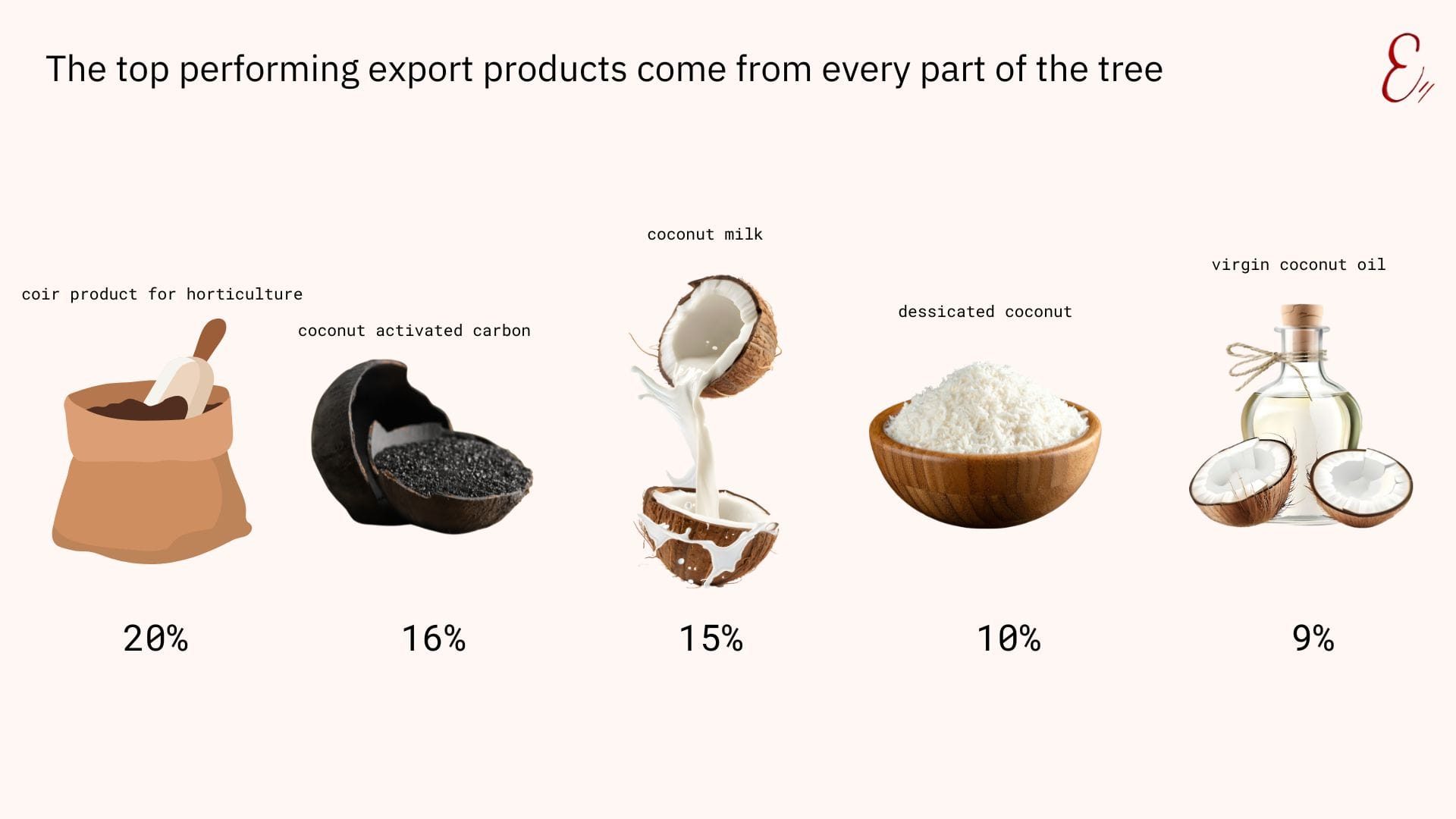
Non-dairy alternatives are increasingly popular; driving higher demand for coconut, as do its uses as a health food and gluten free ingredient. Defatted coconut exports grew by almost six times in one year, bringing it into the top ten coconut exports.
But higher volume isn’t what’s really driving the export boom. It’s higher prices. Actual export volumes didn’t increase by nearly as much. In fact, for some products, like desiccated coconut, export volume decreased.
The Coconut Research Institute attributed higher global prices to lower harvests in competitor countries like India and Indonesia.
Not enough pol
Demand is also steadily rising But Sri Lanka isn’t producing enough coconuts to meet surging global demand. The Coconut Research Institute estimates that coconut demand — both local and export — is four billion nuts per year. Yet, the country produces less than three billion, and just over half of them are consumed domestically. As export demand grows amid a constrained supply, domestic affordability of coconuts too declines.
Coconut industrialists, making milk, coir mats, and activated carbon are “starved for raw materials”, according to Ranil De Saram, secretary general of the Ceylon Chamber of Coconut Industry. The chamber was formed just over a year ago in 2024, to coordinate the industry's needs in the backdrop of growing international interest. They are currently working with the government and UNIDO, the UN’s industrial development body, to create a comprehensive strategy to increase coconut production.
Cricket grounds with 64 stumps
A major issue with coconut production is the low yield from the island’s coconut trees. Twenty percent of trees are senile, meaning they need to be replanted, explained Nilmini Jayalath, the research institute’s agricultural economist.
Climate change exacerbates the problem. “Temperatures above 32 degrees celsius hinder pollination and germination. Good irrigation and creating cool micro-climates through intercropping can help,” said Jayalath.
But these practices aren’t common. Only about five percent of coconut land is irrigated and about a quarter are intercropped. Fertiliser is used on just over a third; this plummeted further during the fertiliser ban of 2020 leading to low harvests three years later.
The cumulative result is a low yielding tree, currently producing around 45 to 55 coconuts when they could produce nearly double.
Jayalath attributes this neglect partly to “absentee landlords.”
An industry insider at a major export company agrees. He says most farmers are third generation, and uninterested in coconuts. They usually live in cities and keep their farms primarily as prestige projects or out of sentiment. The farms are like “cricket grounds with 64 stumps”, empty except for the neglected trees.
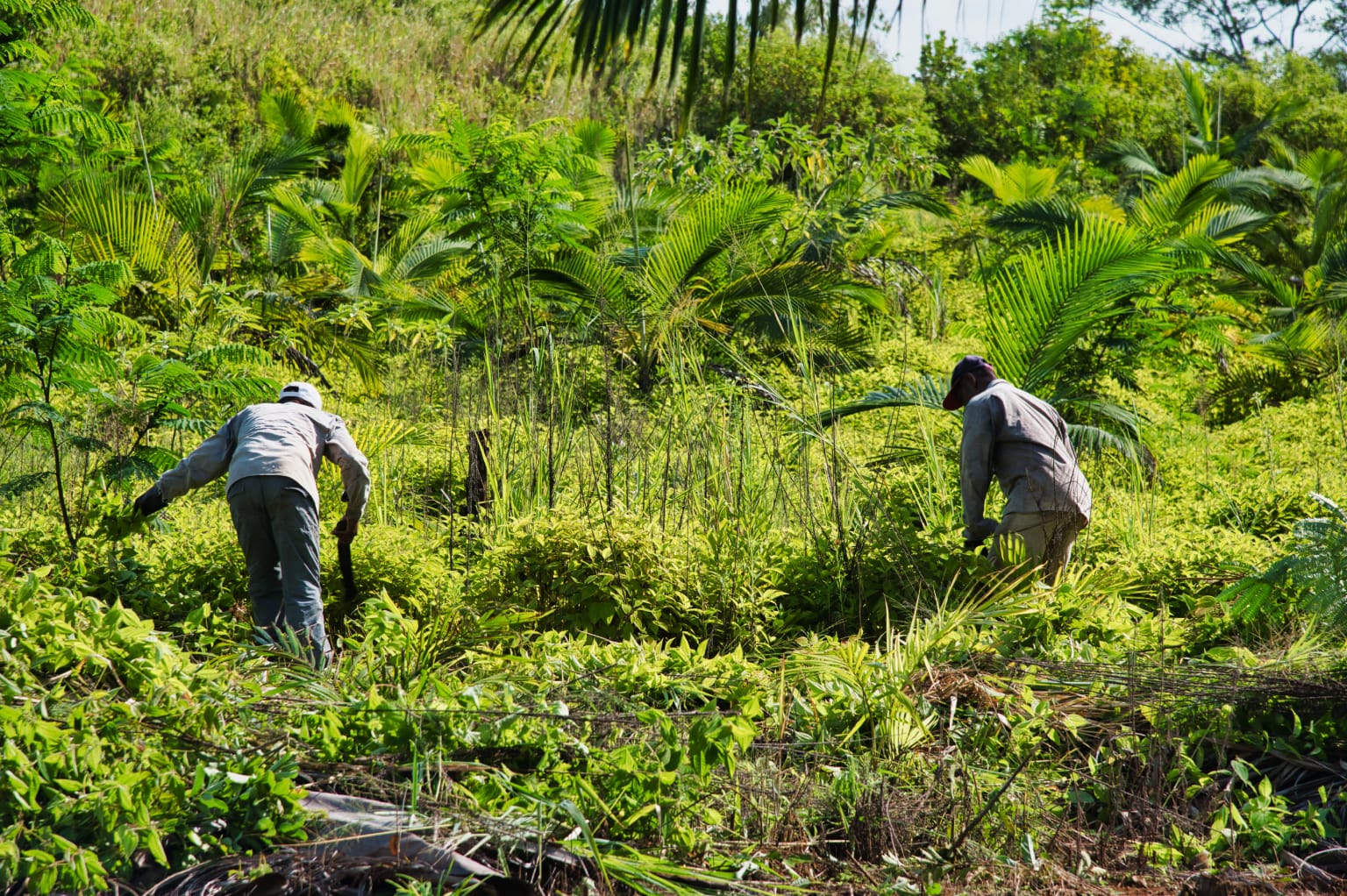
The insider says others are backyard farmers, who produce the greatest yield. But most own twenty to fifty acres and are absent from their farms. To cultivate coconut effectively, complete with fertilisation, irrigation, disciplined plucking schedules, and intercropping takes time, money, and effort.
And these smallholders own a majority — about three quarters — of coconut lands.
Some modern practices are also reducing yields. Traditional practices like burying husks around the trees to absorb more water have been abandoned, as husks are now used for horticulture and are a top export. One coconut cultivator said that labour too, particularly coconut pluckers, are in short supply.