
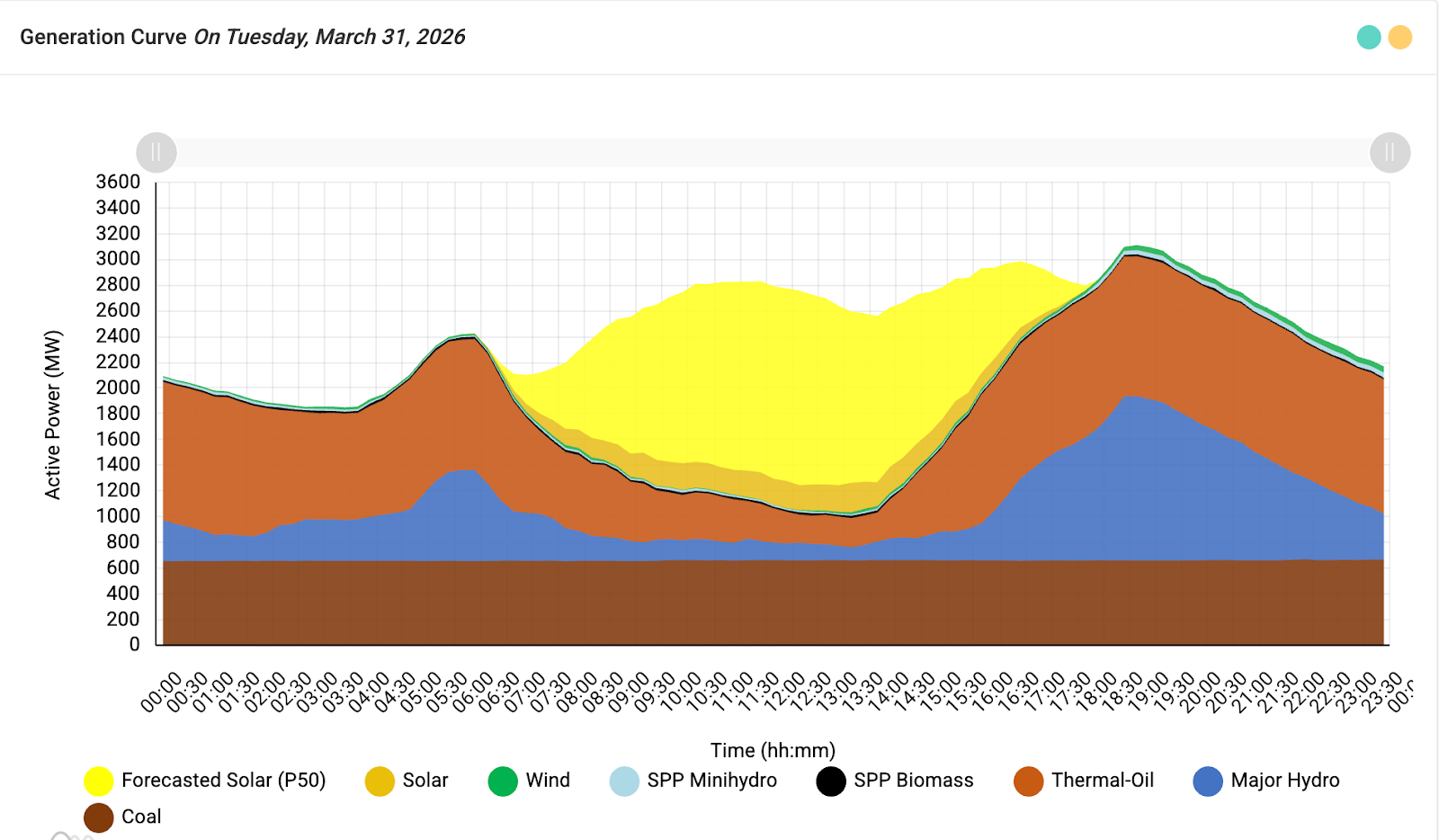
Even before the Hormuz Strait was closed, the public utilities commission, which regulates electricity, warned of possible power cuts. They said burning low-quality coal, combined with planned maintenance at Norochcholai, could result in evening blackouts.
Burning substandard coal at Norochcholai, which produces a third of the island’s electricity (excluding rooftop solar), reduces generation efficiency by over 15 percent.
In April, May, and June, fuel derived from crude oil will be used to generate 13 percent of electricity, according to the public utilities commission’s latest estimate. This share is slightly higher than it would be ordinarily.
Crude oil-based electricity generation substitutes for coal, but with the US-Israel-Iran war affecting fuel supplies, it may not be enough.
Fuel stuck
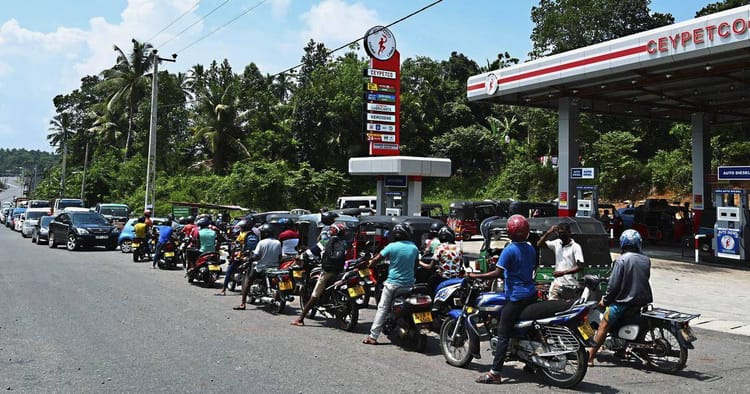
With the closure of the Hormuz Strait, fuel shipments have been delayed.
Crude oil, as opposed to refined products like diesel, is of particular concern. Ordinarily, Sapsugakanda refines crude to produce the island’s entire requirement of furnace oil and naphtha that’s then used by thermal power plants. But last month, the CPC, the state-owned petroleum corporation, warned that Sapugaskanda may shut down in mid-April if no new oil shipments arrive.
No new crude shipments are expected until end-May, Mayura Neththikumarage, the corporation’s managing director, told The Examiner. The CPC expects a shipment of American WTI crude by the end of May and Emirati Murban in June.
With the current schedule of crude shipments, Sapugaskanda will be unable to produce furnace oil and naphtha between the third week of April and end-May.
The CPC has already ordered furnace oil from Singapore, and anticipates delivery by 13 April. Neththikumarage says this furnace oil is enough for twenty days of electricity generation. The National System Operator, tasked with managing electricity supply, has also asked the corporation to procure naphtha to supply the Kelanitissa power plant.
With Sapugaskanda likely closed from mid-April, and imported furnace oil only enough to last twenty days, May’s oil-based electricity generation may have to come from an expensive, last resort source: diesel.
Rain to the rescue?
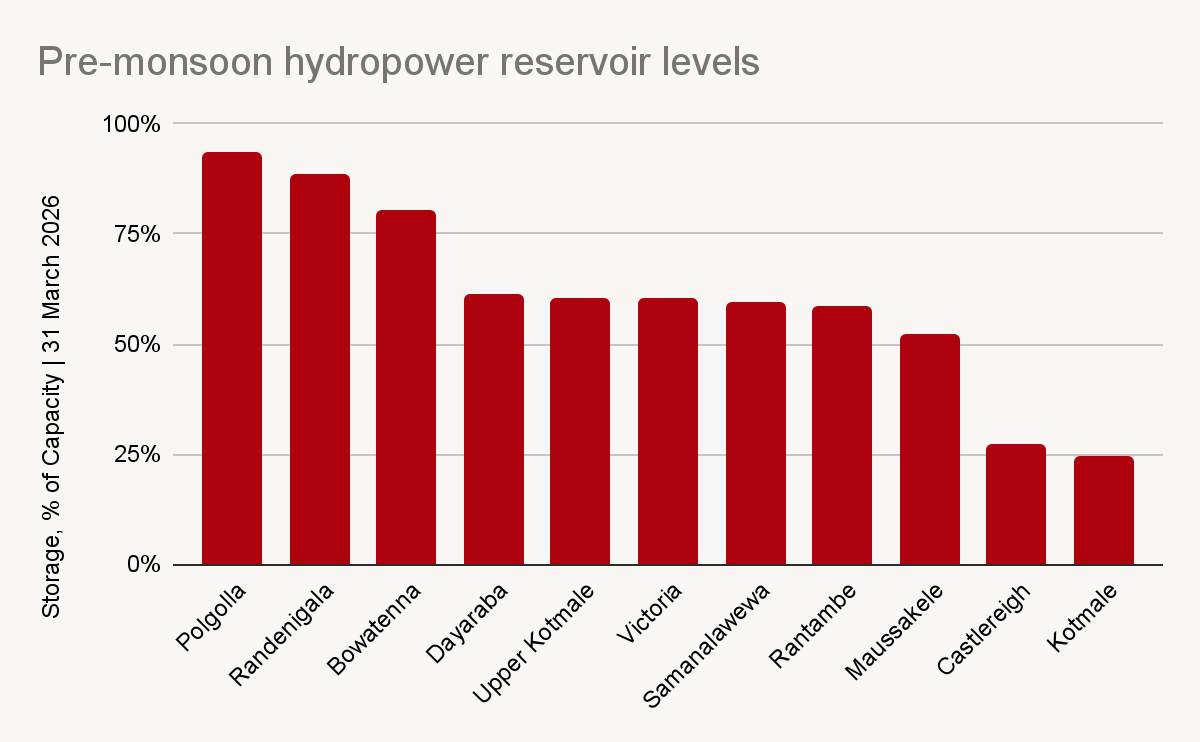
If monsoon rains arrive later than expected, the situation may get worse. Currently, water levels at hydropower reservoirs aren’t unusually low. But they are getting lower as without rain, outflows substantially exceed inflows. If forced to choose between irrigation and electricity generation, the Mahaweli Authority, which manages hydro reservoirs, prioritises irrigation.
The meteorological department predicts that there are “equal chances” of “receiving below, about, or above normal rainfall”. Other forecasts are similar. Sky News forecasts a 60 percent chance of an Indian Ocean Dipole, which results in a wetter Indian Ocean. However, this may be neutralised by the 80 percent chance of an El Niño, which results in lower rain.
Dry and hot weather doesn’t only affect electricity generation — it has also increased peak demand by 10 percent, said Pradeep Perera, the National System Operator’s chairman.