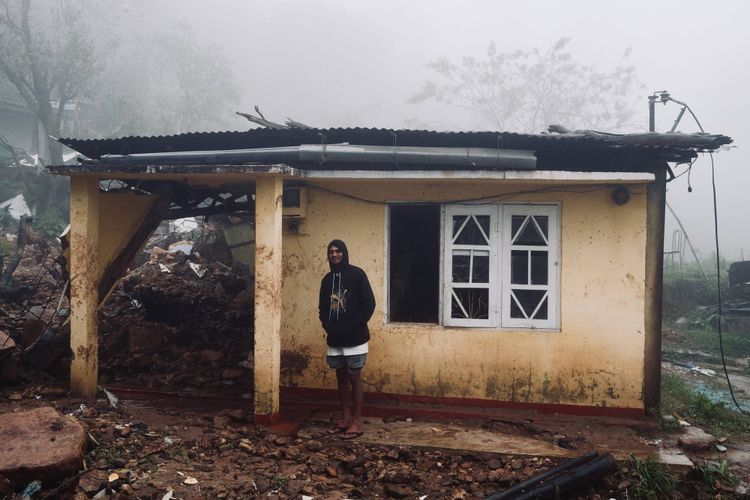
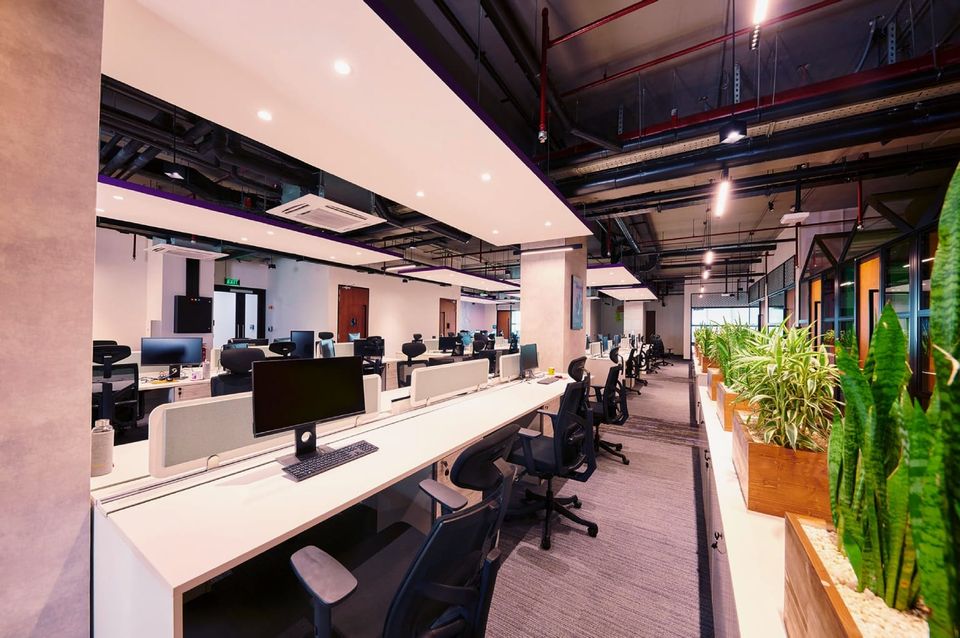
Four months ago, Sayuri got an email from her employer, IFS, a Swedish software company, telling her she was laid off. “An organisation-wide restructuring” arising from “AI implementations across products” was cited as the cause.
Her first reaction was “utter disbelief”. Sayuri, not her real name, never imagined being laid off in the “blink of an eye”.
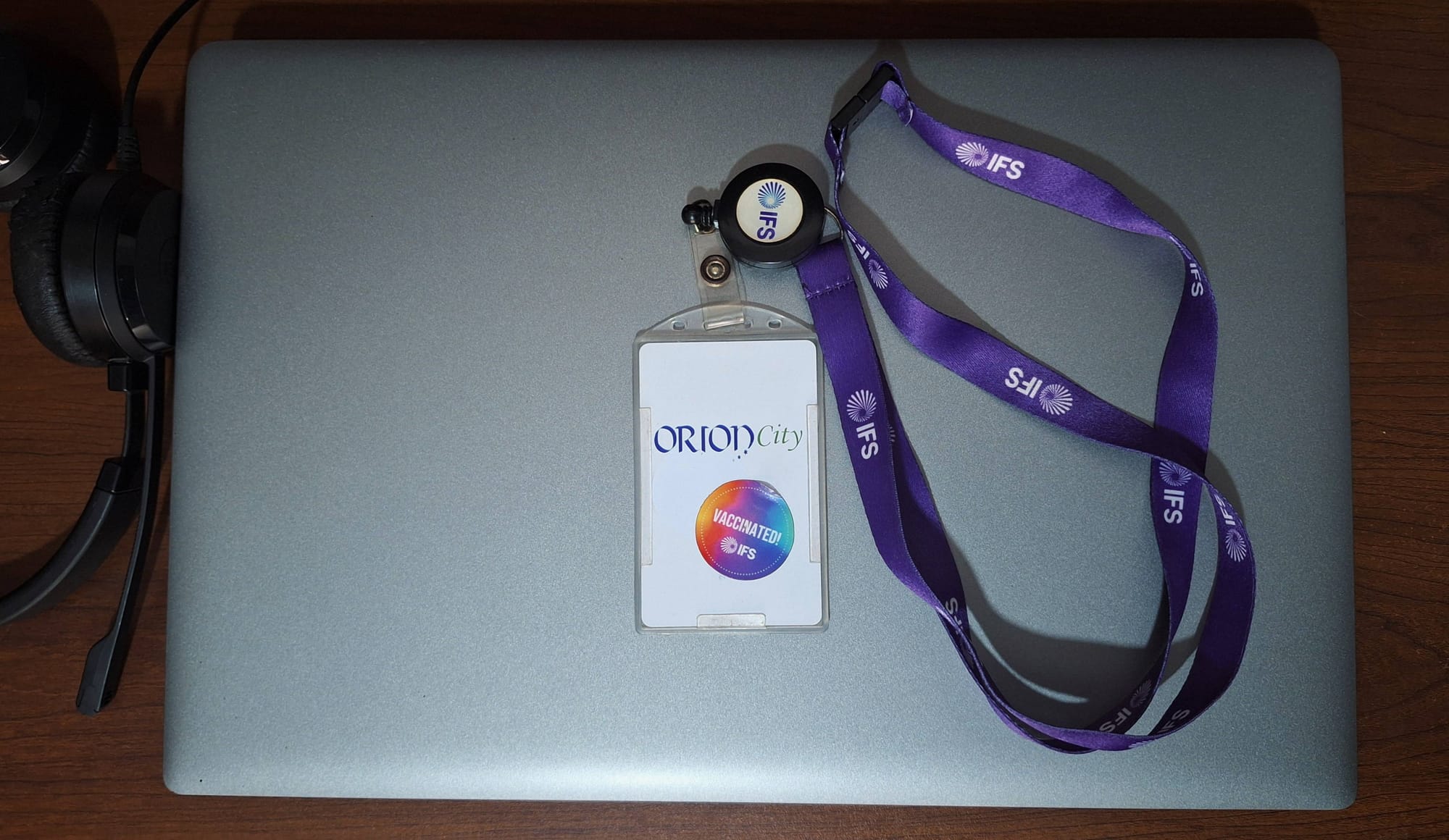
She wasn’t the only one. A senior IFS software engineer said the layoffs affected 400 to 450 people in Sri Lanka, including whole departments. They took place in multiple waves, beginning in November 2025.
Based on the last available public data, IFS employed about 3,000 Sri Lankans before the layoffs.
On unstable ground
The tech space — and the Sri Lanka subreddit — has been rife with layoff rumours. Employees are anxious. Other than IFS, thread chatter often focused on Sysco, MAS, Fortude, and hSenid.
An executive at MAS, and a senior Fortude staff member, told The Examiner that there weren’t any layoffs at their firms.
Other companies discussed on the Reddit thread weren’t willing to comment. But an enterprise technology company manager observed an influx of talent from layoffs at IFS, LSEG, and John Keells IT.
The layoffs aren’t just affecting Sri Lanka. Global tech layoffs surpassed 245,000 in 2025 –– 2021 tech layoffs were 25,000 for the entire year. US-based technology companies accounted for 70% — AI was cited as a reason for many of these.
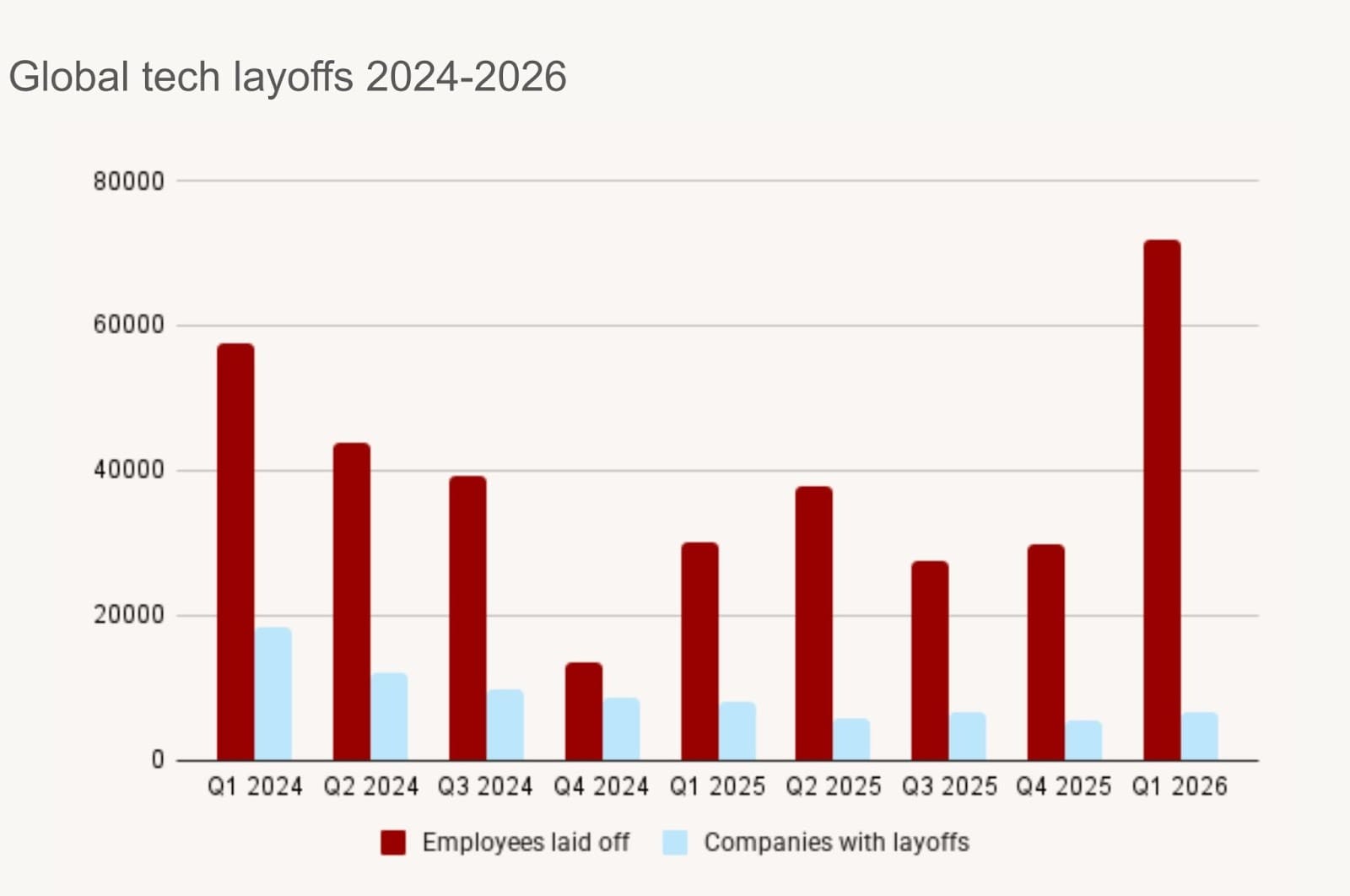
Other countries which rely on providing US companies with cheap technical talent were also heavily hit. India saw over 76,000 tech layoffs in just the first six months of 2025; higher than the total amount of layoffs recorded from 2020 to 2023. Non-tech global capability centres — the in-house back offices of global giants providing human resources, accounting, or other services — were hit particularly hard.
The death of labour arbitrage
Sri Lanka’s tech and business process outsourcing industry has been running on labour arbitrage since the 1990s. It was much cheaper for a company in rich countries, like the US or Sweden, to hire an offshore worker in Sri Lanka (or India or the Philippines) than in their own country.
Relying on this model, Sri Lanka’s tech workforce grew to over 88,000 by 2018, when the last survey was published.
During the pandemic, demand for tech workers surged massively, as the world moved online and relied more on technology. “Now things are normalising, and companies have to restructure,” Mangala Karunaratne, Calcey’s founder, says. He adds that the effect is compounded by AI.
Sanjiva Weerawarana, WSO2’s founder, agrees. During COVID, WSO2 also hired a lot of people. They both believe that workforce numbers are now settling back to pre-pandemic levels. But “on top of that came GenAI,” Weerawarana adds.
“The primary hit on IT right now is technology itself,” he explains. Companies view one person with the ability to leverage AI tools as being equivalent — and more cost-efficient — to a multi-person team without AI tools. This threatens the bedrock of our tech industry.
A lot of pain…
Small-scale outsourcing companies are especially at risk.
Clients may no longer need to outsource some functions because AI can do it, explained Waruna Singappuli, managing director at Knowledge Outsource.
“We have to figure out what is in demand. Right now, things are still not very clear. It's very vague and sort of a guessing game for everybody,” he said. “It’s a moving target.”
Those with narrow, specialised, skill sets are the worst affected. One role is that of the tech writer. Sayuri confirmed that her entire department, responsible for technical writing, no longer exists.
“I’m applying for any job related to my skillset, be it fresher or manager positions,” she said. She’s also upskilling, but “reskilling feels a bit pointless” as “even if I start afresh on a new skill altogether, companies are now expecting three or four years of experience for an entry-level job. I’d probably only make it as an intern.”
AI is also disappearing technical jobs, for example the engineers who quality check code. Multiple companies, among them Zone24x7 and hSenid, now ask software developers to test their own code. In the past developers relied on dedicated quality assurance engineers – who made up 15% of all Sri Lankan tech jobs in 2018, second only to software engineers.
AI eating hiring too
AI isn’t only resulting in layoffs, it's also causing lower hiring rates. New graduates face greater pressure than veterans. Veterans have reputations, as well as the experience and knowledge to leverage AI tools, while also flagging when the models are wrong.