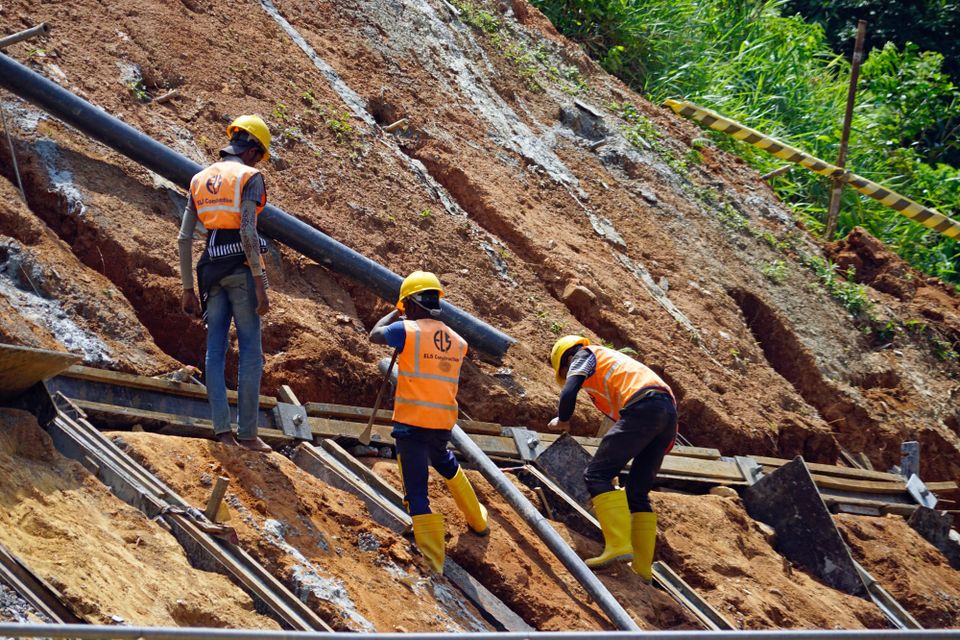
Cyclone Ditwah damaged 723 kilometres of A and B class roads in the Central Province — over half of the total road damage in the island, Prasanna Gunasena, deputy transport minister, told parliament yesterday. Part of the post-cyclone rebuilding proposed for the worst hit hill country is a 115 billion rupee ‘damage improvement and safety infrastructure development’ plan.
Damaged road repair costs in the Central Province alone are estimated at 52 billion rupees. But the cost of reconstruction with safety measures is nearly double this figure — 115 billion rupees.
In the past, road construction required cutting through a mountain and laying a carpet down. But according to Gunasena, rebuilding after the cyclone will look different.
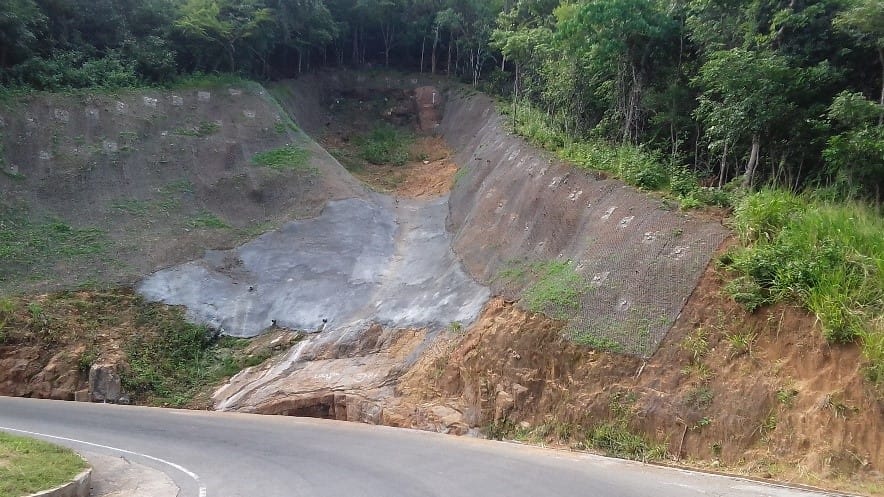
“Slope protection, or thinking about the mountain falling from the top or bottom, wasn’t thought of. Money wasn’t spent on it. But in future plans, that will be included.”
Wimal Kandambi, the Director General at the Road Development Authority, or RDA, confirmed to The Examiner that protection and slope protection would be a “must this time.” The RDA is currently in discussions with the building research organisation, NBRO, for possible designs and cost estimates.
Once these details are confirmed, the RDA plans to open tenders for slope protections to the road network.
This emphasis on protection is driven by the 437 Ditwah landslides that affected the Central Province. In the immediate aftermath of Ditwah, the hill country was cut off from the rest of the island. Even immediate relief didn’t reach villages nested among the treacherous mountains.
Two weeks later, over 90 percent of roads have been reopened for vehicles to pass through, but authorities say that long-term reconstruction will take about two years.
Provincial roads
The road network largely falls either within the territory of the RDA or within the provincial RDA — the PRDA. In the Central Province, 193 PRDA, or rural roads, were damaged. A similar number, 191, were affected in Uva.
Both provinces are looking at a long road ahead for permanent reconstruction.
K. Puwakgolla, the Central Province PRDA’s General Manager, says that they’ve sought help from Peradeniya University. The university is advising them on protection measures like retention walls and bridges.
Landslides and floods have changed the landscape permanently in some locations. Roads were washed away to the bedrock, giving way to new waterways and waterfalls. At these spots, a new bridge is the only option. These permanent structures could take between three to seven months to construct.
They’ve also requested reports from the NBRO for about 45 locations in their road network where landslides surprised the PRDA.
“Funds aren’t a problem because President Anura Kumara Dissanayake has assured us that we can request any amount, at any time,” Puwakgolla added.
In Uva Province too, PRDA General Manager Hendry Dissanayake says the extent of the damage means that permanent reconstruction could take over one and a half years in some areas.
H.R. Pasindu, a Moratuwa University don, was involved in a previous JICA study to strengthen slopes along major roads across the upcountry area. The benefit quantification for the project considered questions like what’s the alternative route if a slope fails?
Slope failure is “very difficult” to predict, says Pasindu, as any given mountain range at any location can fail.
“You don’t want to overspend on it because the next section might fail, but once you know a road is important, you must make sure those slopes are stable. It’s like what Hong Kong is doing. There, almost all roads in the mountain range have had some sort of improvement.”
Three-step process
According to Bimal Rathnayake, the transport minister, post-Ditwah transport plans are unfolding in three steps: emergency, temporary, and permanent